
Conserving Works on Paper Through Effective Mounting and Framing

Picture frames are everyday objects, but when it comes to the frames used by museums, there are particular standards and requirements that need to be met.
The process of selecting and moving an artwork from the museum’s storage to the exhibition gallery involves multiple departments. After an artwork is chosen for an exhibition, registrars and art technicians coordinate the transport of the piece to the conservation lab, where conservators assess, treat, and prepare the work for display.
In 2023, the M+ Conservation team framed Collectivity Memory–Guangzhou. Zhongxin Plaza, a work by Chinese artist Chen Shaoxiong that measures almost four metres long. We spoke with Suiying Zaffer Chan, Associate Conservator for Paper at M+, about the collaborative work that went into mounting and framing this work of art.

Taking Preventive Measures
Framing not only enhances the appearance of an artwork but also plays an essential role in its protection. If an artwork arrives at the museum pre-framed, a conservator will examine the structure of the existing frame and the compatibility of its materials with the enclosed work. If the frame was designed by the artist to be presented with the artwork, conservators often try to respect the artist’s wishes by keeping the frame. However, if the frame does not meet the museum’s standards for protection, it will be retrofitted with conservation-grade materials and structurally reinforced.
For example, if the backing board is made from plywood or a composite board, organic acids from these materials may migrate to the artwork and cause it to yellow. To prevent this from happening, we will replace the backing board with a corrugated polypropylene sheet, which is an inert plastic material. Filtering UV light with specially treated acrylics is also usually advisable, as UV wavelengths can cause a work of art to fade. We also utilise silica materials to maintain a suitable humidity level within the frame.

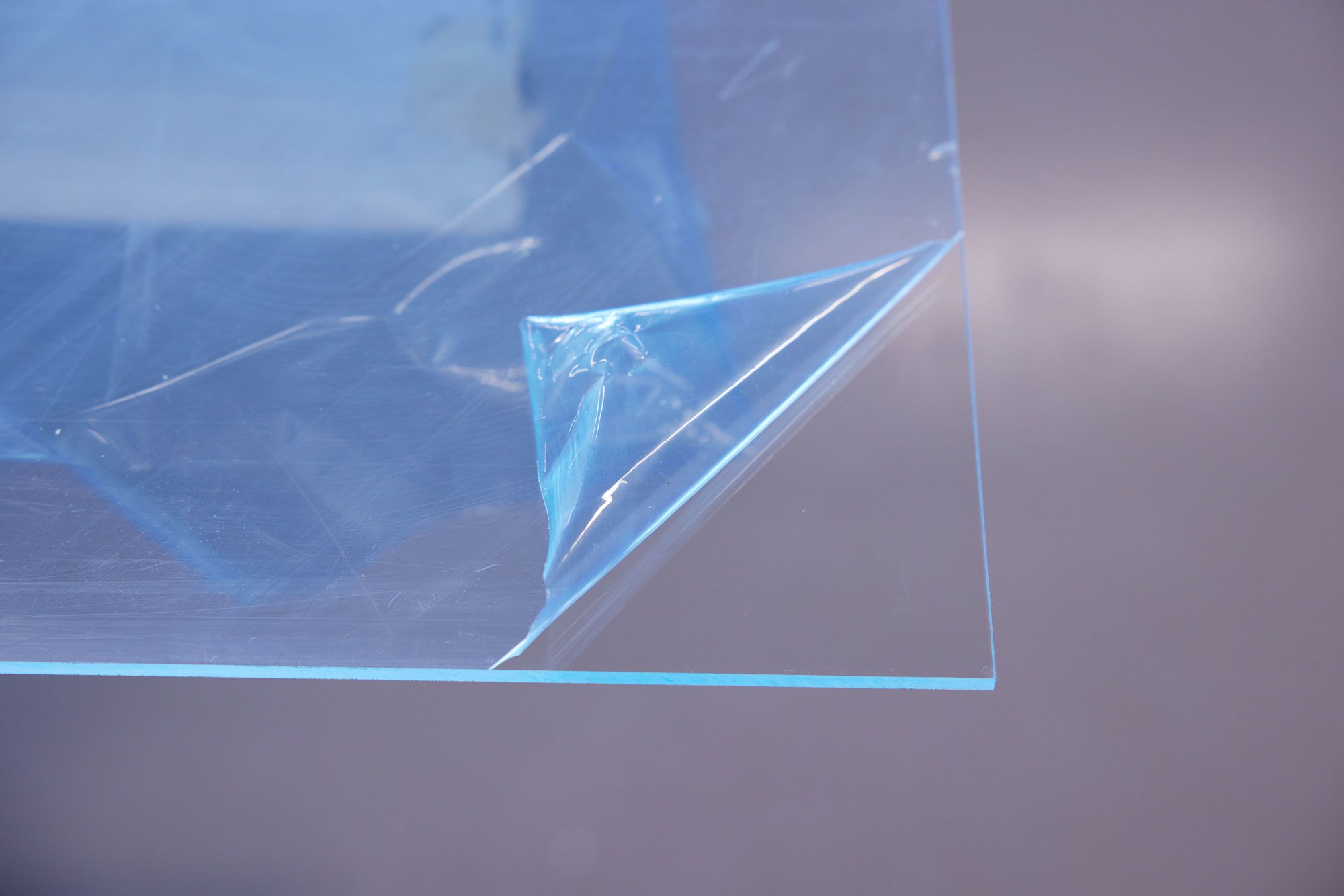
Acrylic glazing for the frame
Acrylic glazing for the frame
When deciding whether or not to use a frame, we assess the condition of the artwork and its intended method of display in the gallery. The best presentation method depends on each individual artwork. For example, for a work on paper that needs to be displayed in an open manner, a reversible hanging or mounting system can serve to both display and protect.

Preparing Artwork for Exhibition
Chen Shaoxiong’s ink painting Collectivity Memory–Guangzhou. Zhongxin Plaza was chosen for the M+ Sigg Collection: Another Story exhibition. The work is from a series of paintings that explores the collective memories of public spaces. Each painting from the series features a landmark from a Chinese city and is made with the ink fingerprints of people familiar with the depicted structure.
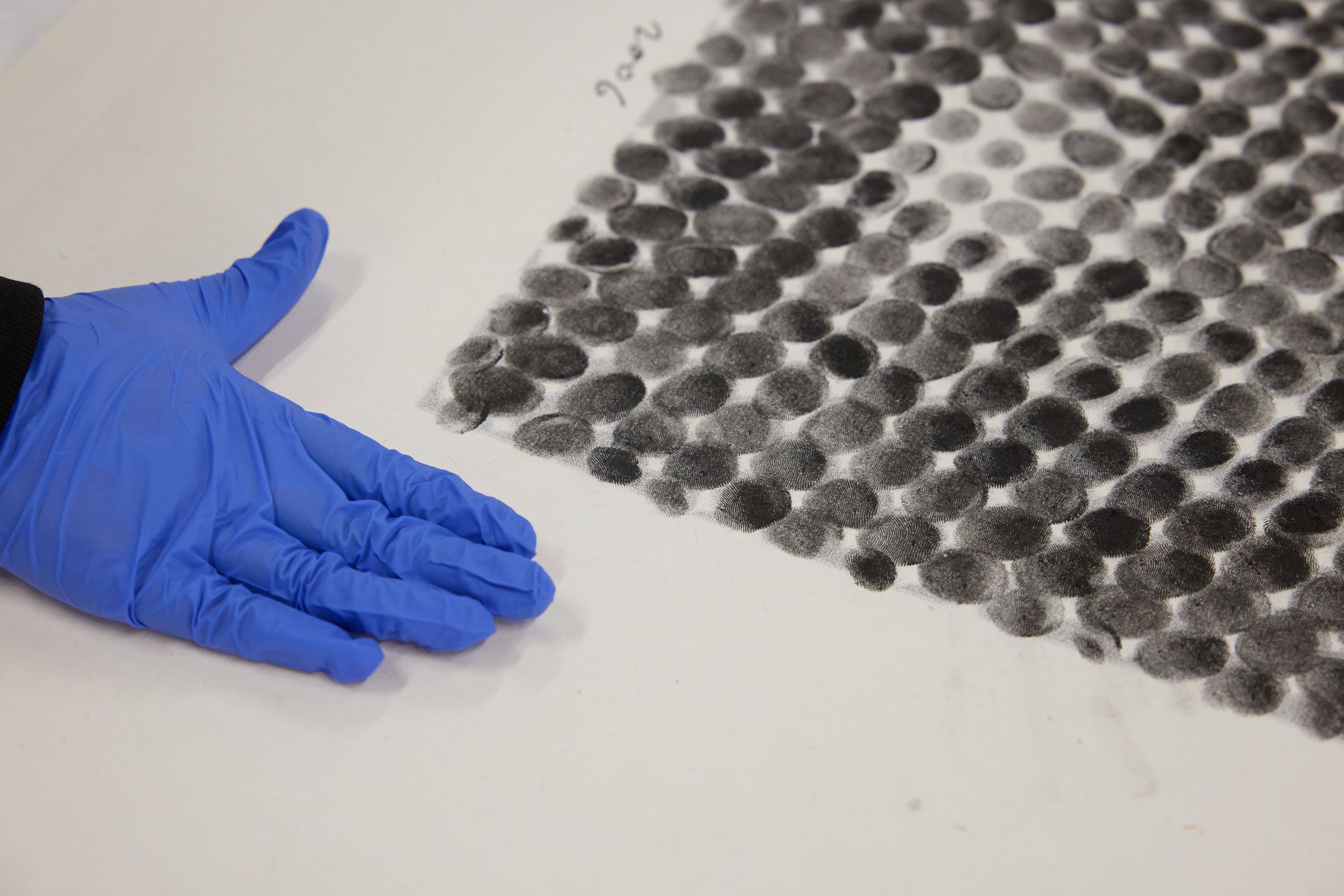
Close-up of the fingerprints that make up Collectivity Memory–Guangzhou. Zhongxin Plaza
Close-up of the fingerprints that make up Collectivity Memory–Guangzhou. Zhongxin Plaza
When we examined the work, we saw that it was mounted in the traditional Chinese style, which involves lining the work with Xuan paper to support the paper substrate and backing it with additional layers of Xuan paper to strengthen its structure. This mounting style creates a three-centimetre paper border around the artwork.
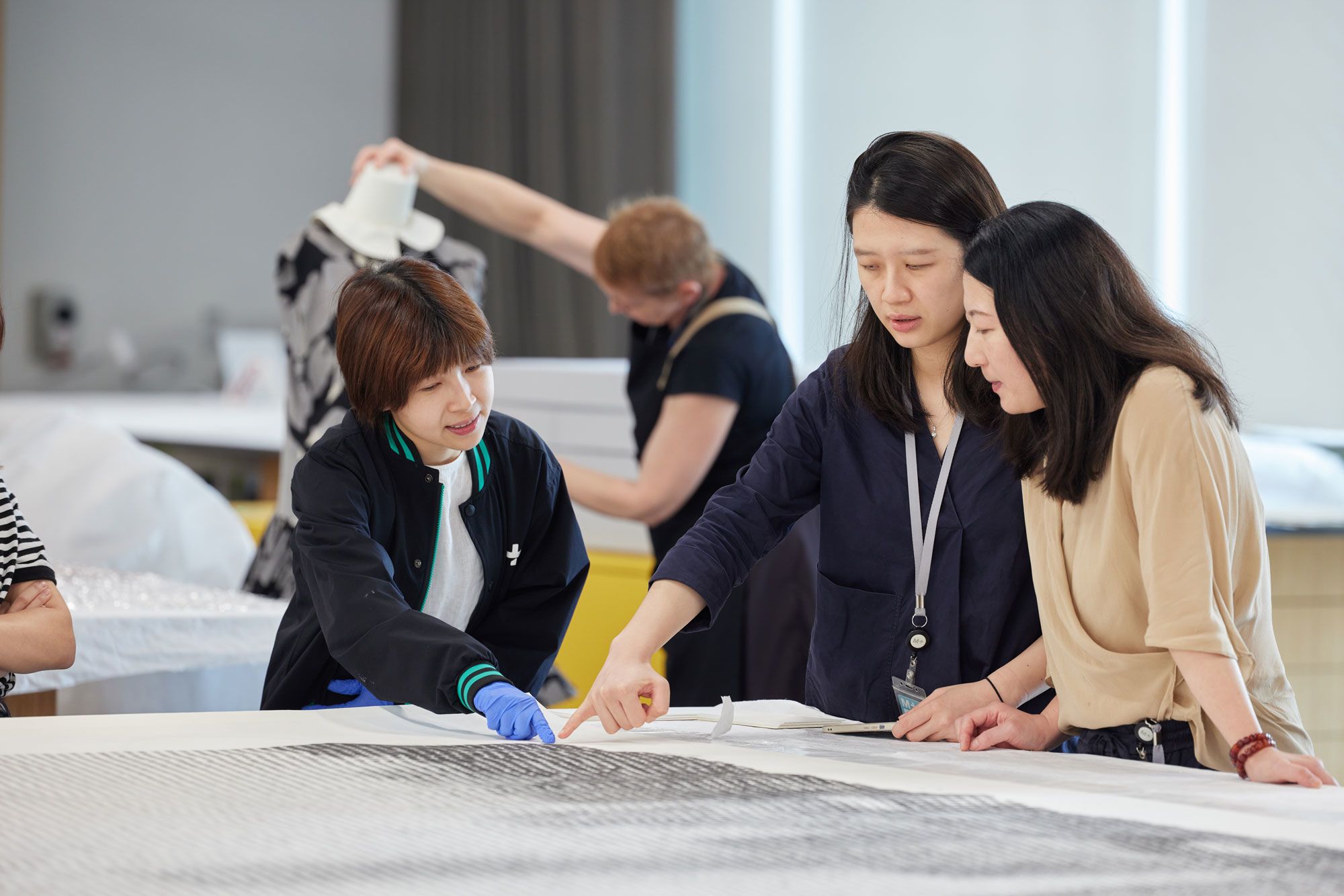
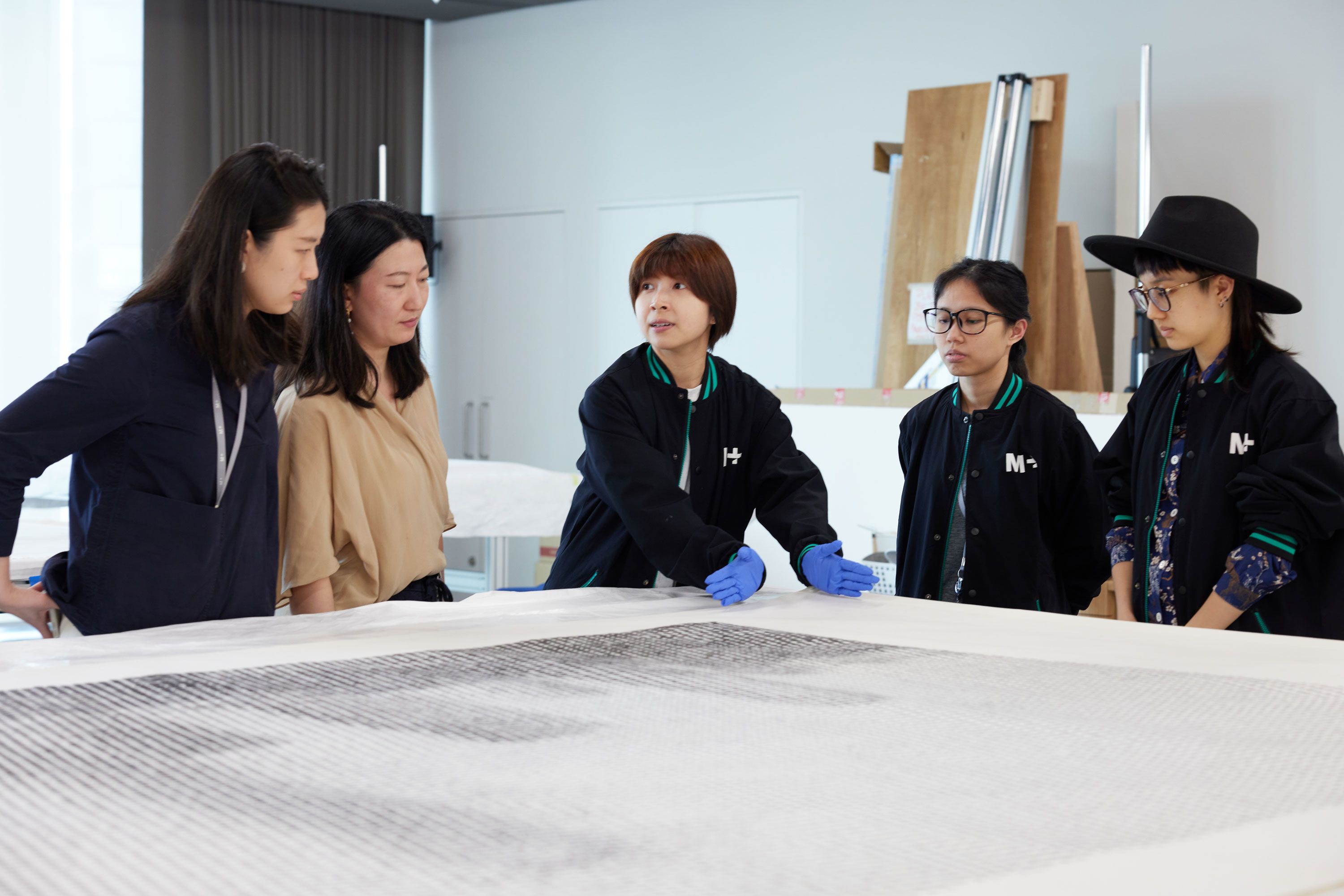
Conservator Suiying Zaffer Chan and curators Ariadne Long and Mo Wu discuss the condition of the artwork
Conservator Suiying Zaffer Chan and curators Ariadne Long and Mo Wu discuss the condition of the artwork
Collectivity Memory–Guangzhou. Zhongxin Plaza is generally in stable condition, though minor abrasions, tears, creases, as well as pin holes believed to be from a previous exhibition can be seen on the artwork’s surface. When the piece was unrolled, the paper was undulated, and the corners curled upward due to its long-term rolled storage.
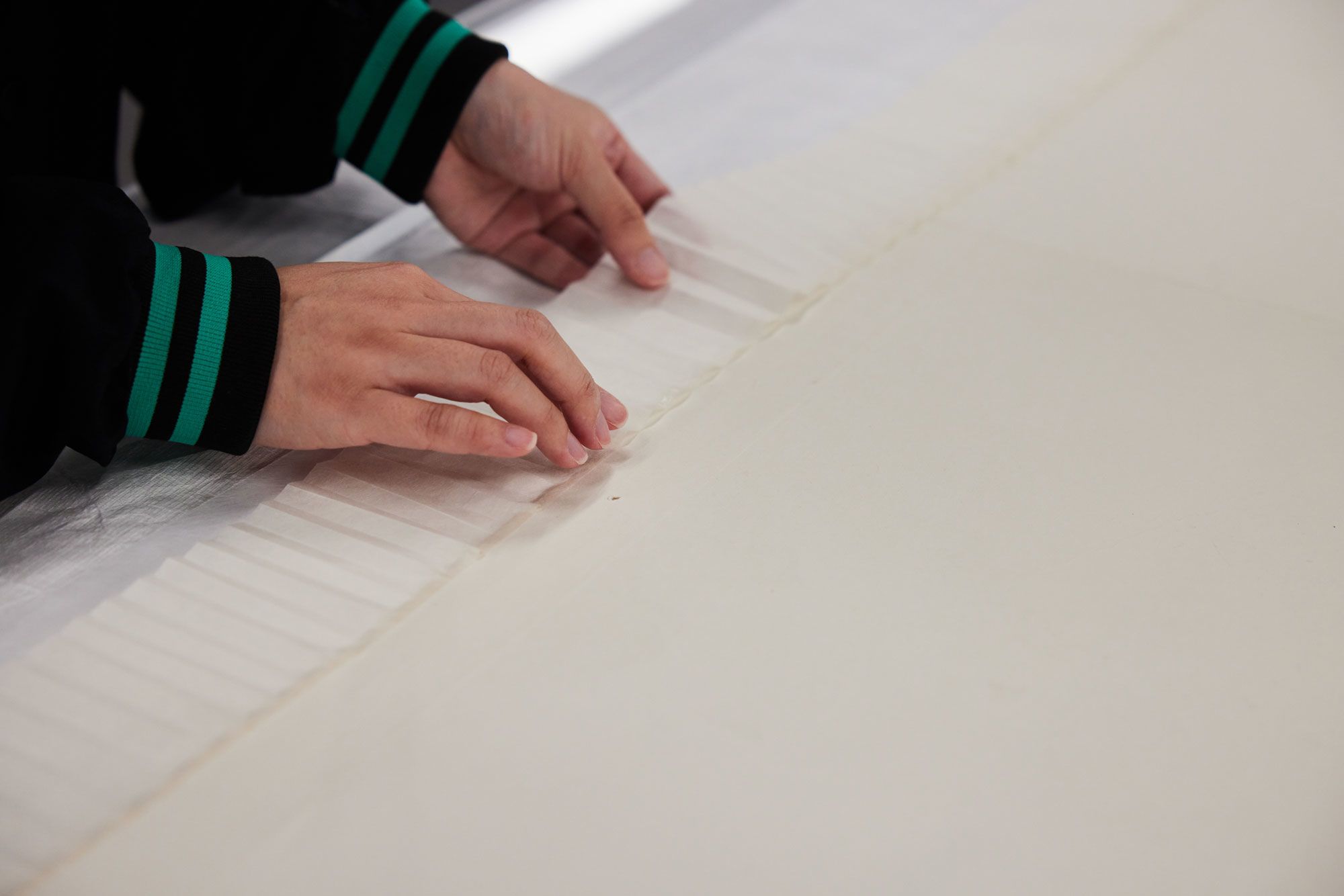
Japanese Kozo paper strips are attached to the margins of the artwork
Japanese Kozo paper strips are attached to the margins of the artwork
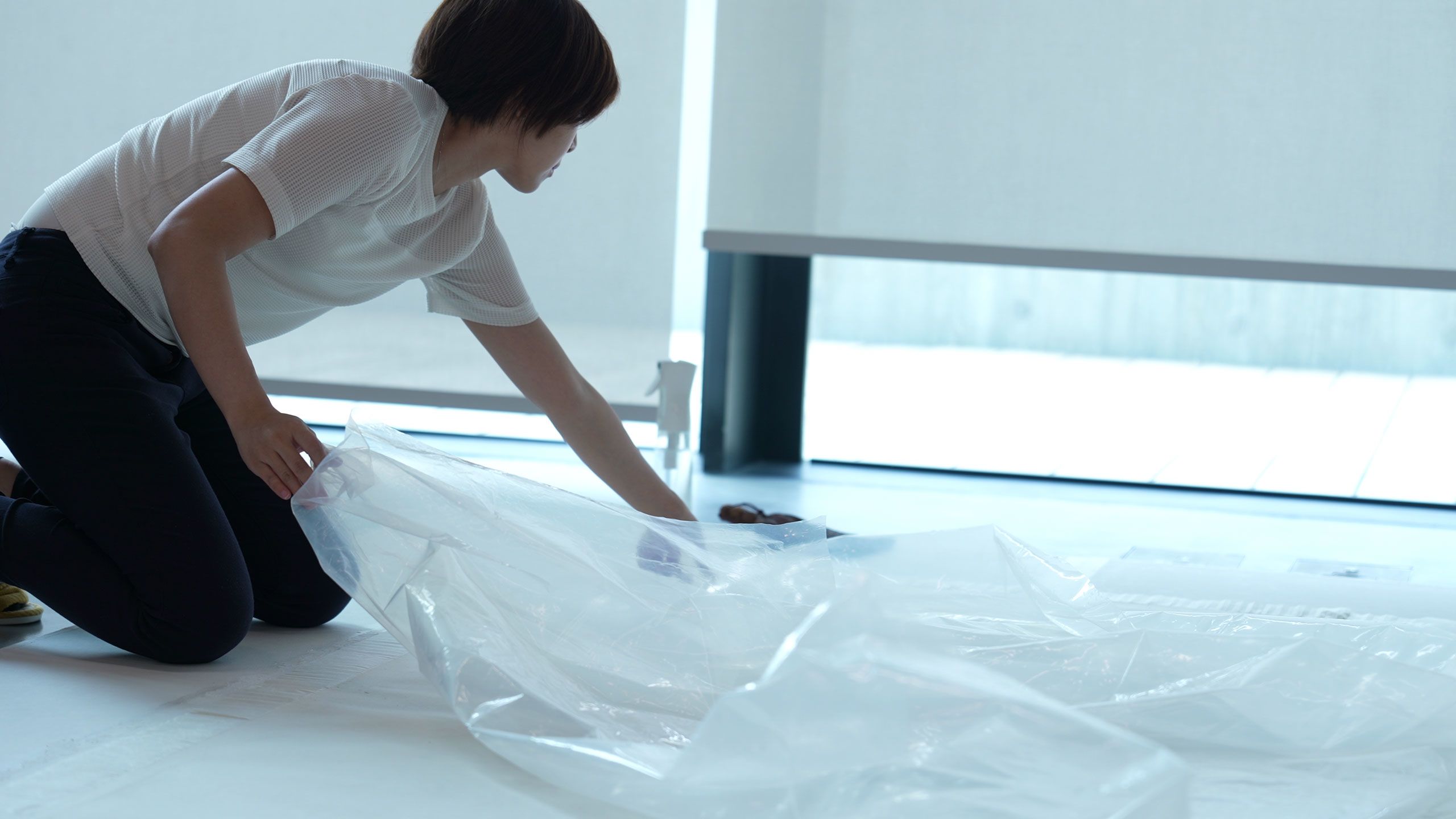
The primary conservation treatment involved humidification and flattening. Firstly, accordion-folded strips of Japanese Kozo paper were attached to extend the margins of the artwork. The work was then slowly humidified with a controlled mist and covered with a synthetic cloth and plastic sheet.
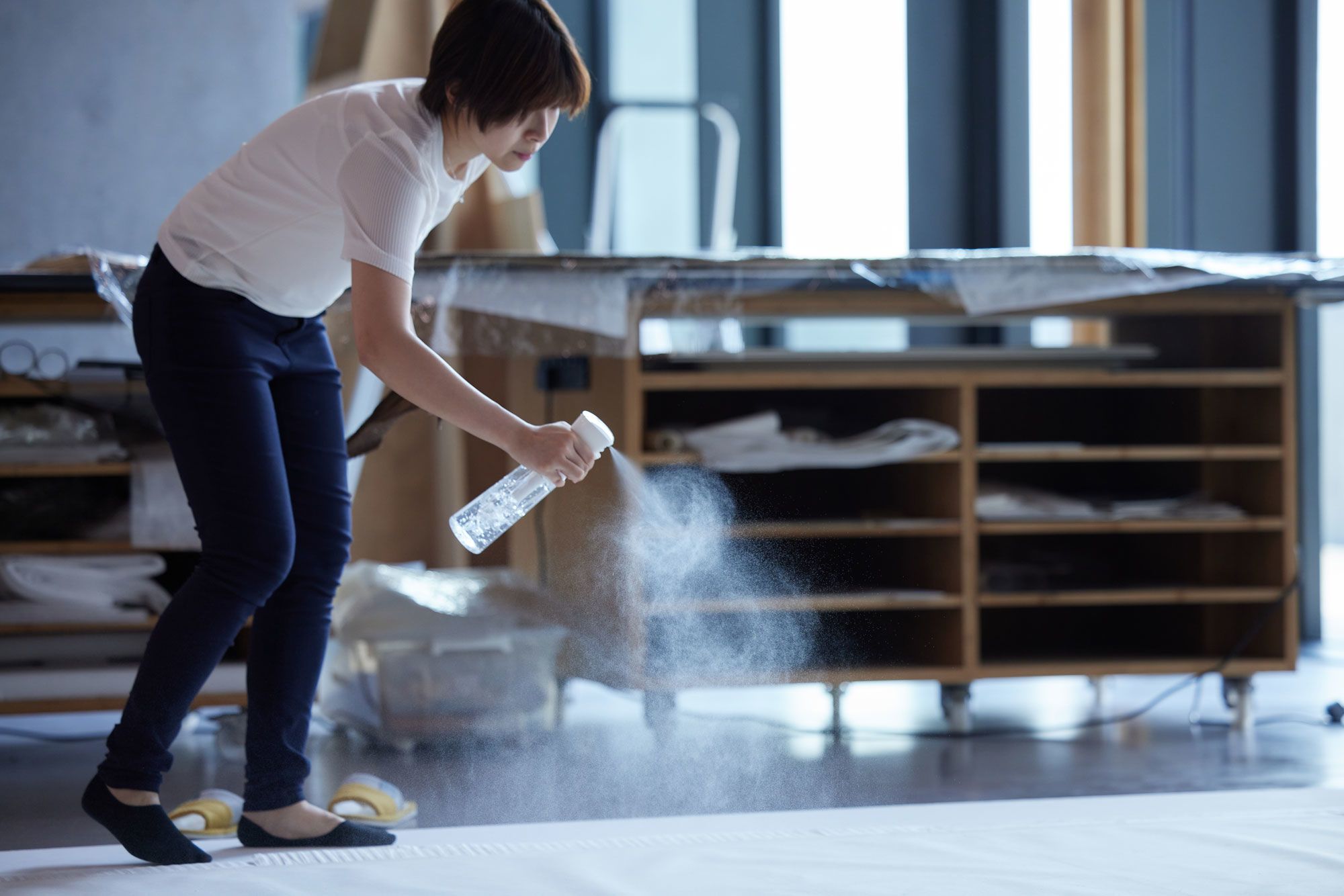
The artwork is humidified with a controlled water mist
The artwork is humidified with a controlled water mist
After the paper absorbed moisture and gently relaxed, conservators mounted the artwork by fixing the Kozo paper margins to the mounting board with a conservation-grade wheat-starch paste. To control the level of drying, conservators partly covered the centre of the artwork so that the edges dried first. Finally, the plastic sheet was removed to enable the remaining moisture to fully evaporate from the paper so that it could contract and stretch evenly on the mounting board.

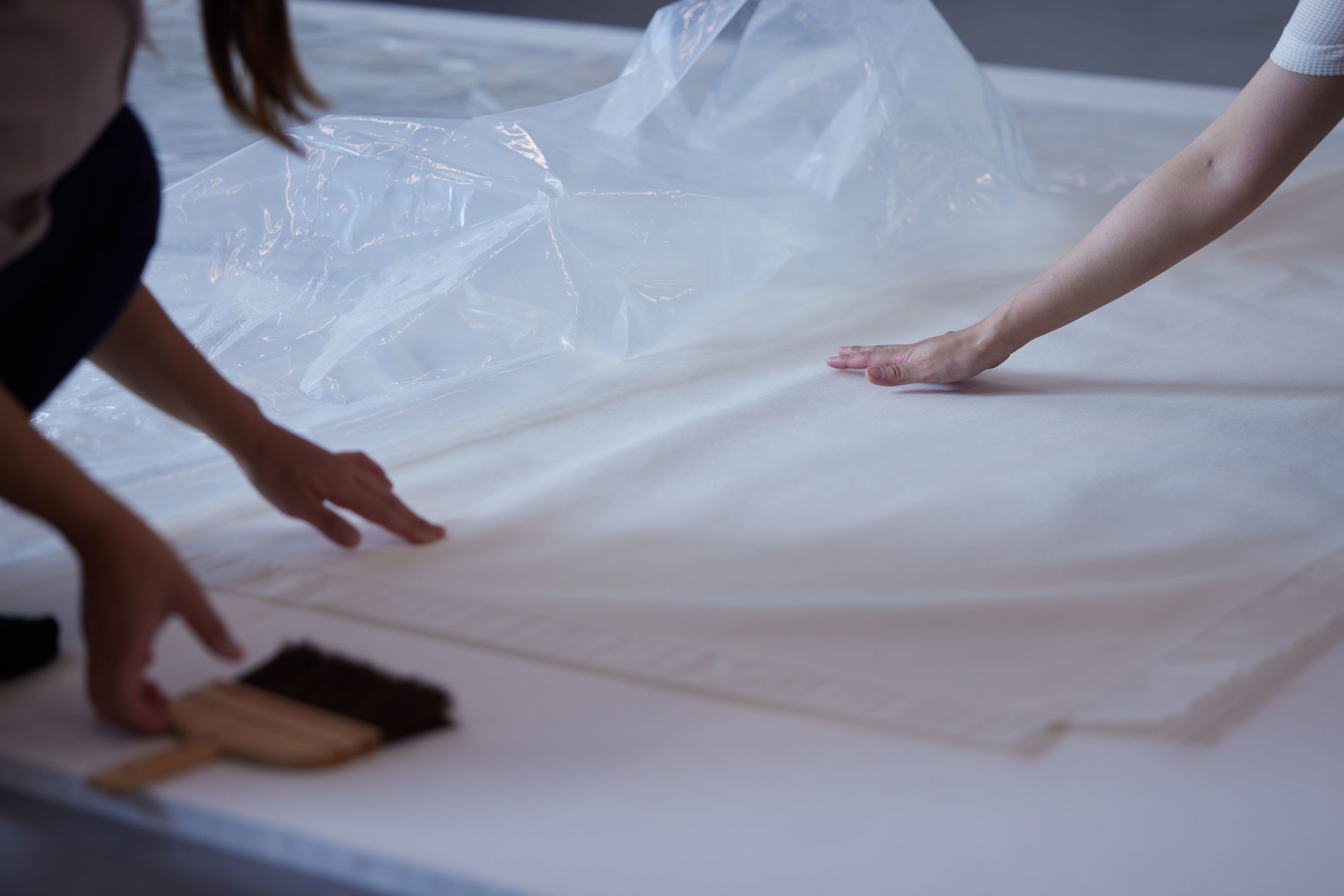
The centre of the artwork is covered to control the drying time
The centre of the artwork is covered to control the drying time
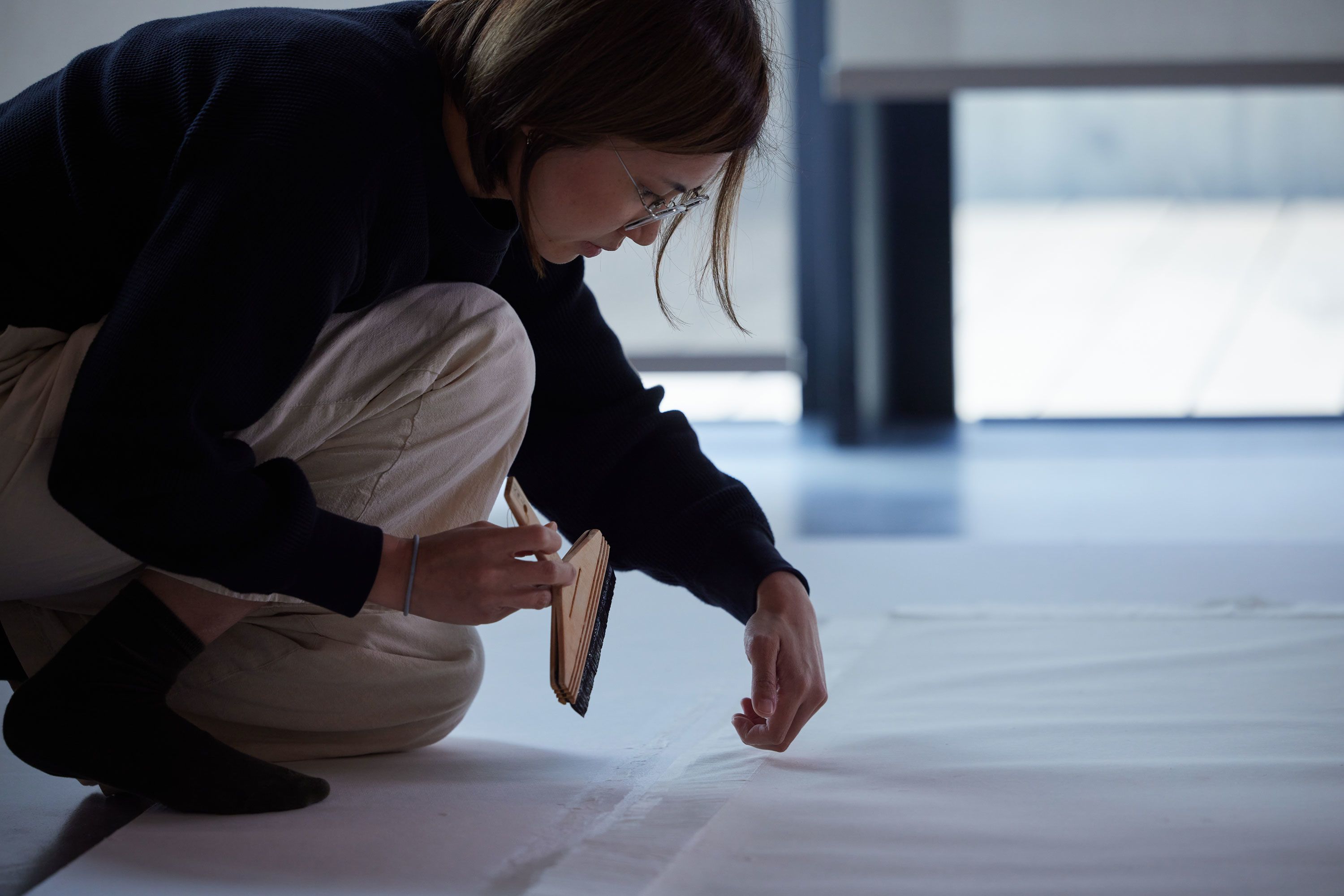
Conservation coordinator Sally Hui assists mounting the artwork
Conservation coordinator Sally Hui assists mounting the artwork
After discussing with the curators about how the artwork should be displayed to the public, we collaborated with professional framers to construct a custom frame with a large yet lightweight backing. The framers built the wooden lattice for the backing structure in our conservation lab.
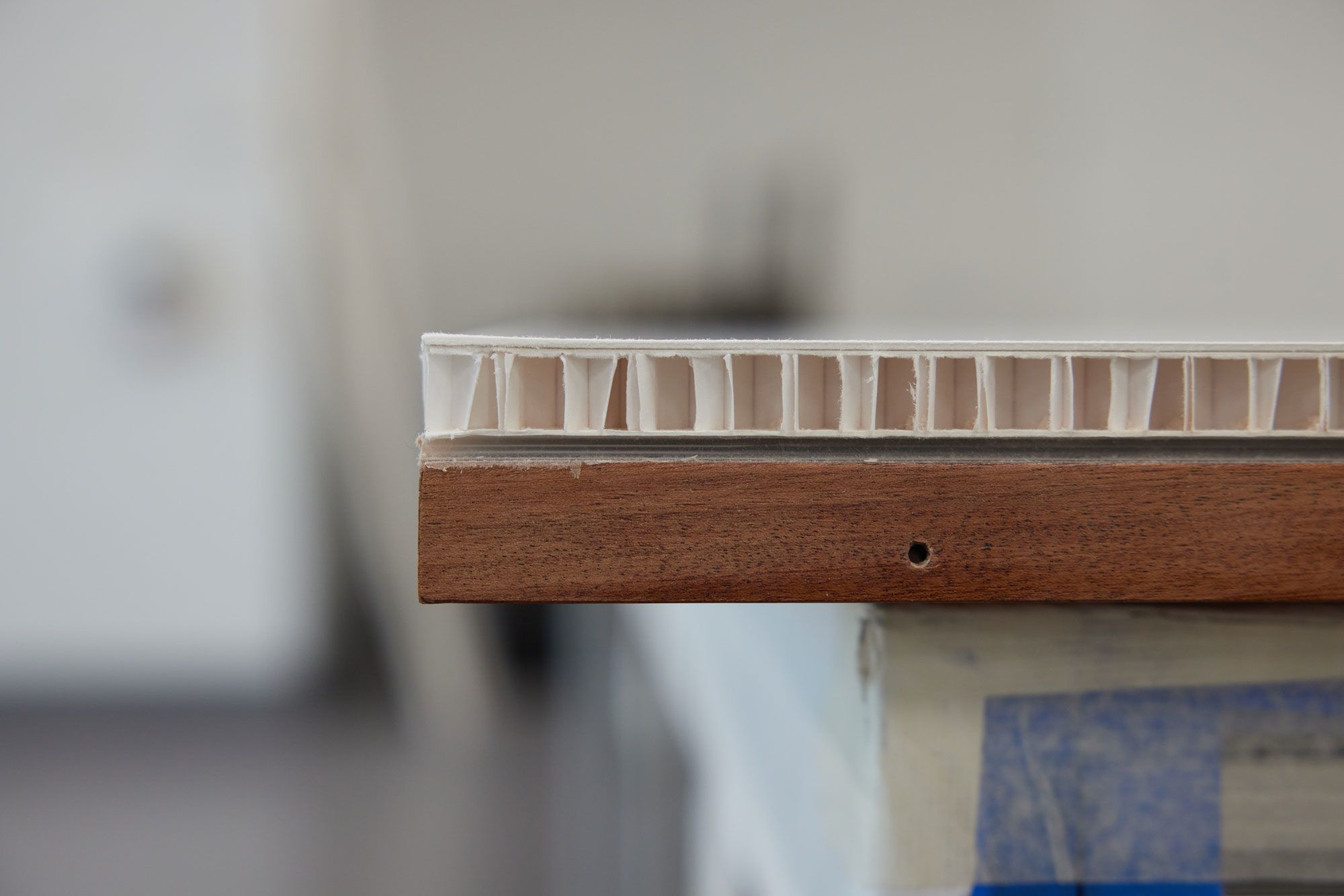
The honeycomb board boasts a hexagonal structure that improves its rigidity
The honeycomb board boasts a hexagonal structure that improves its rigidity
A layer of corrugated polypropylene was placed as the backing material over the wooden lattice. This layer was followed by an archival honeycomb board, which is known for its strength, rigidity, and lightweight structure. Finally, an acid-free cotton rag mat board was added as the layer that comes into direct contact with the artwork. Together, these materials provide a solid and supportive backing while remaining lightweight, thereby reducing the risks of injuries during the lifting and hanging process as well as minimizing the chances of the frame falling.
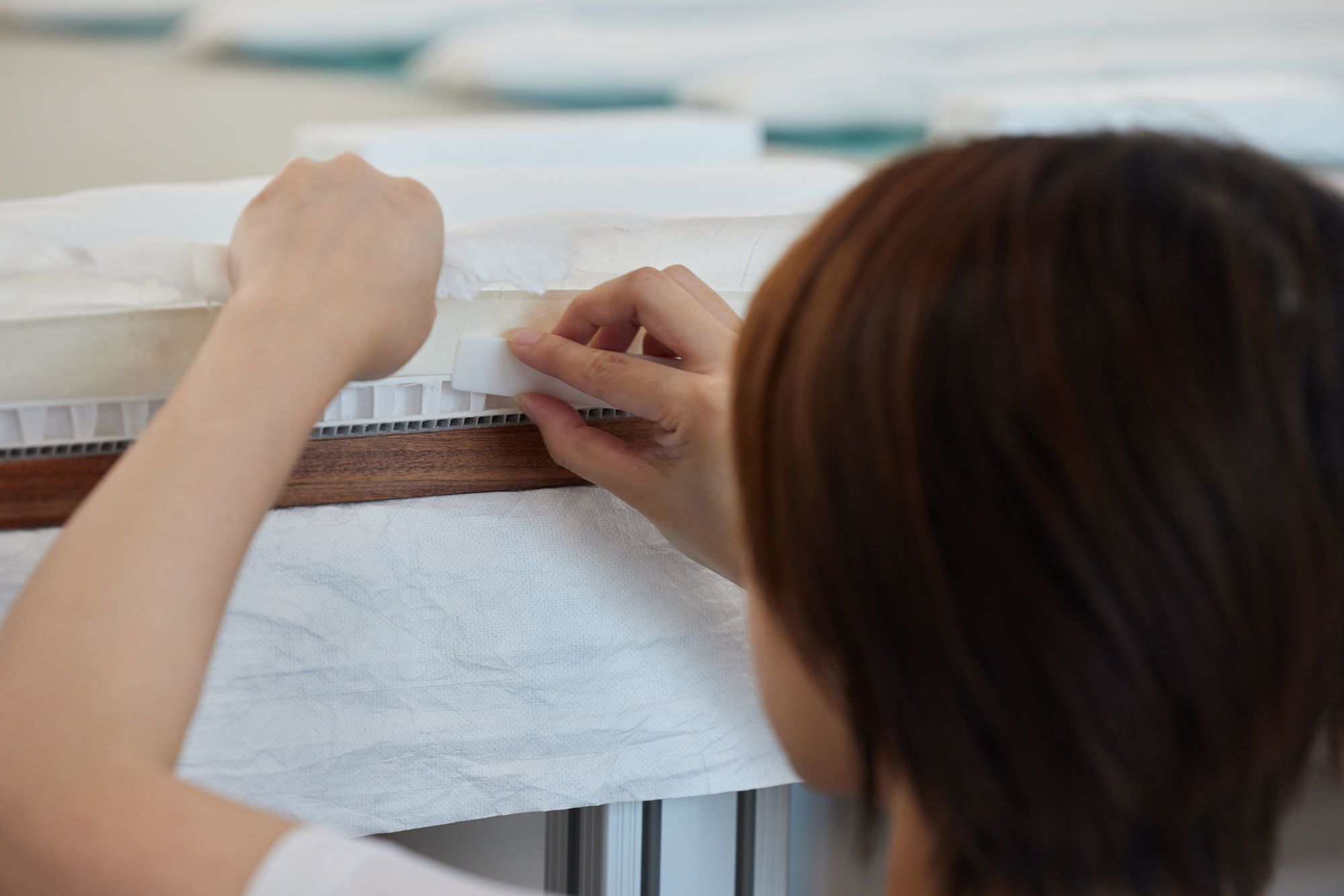
The edges of the Kozo paper strips are pressed by a Teflon-coated spatula
The edges of the Kozo paper strips are pressed by a Teflon-coated spatula
Once fully dried, the artwork was removed from its mounting board, and a wheat-starch paste was used to attach the Kozo paper margin to the completed secondary support.

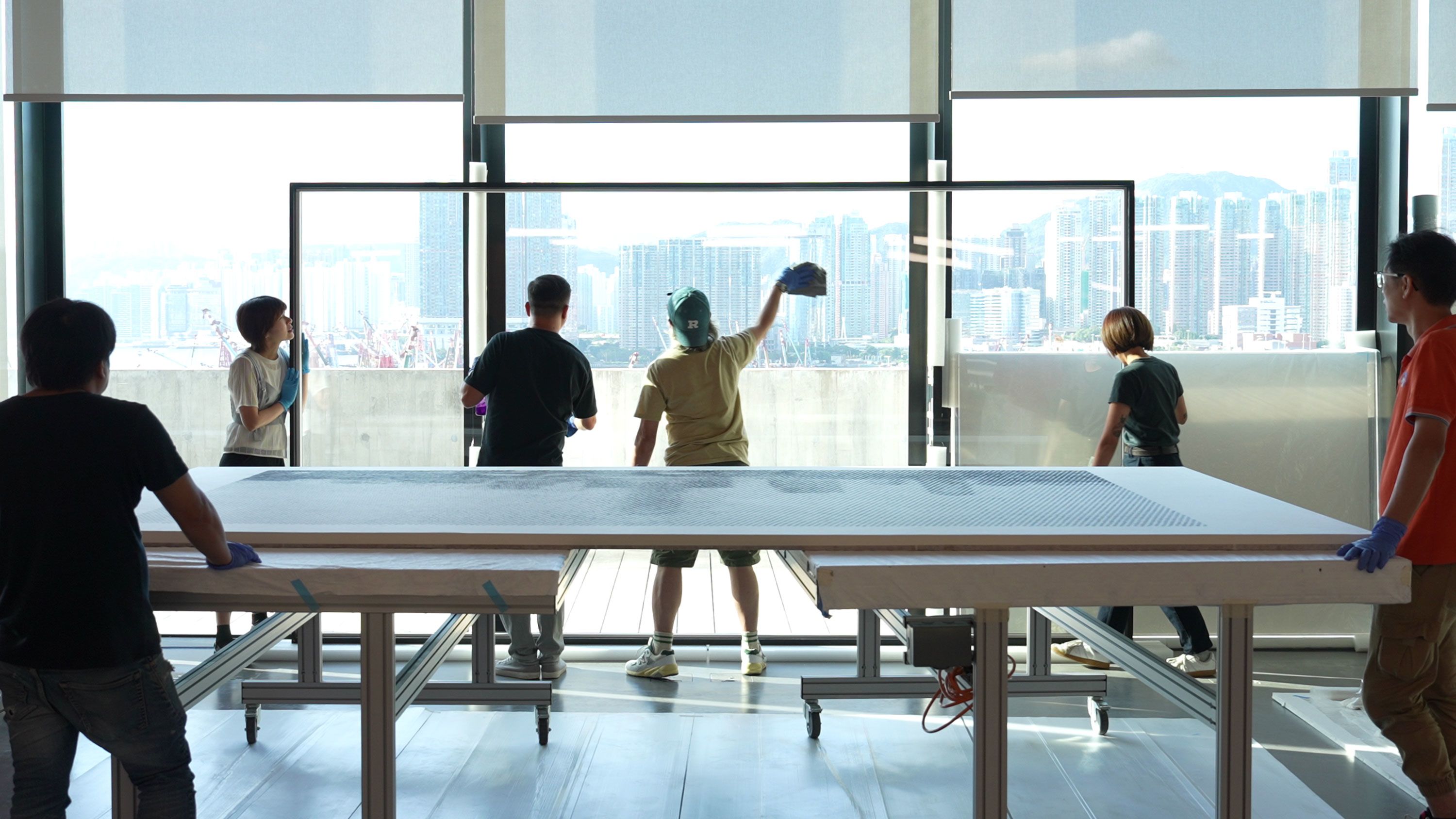
An acrylic pane is cleaned before the frame is assembled
An acrylic pane is cleaned before the frame is assembled
The framers returned to the conservation lab a month later to assemble the entire frame, which included affixing the frame and acrylic pane to the backing board on which the artwork was mounted. Once the frame was sealed, the process of preparing the artwork for display was finally completed. From transporting the work from the storage warehouse and inspecting it in the conservation lab to deciding the presentation method and frame specifications, carrying out the conservation treatment, and ultimately mounting and framing the work, the entire process took eight months.
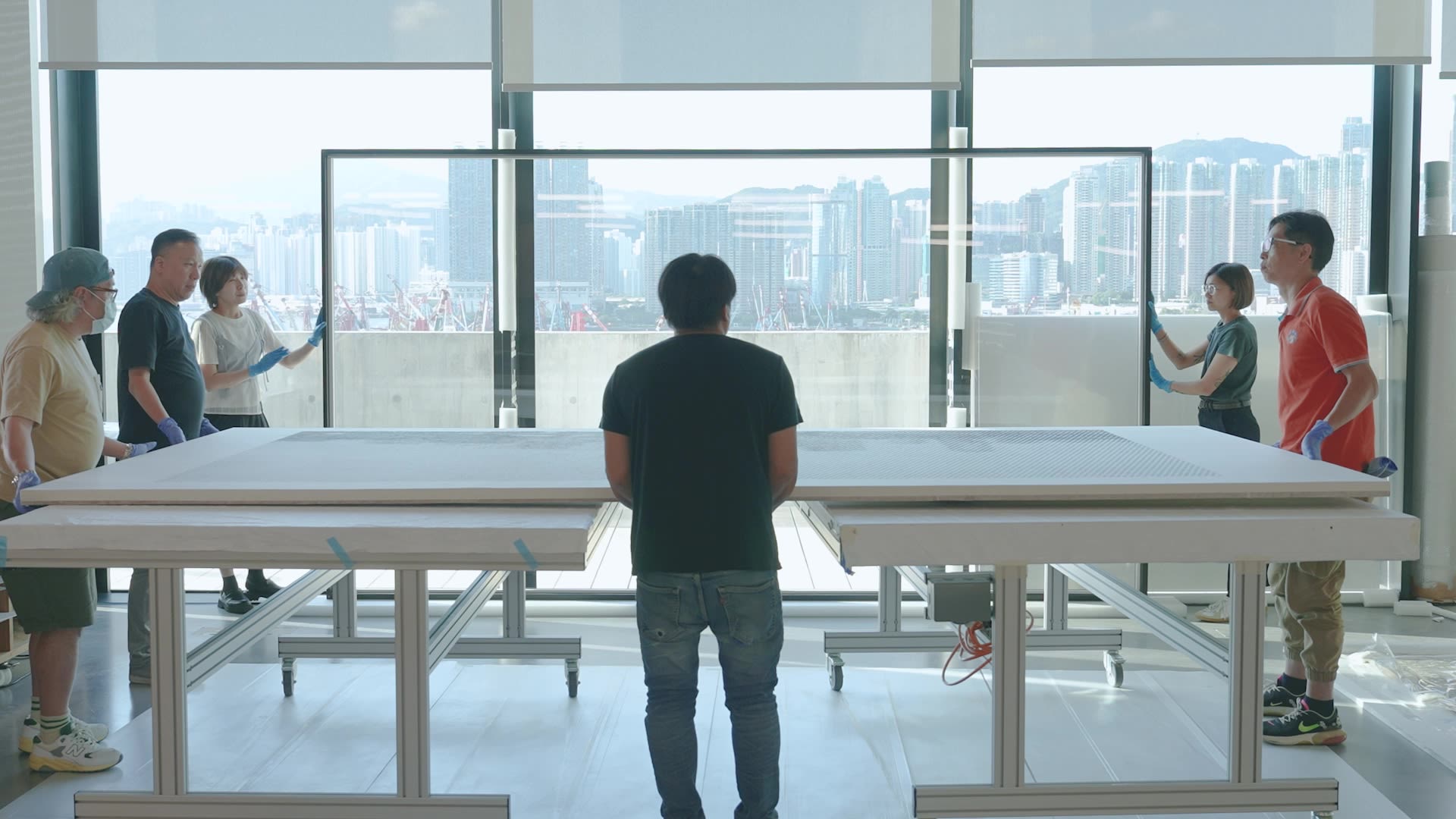

Building a Relationship with the Framers
It can be a time-consuming process to develop a good working relationship with the right framers. While there are many framing professionals in Hong Kong, the methods and materials they use may not necessarily meet the specific needs and standards required by a museum. For example, we avoid using unfamiliar or untested commercial adhesives during the conservation process. Instead, we often use a wheat-starch paste, which is water-soluble and re-treatable, making it ideal for conservation work.

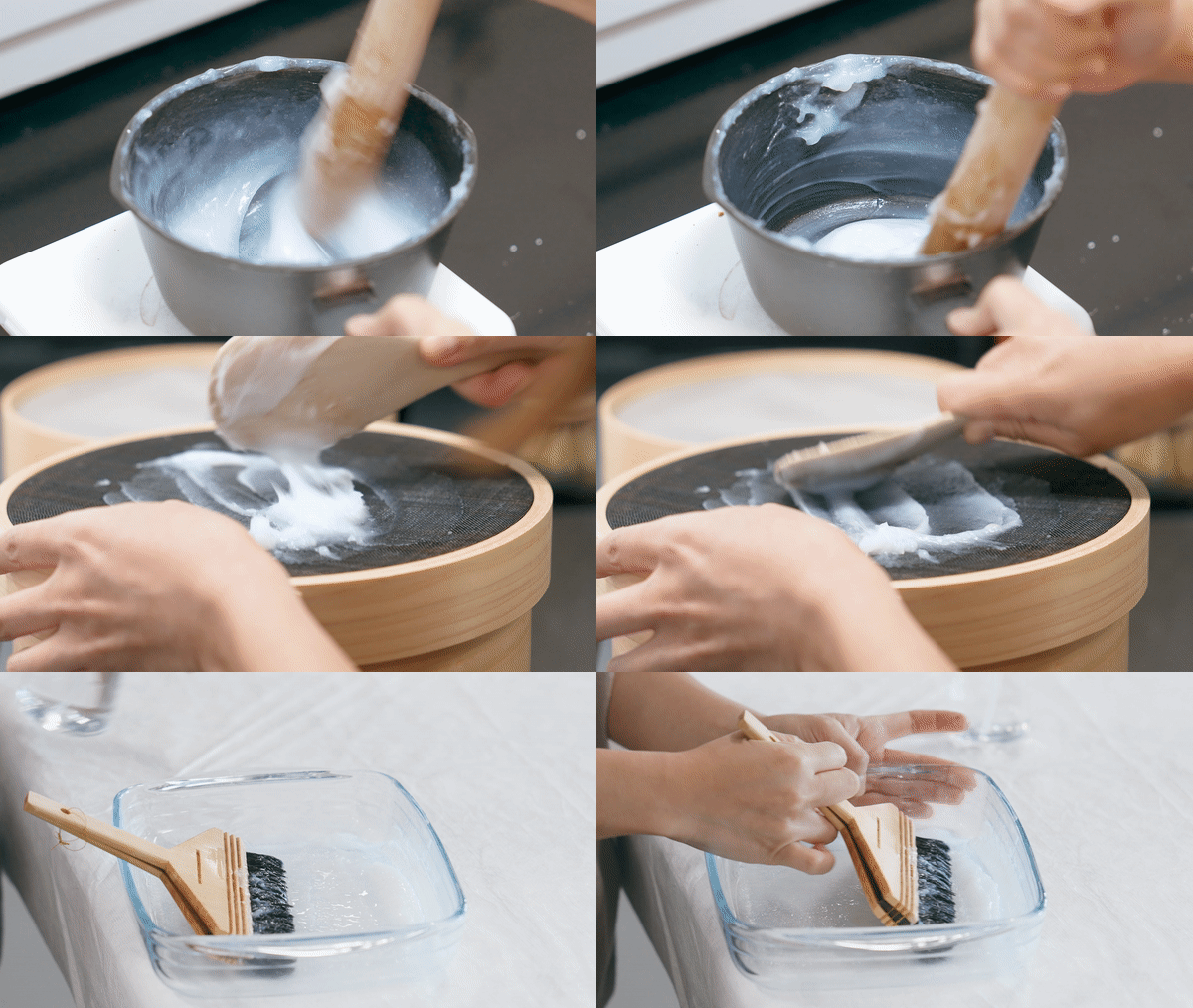
Conservators prepare a wheat-starch paste
Conservators prepare a wheat-starch paste
When working with framers, we communicate the museum’s specific needs and collaborate closely with them on the mounting and framing process. We are fortunate to have found local framers who are eager to learn the latest conservation methods and who have the skillsets to rise to the challenge.
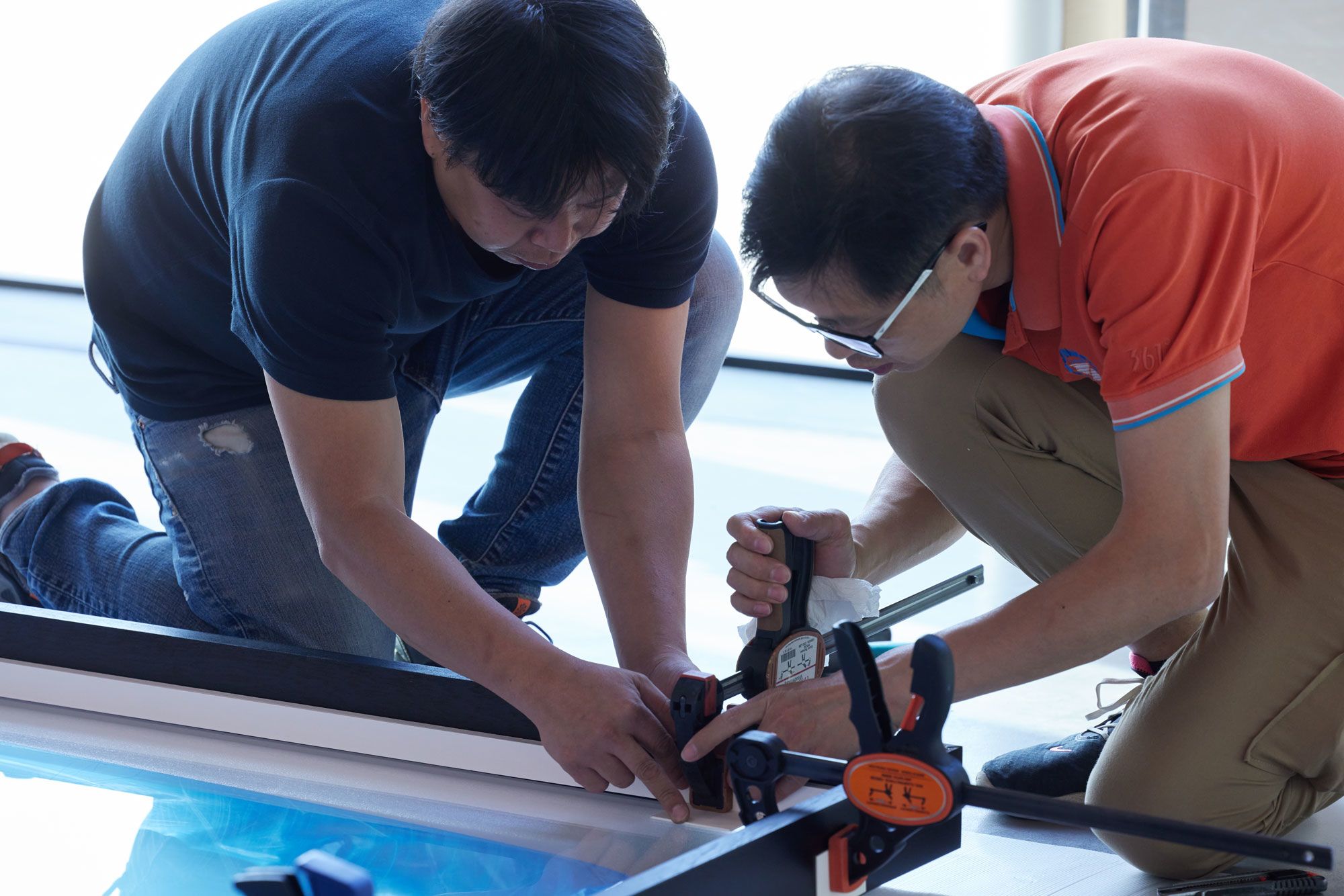
Framers assemble the frame
Framers assemble the frame
They are keen to observe our demonstrations, practice the techniques, and compare the results of various framing methods alongside us. This hands-on collaboration not only enhances their skills but also spreads awareness of artwork preservation within the local art community. By sharing and refining these techniques together, we help ensure the longevity of artworks. We take great pride in this ongoing and mutually beneficial exchange of knowledge and expertise.

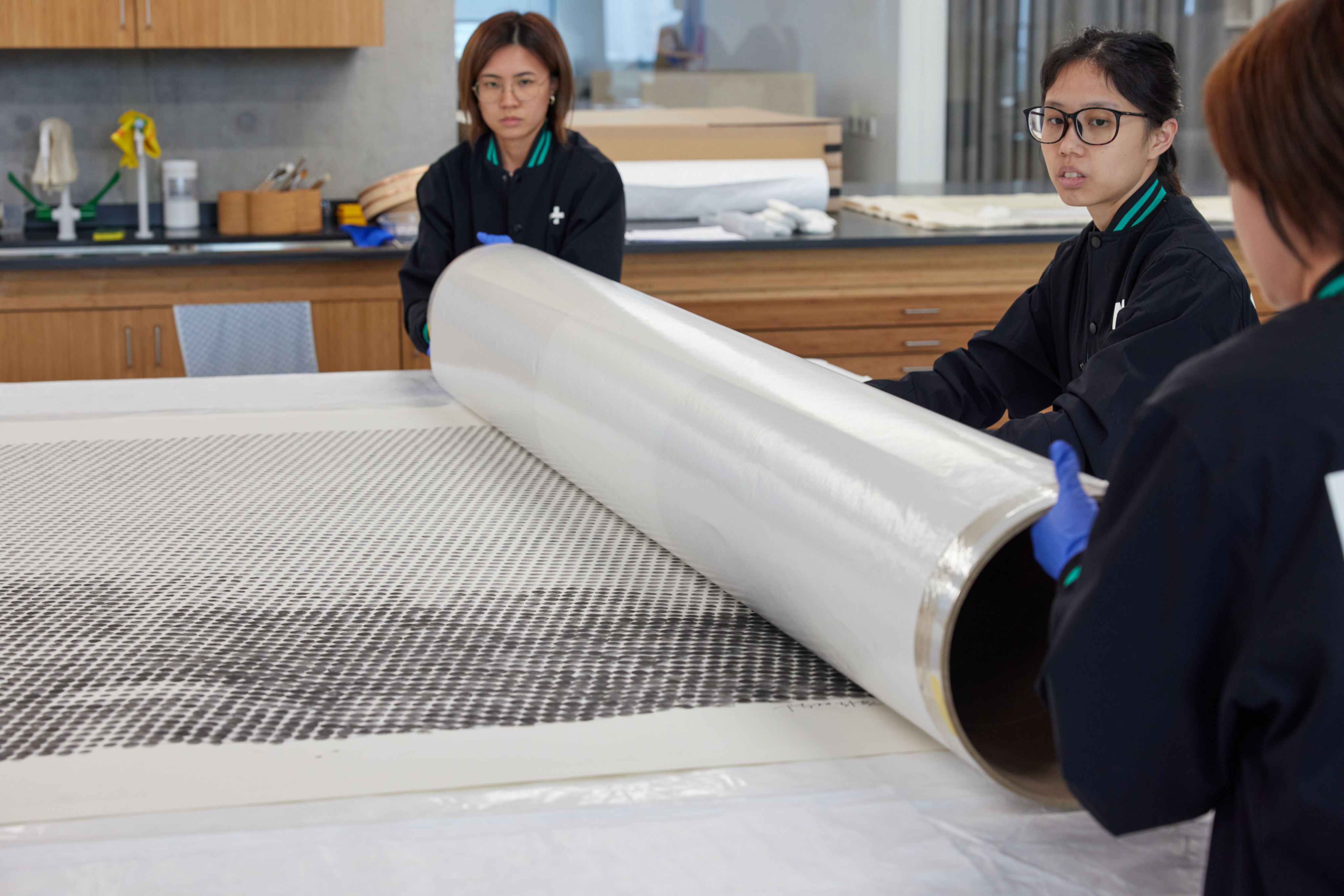
Unrolling the artwork for condition-checking
Unrolling the artwork for condition-checking
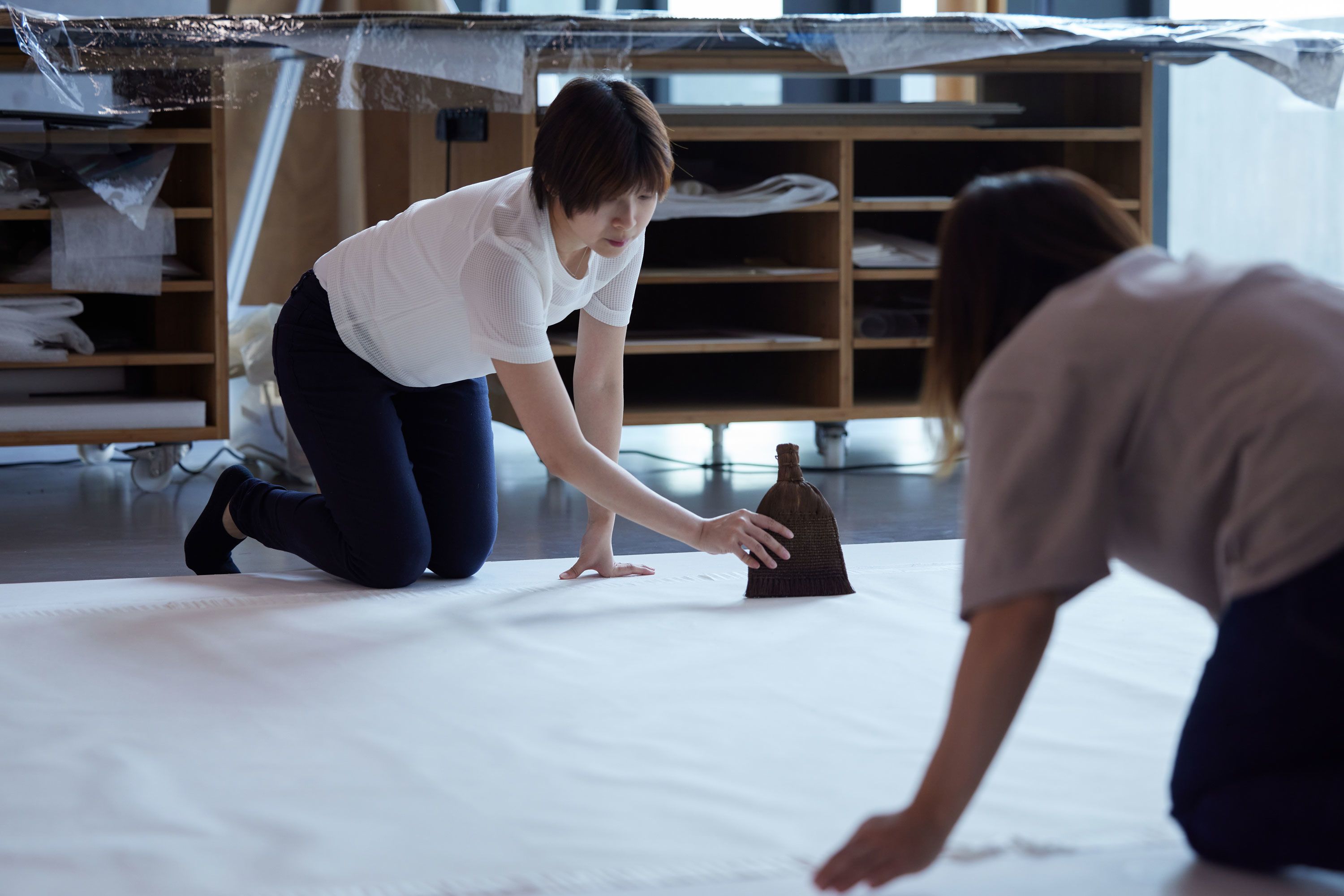
Conservator Suiying Zaffer Chan and Manami Hori mount the artwork
Conservator Suiying Zaffer Chan and Manami Hori mount the artwork
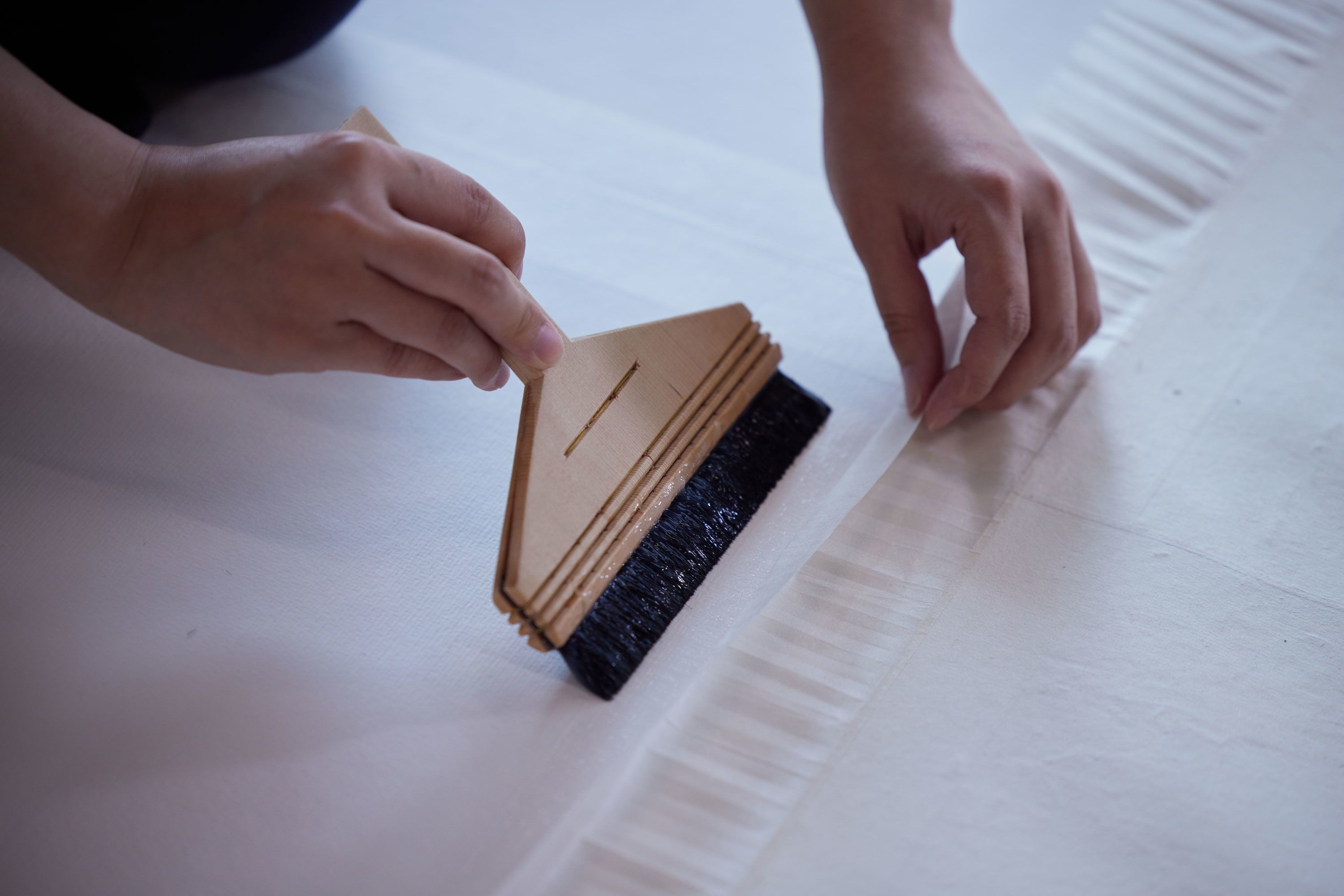
Kozo paper strips are used to adhere the artwork to the drying board
Kozo paper strips are used to adhere the artwork to the drying board
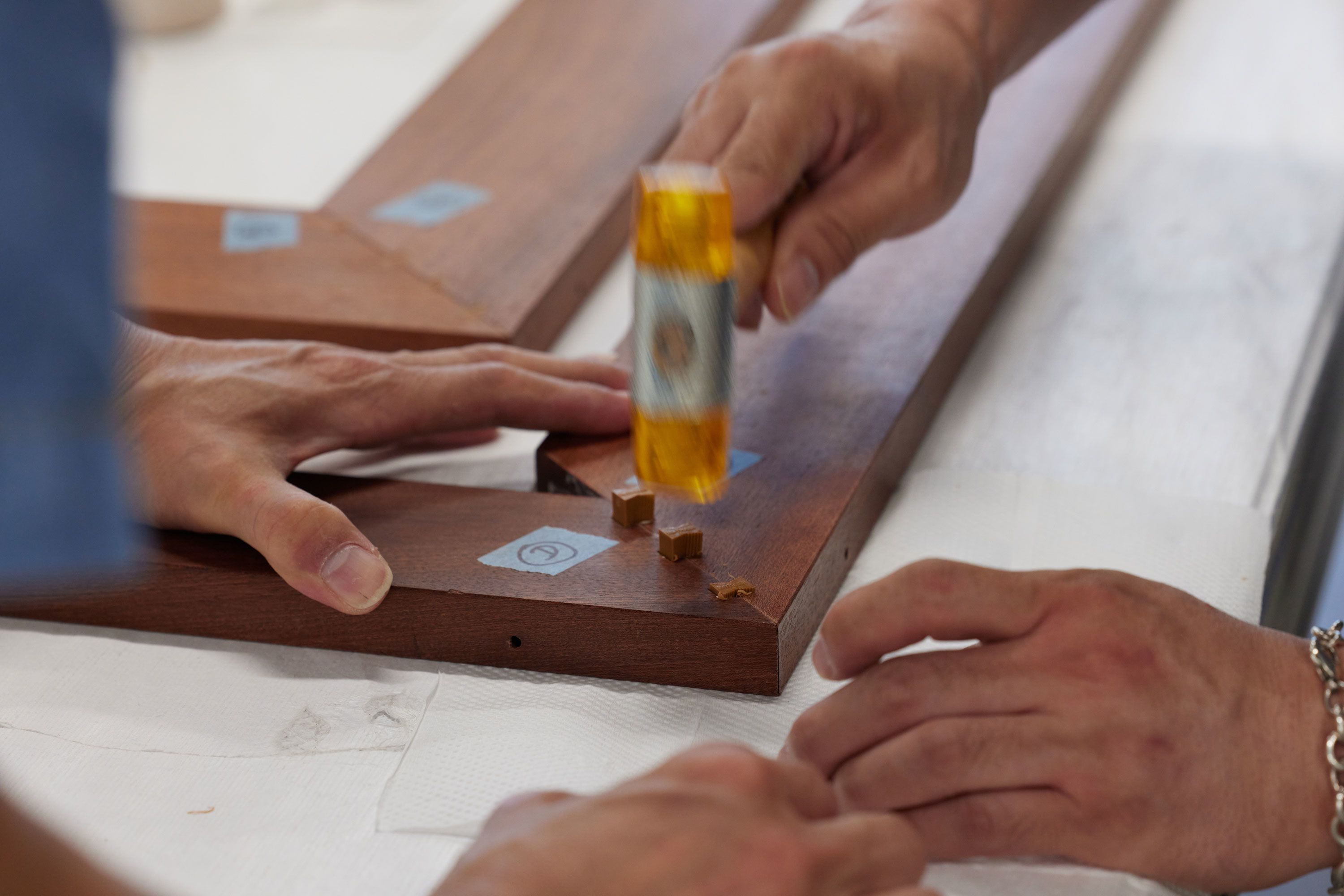
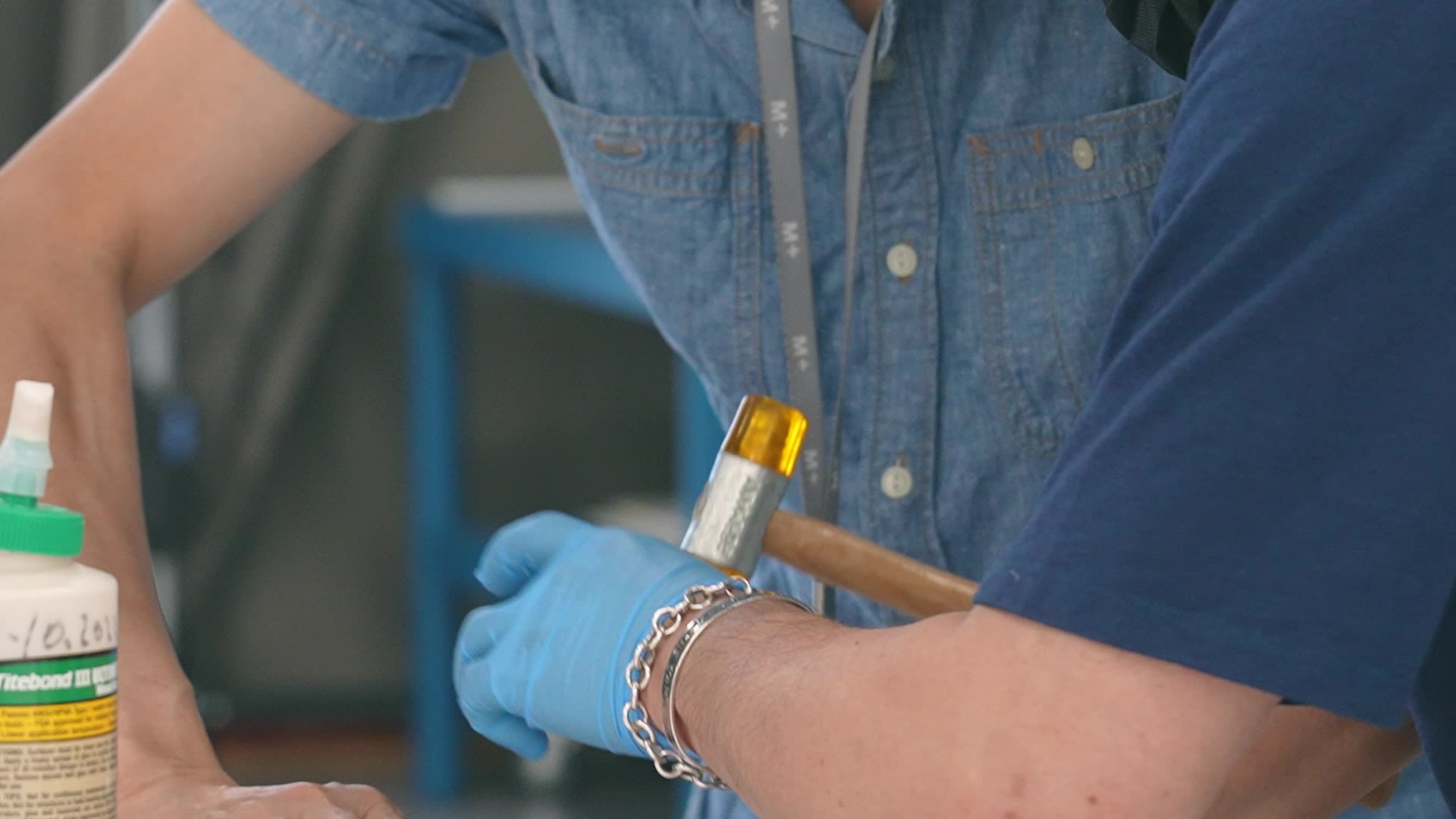
Hammering in the butterfly joint of the wooden strainer
Hammering in the butterfly joint of the wooden strainer
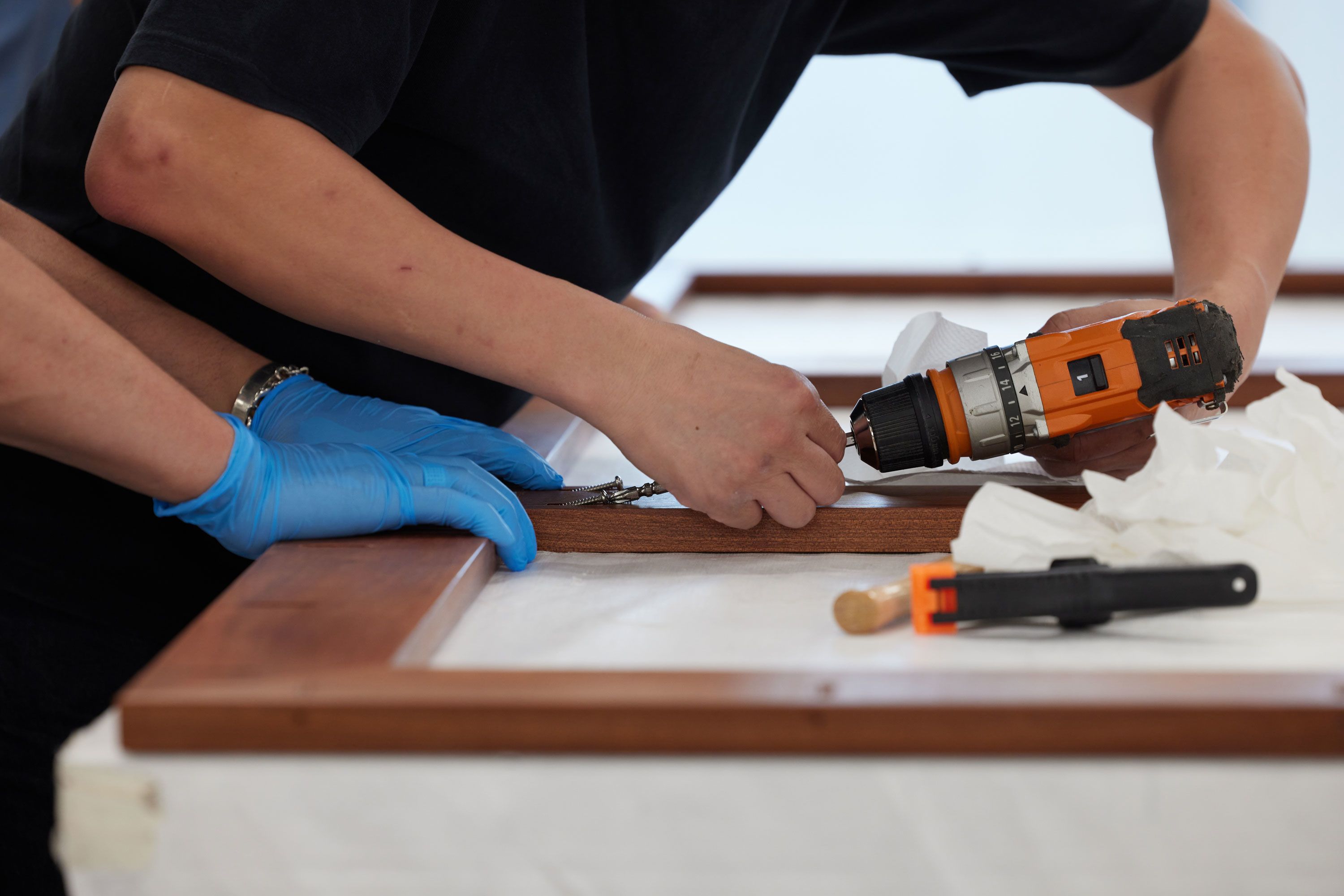
Screwing in the wooden strainer
Screwing in the wooden strainer
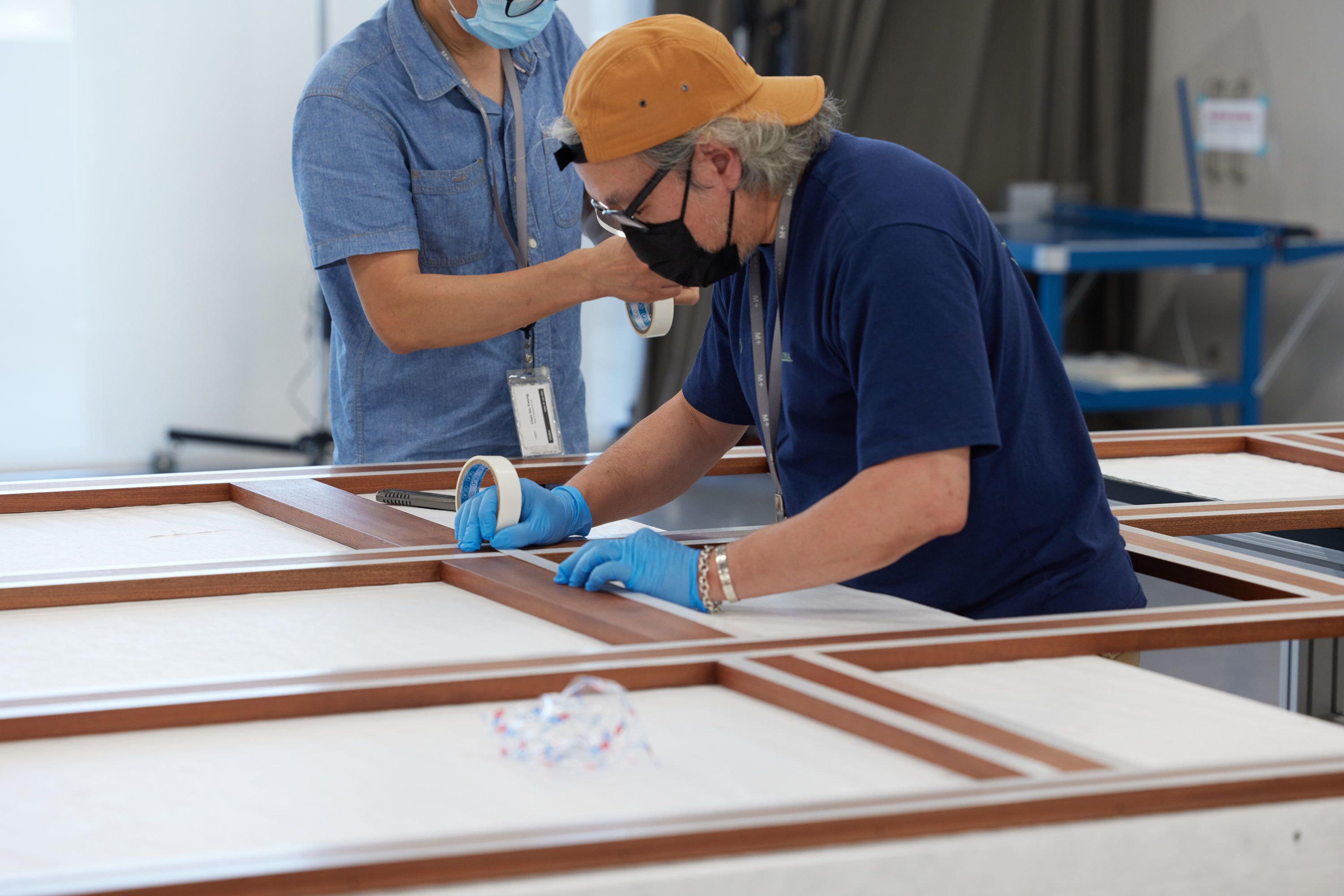
Double-sided tape is used to adhere the wooden lattice to other layers of the backing structure
Double-sided tape is used to adhere the wooden lattice to other layers of the backing structure
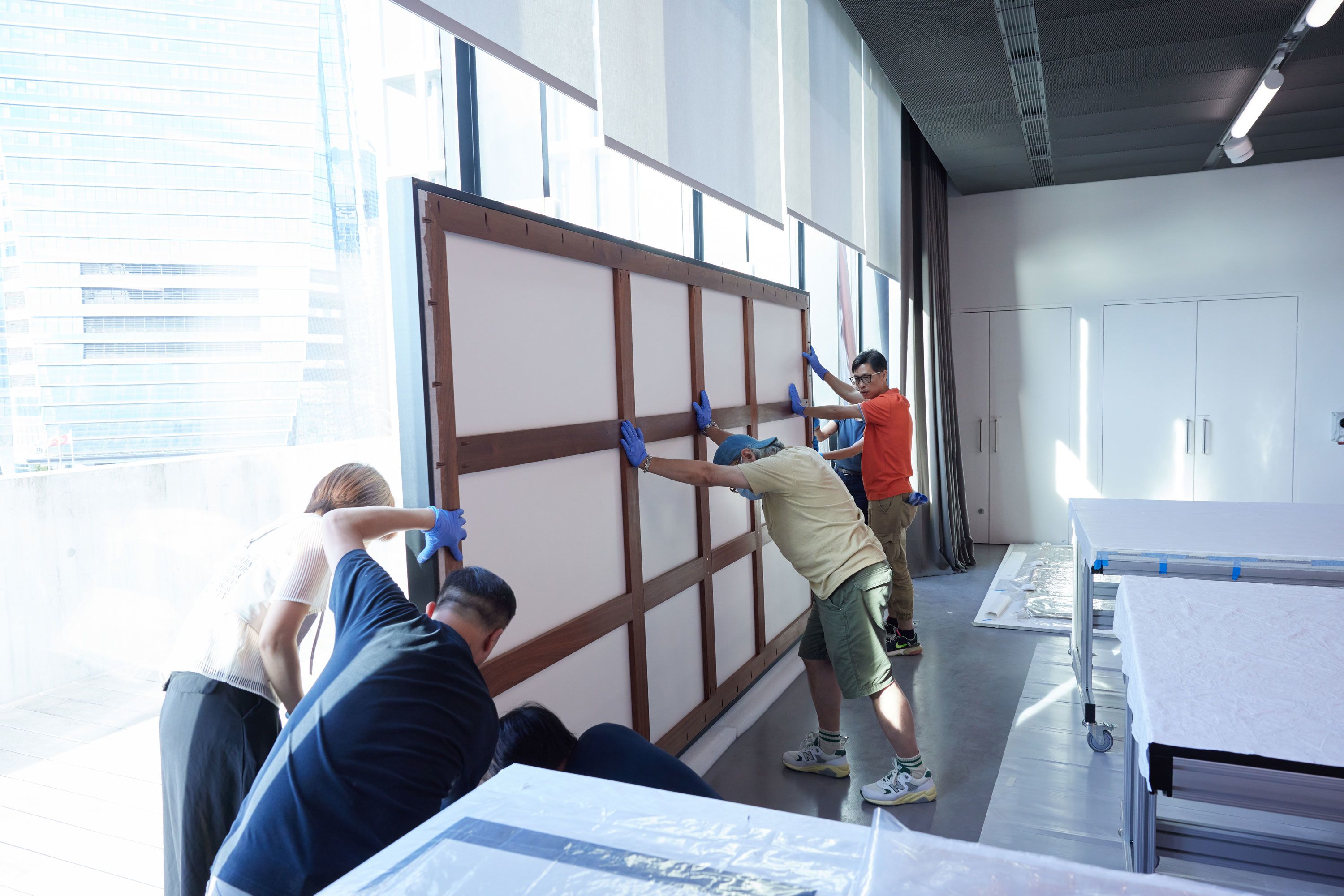
The frame and acrylic glazing is affixed to the backing board on which the artwork is mounted
The frame and acrylic glazing is affixed to the backing board on which the artwork is mounted
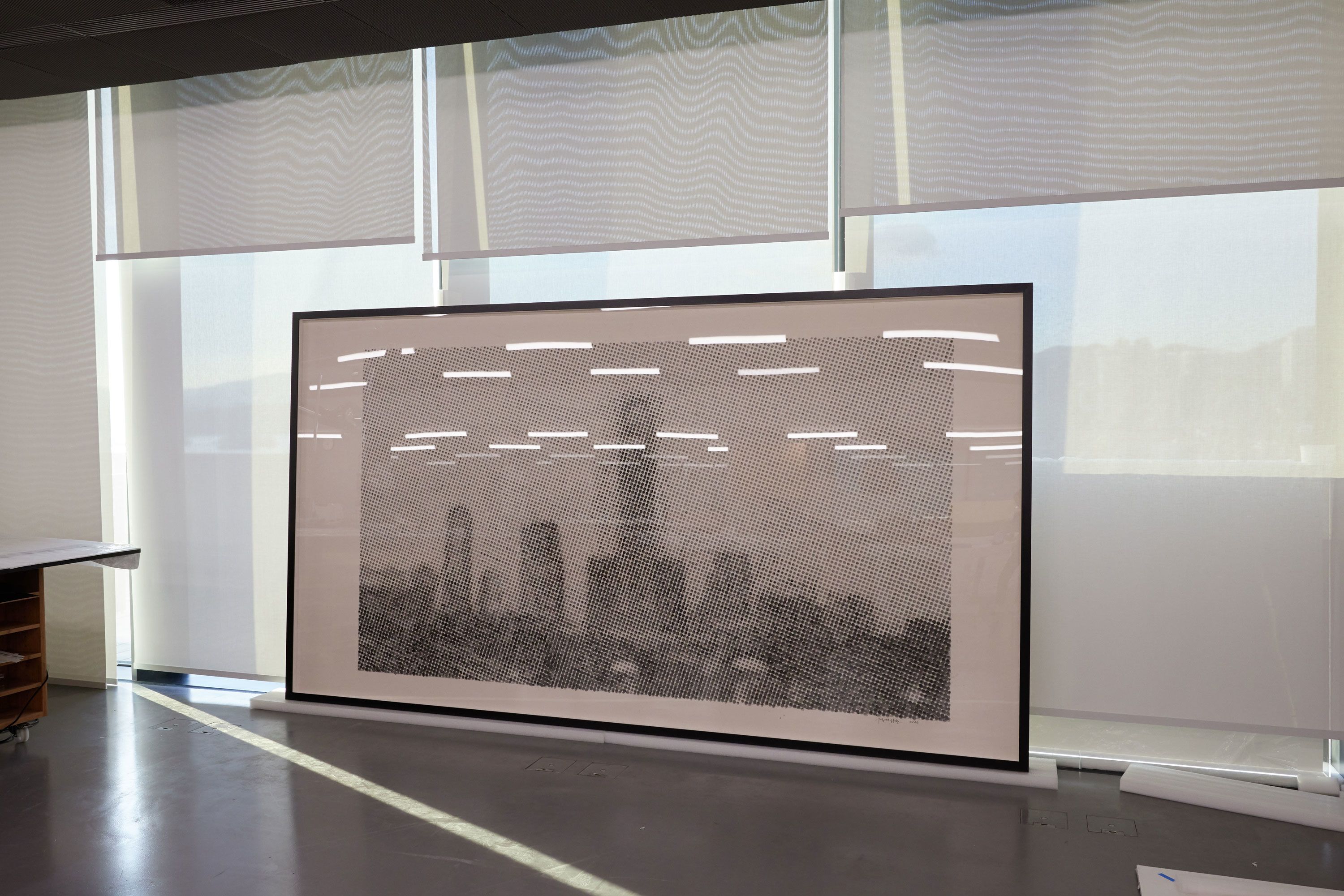
The framed artwork
The framed artwork
After the Exhibition
People are often curious about what happens to a frame after an exhibition. We view a custom-built frame, such as the oversized frame for Collectivity Memory–Guangzhou. Zhongxin Plaza, as a part of the artwork as well as a way to protect it, and so for this reason, the two go back into storage together.
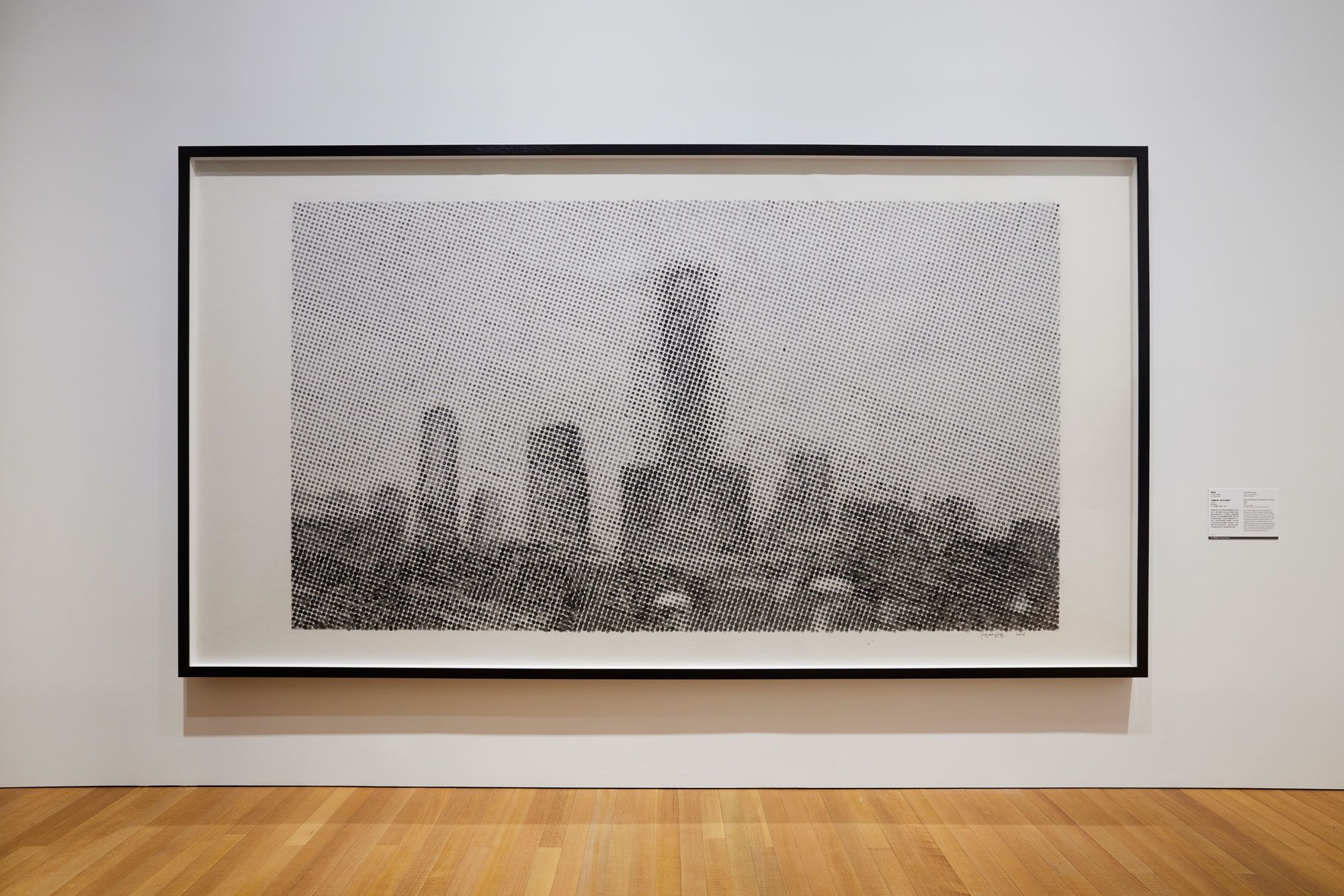
Installation view of Collectivity Memory–Guangzhou. Zhongxin Plaza in the Sigg Galleries
Installation view of Collectivity Memory–Guangzhou. Zhongxin Plaza in the Sigg Galleries
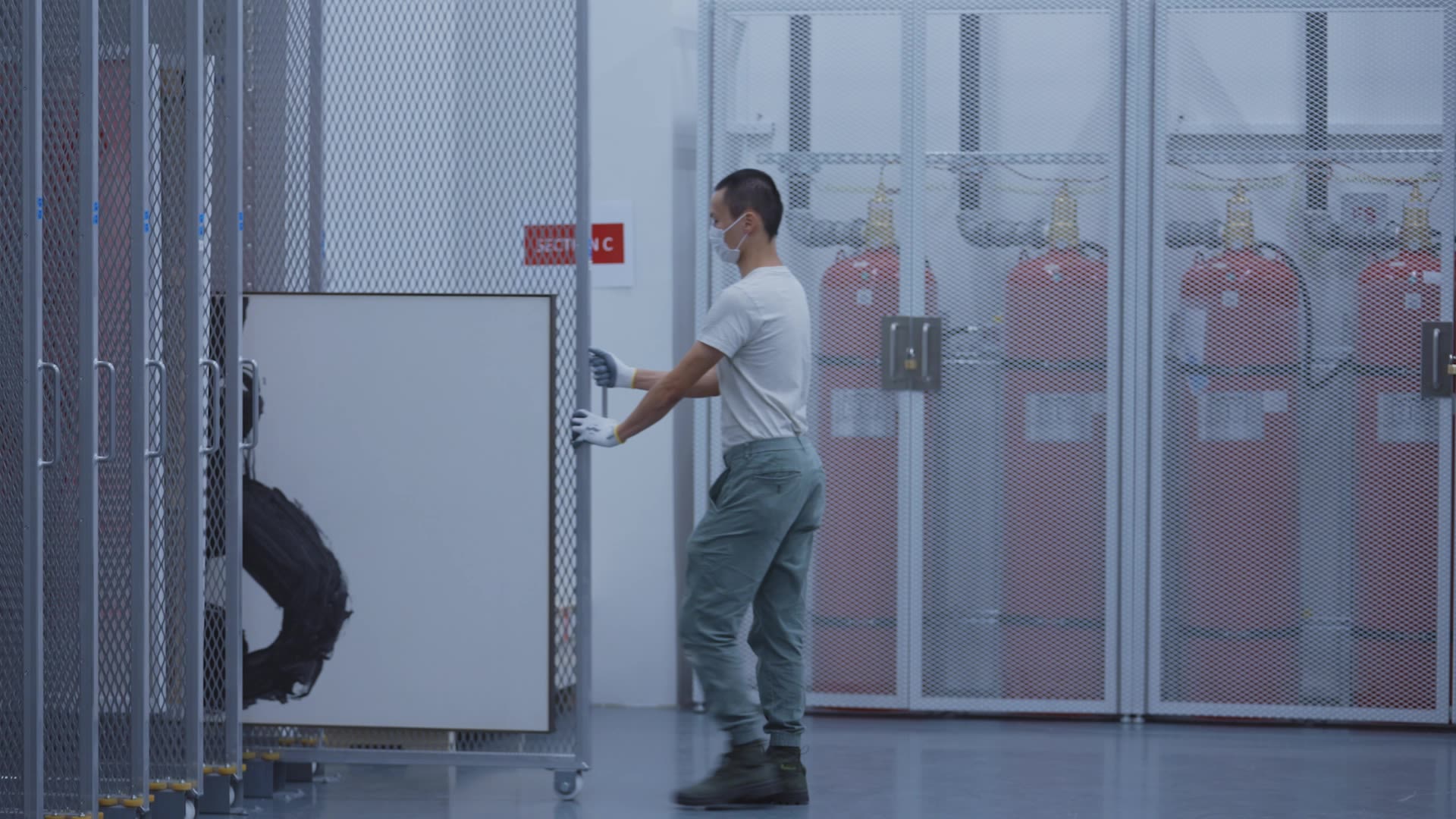
Considering the museum’s sustainable development and limited storage space, we are currently implementing a standardised frame-size scheme. What this means is that the conservation team has designed a series of frames in different sizes that will fit various two-dimensional artworks. Conservation technicians can remove these standardised frames from artworks after an exhibition ends and reuse them in upcoming shows. This scheme not only reduces the disposal of single-use materials, but it also allows us to store unframed artworks flat in the warehouse, which is more space efficient.

What Artwork Conservation Means to Me
I began learning about mounting and conservation because I wanted to protect my own artworks and present them in the best possible way. Today, I’m grateful to be able to use my expertise to help protect the works of other artists.

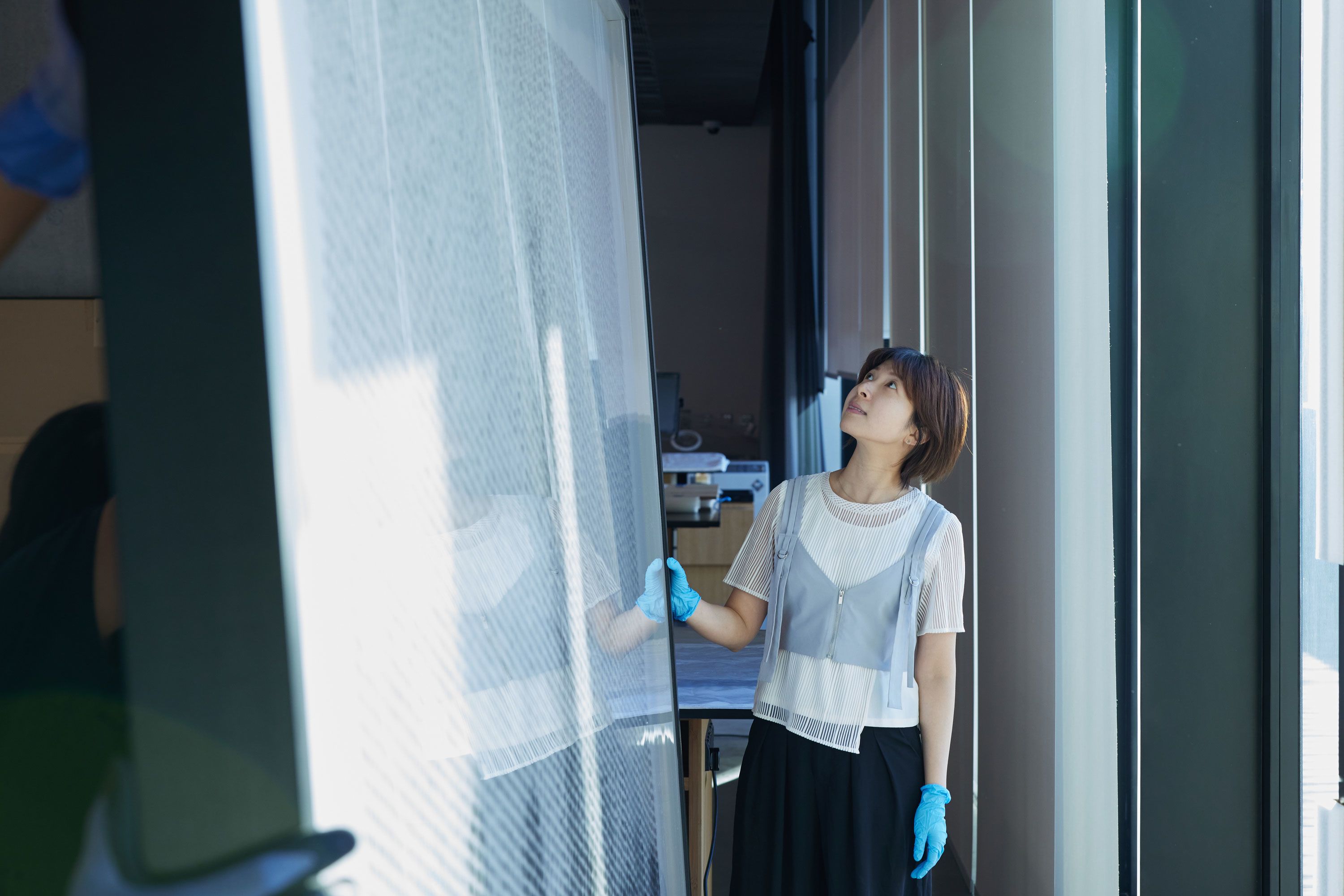
Conservator Suiying Zaffer Chan looks at the framed artwork
Conservator Suiying Zaffer Chan looks at the framed artwork
Any kind of conservation effort inevitably impacts an artwork. The conservator’s most important responsibility is to determine which conservation measures are necessary to stabilise the condition of a work and to identify potential risks that could affect the object’s longevity. It’s also essential to consider how the work will be exhibited and ensure that stakeholders have access to records detailing the artwork’s condition, exhibition history, and any conservation treatments it has undergone. For me, the true significance of conservation lies in preserving the layers of life and meaning that an artwork accumulates over time.
Credits
Produced by M+
Written by: Suiying Zaffer Chan
English editorial: Dorothy So
Chinese editorial: Amy Leung, Lap-wai Lam
Translation: Daniel Nieh
All photos: Dan Leung
Layout: Amy Leung
Special thanks: Manami Hori, Sally Hui, Sara A. Moy, Marta García Celma, Ling Law, Mimi Cheung, Chris Sullivan