
Past
Present
Past
Images and Insights from Ha Bik Chuen’s Kaleidoscopic Archive
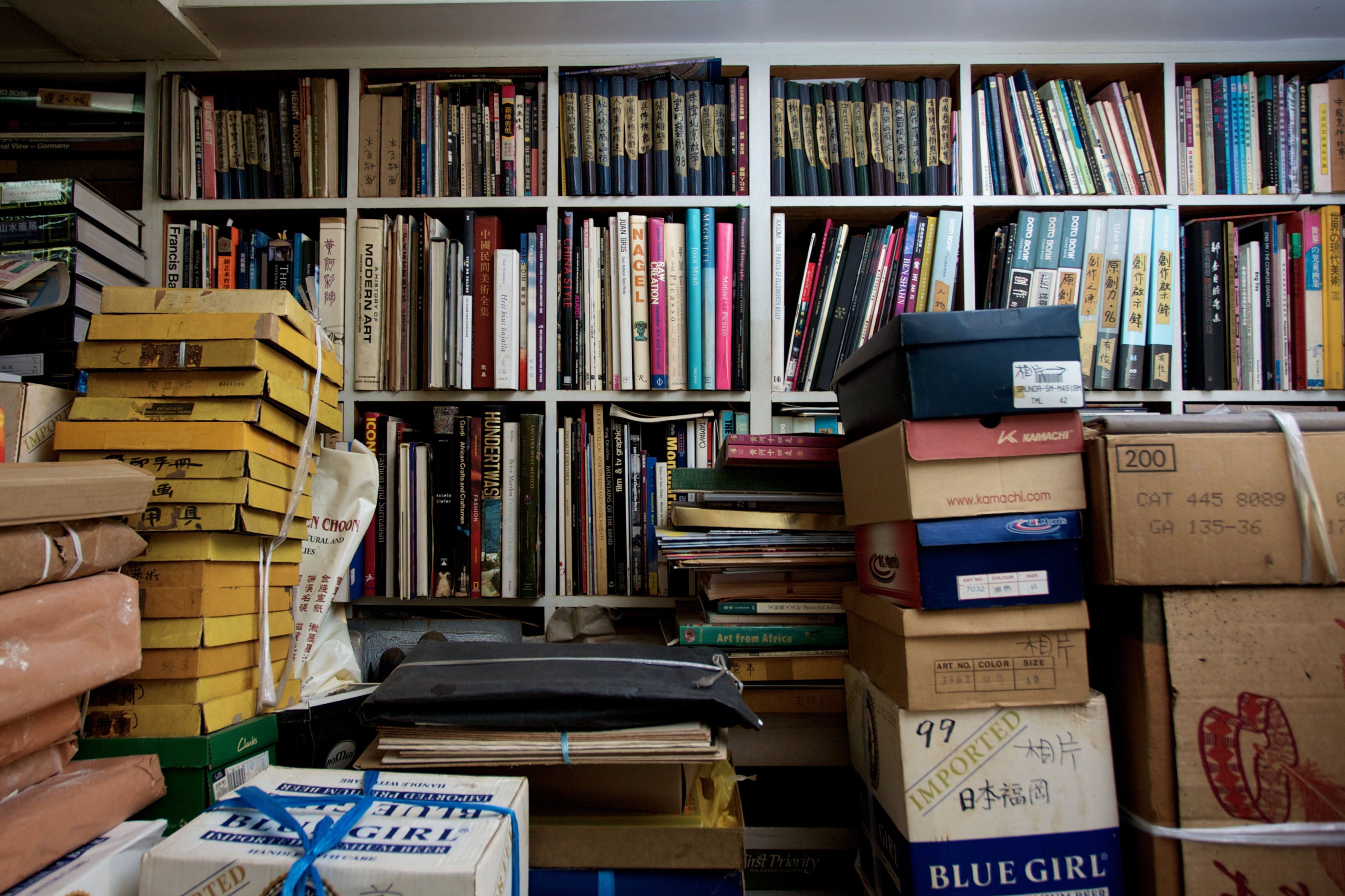

Ha Bik Chuen (1925–2009) was a sculptor, printmaker, and exhibition documenter who lived and worked in Hong Kong. As a self-taught artist in the mid-twentieth century—a time when information was not as pervasive and easily accessible as it is today—Ha collected materials from multiple sources as part of his practice. He embraced an inclusive approach in his collecting, which revealed his eagerness to learn and to think in new ways.

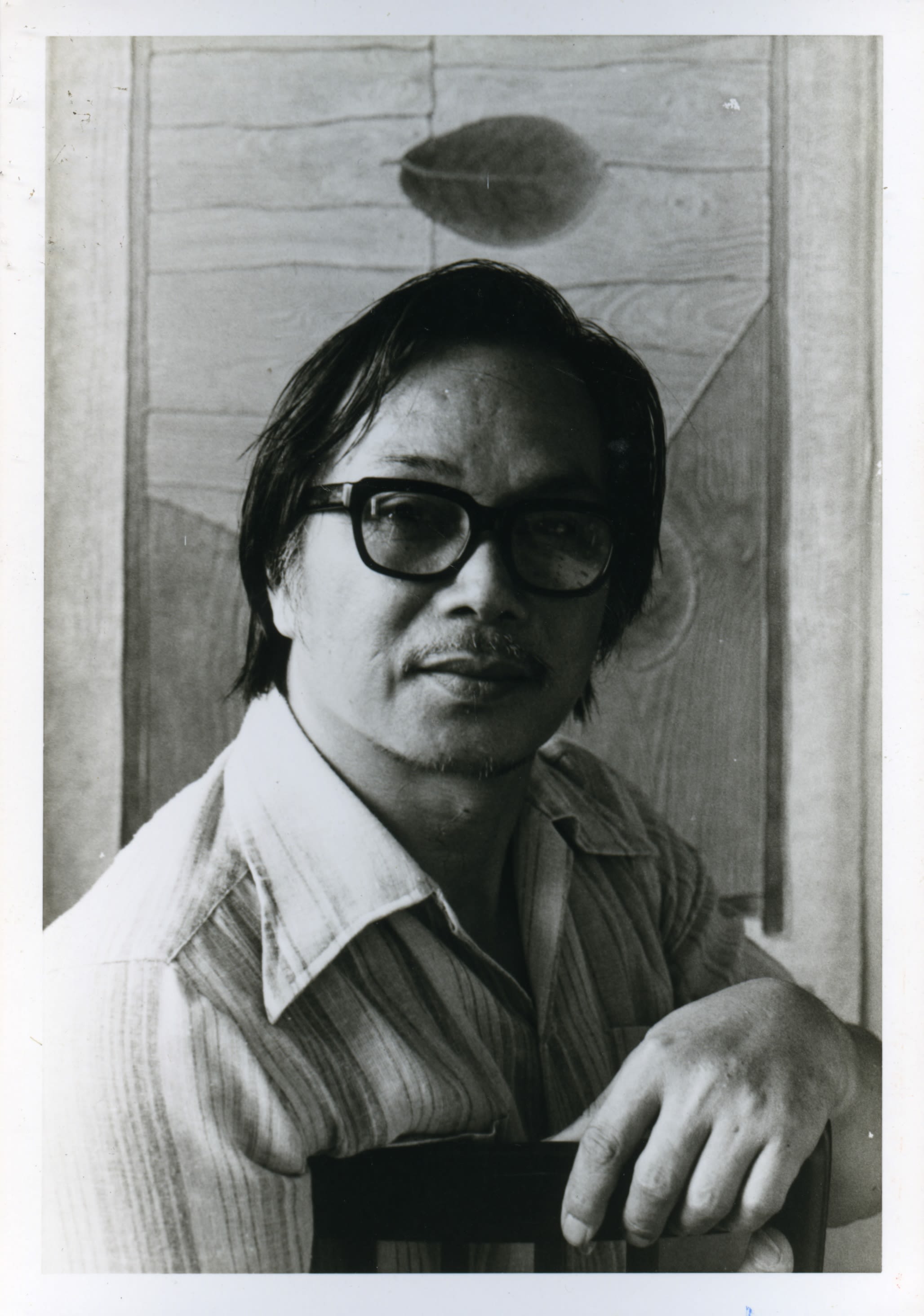
Portrait of Ha Bik Chuen, circa. 1980s
Portrait of Ha Bik Chuen, circa. 1980s
Ha stored, cut, arranged, and collaged collected materials into various forms in his studio which he dubbed as his ‘thinking studio’ in To Kwa Wan. This archive of materials has a rhizomatic structure that not only reflects Ha’s personal life and artistic practice but draws on the milieu of Hong Kong and the region he lived in to channel reflections on the past and its connection to the present.

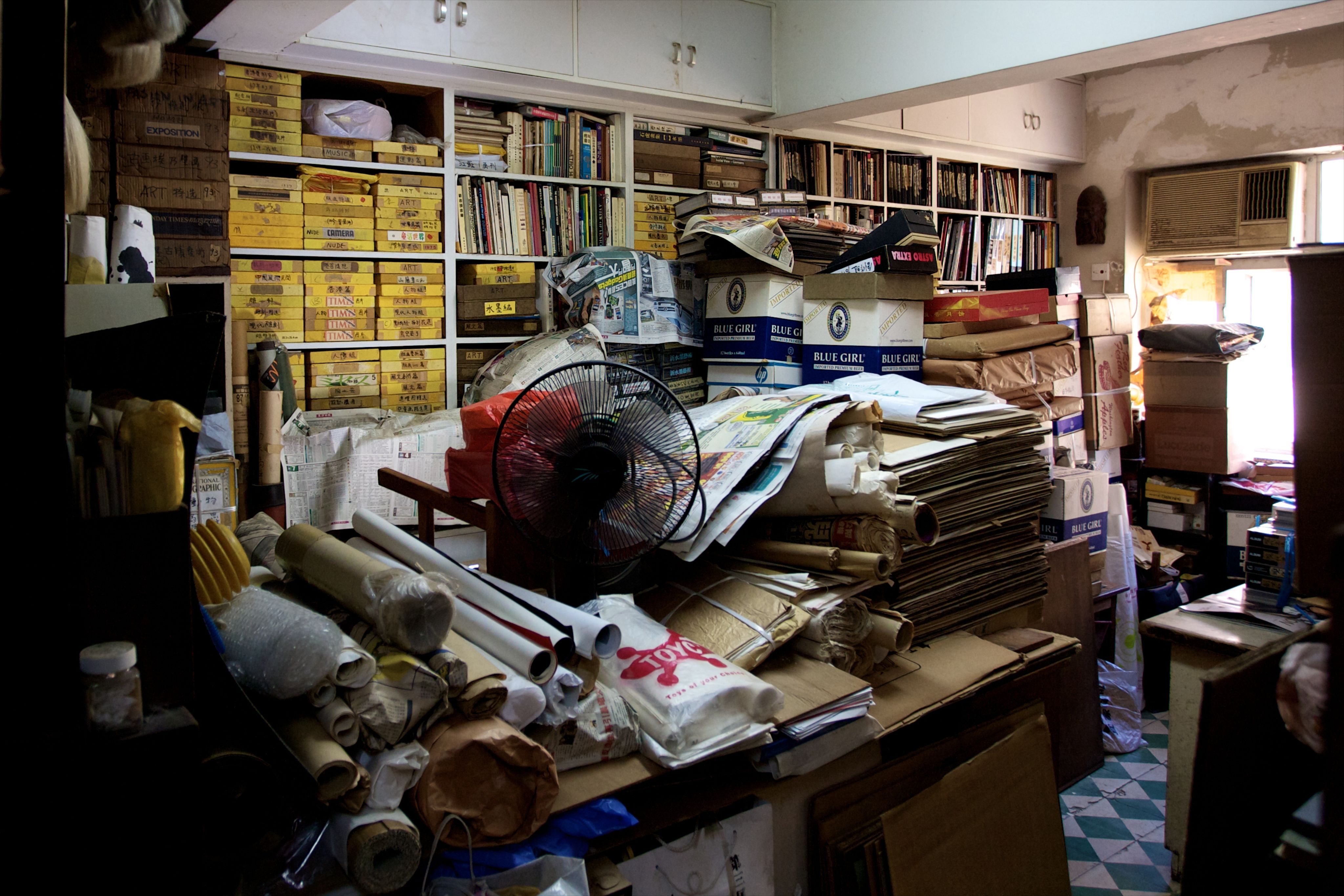

Ha Bik Chuen’s Studio in To Kwa Wan, Hong Kong, 2014
Ha Bik Chuen’s Studio in To Kwa Wan, Hong Kong, 2014

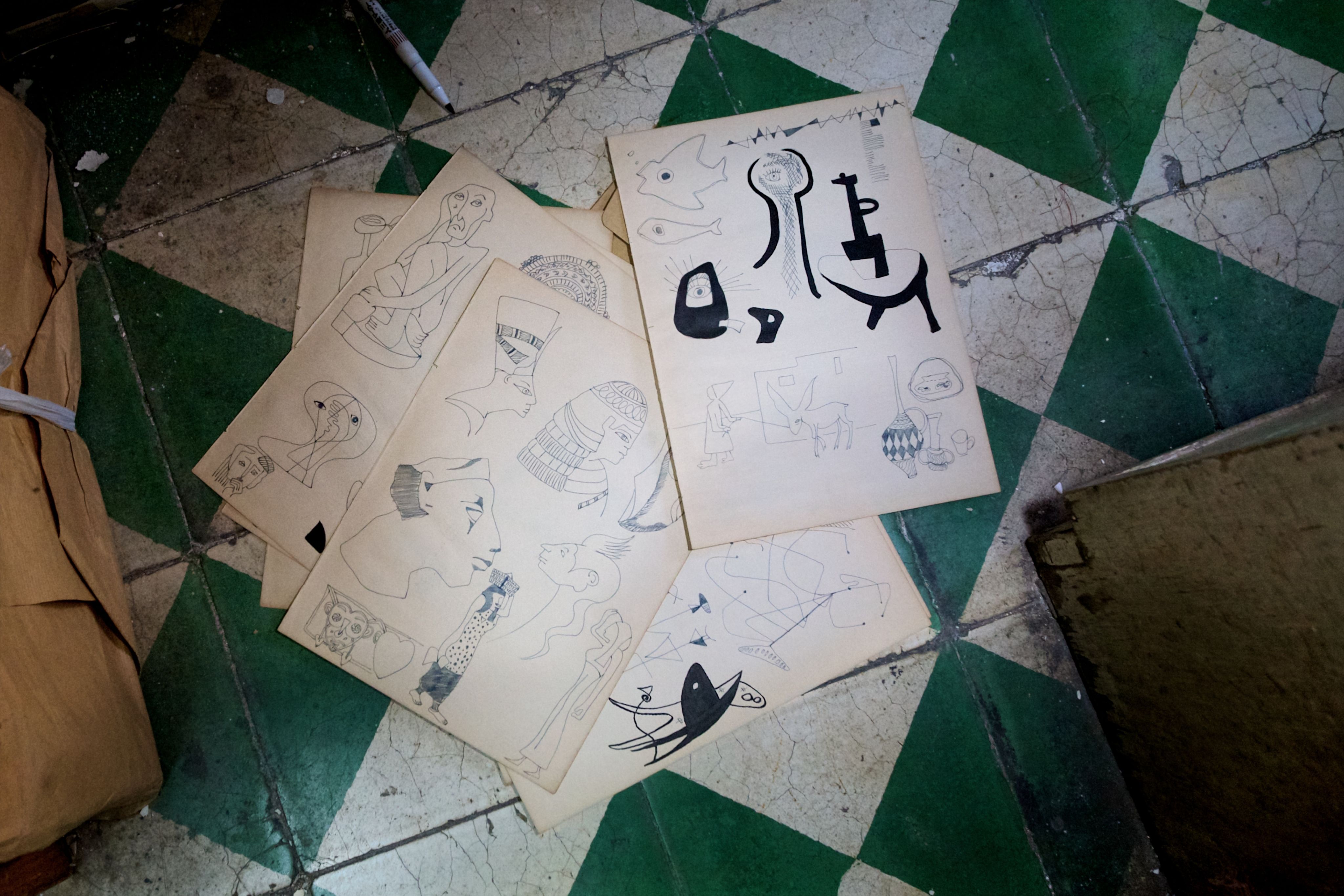
Between 2014 and 2021, the Asia Art Archive (AAA) selectively digitised parts of these materials to encourage research and collaboration, thus making Ha’s private collection available as a public archive.
In 2021, the Ha family donated a portion of the artist’s archive, including visual research materials, photographic documentation, and modified books, to the M+ Collections. Other materials from the archive can be found at the AAA and the Art History Resource Centre at The University of Hong Kong.
Moving of Ha’s collection from To Kwa Wan to Fo Tan, a new project space of Asia Art Archive back in 2016. Courtesy of Luke Casey
Moving of Ha’s collection from To Kwa Wan to Fo Tan, a new project space of Asia Art Archive back in 2016. Courtesy of Luke Casey
Spanning the 1960s to the 2000s, the materials donated to M+ provide multiple entry points for research into and reimagining Hong Kong, its art and visual cultural histories, and its relationship to the world. They also expand upon Ha’s photographic documentation, which offers his personal perspective on the city’s art scene and its development. Meanwhile, his collage or modified books resonate with Ha’s artistic practice of assembling found objects and materials to transcend their conventional connotations, discern changes in society, and offer reflections on global affairs.
Kodak Boxes
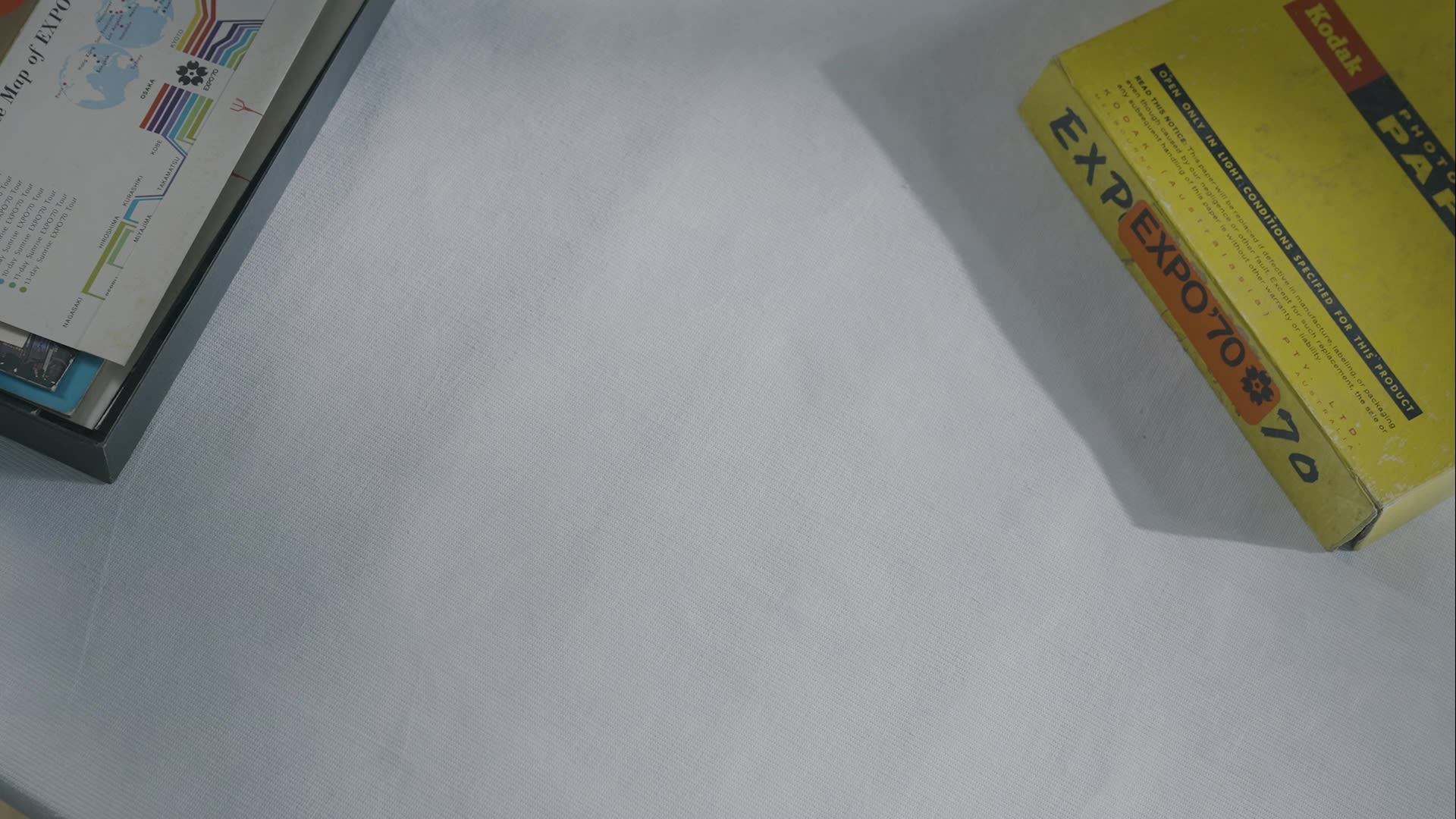

Like cabinets of curiosities, artists’ collected materials provide social and cultural insights into certain periods in their lives by visualising and displaying their kaleidoscopic interests and desires.

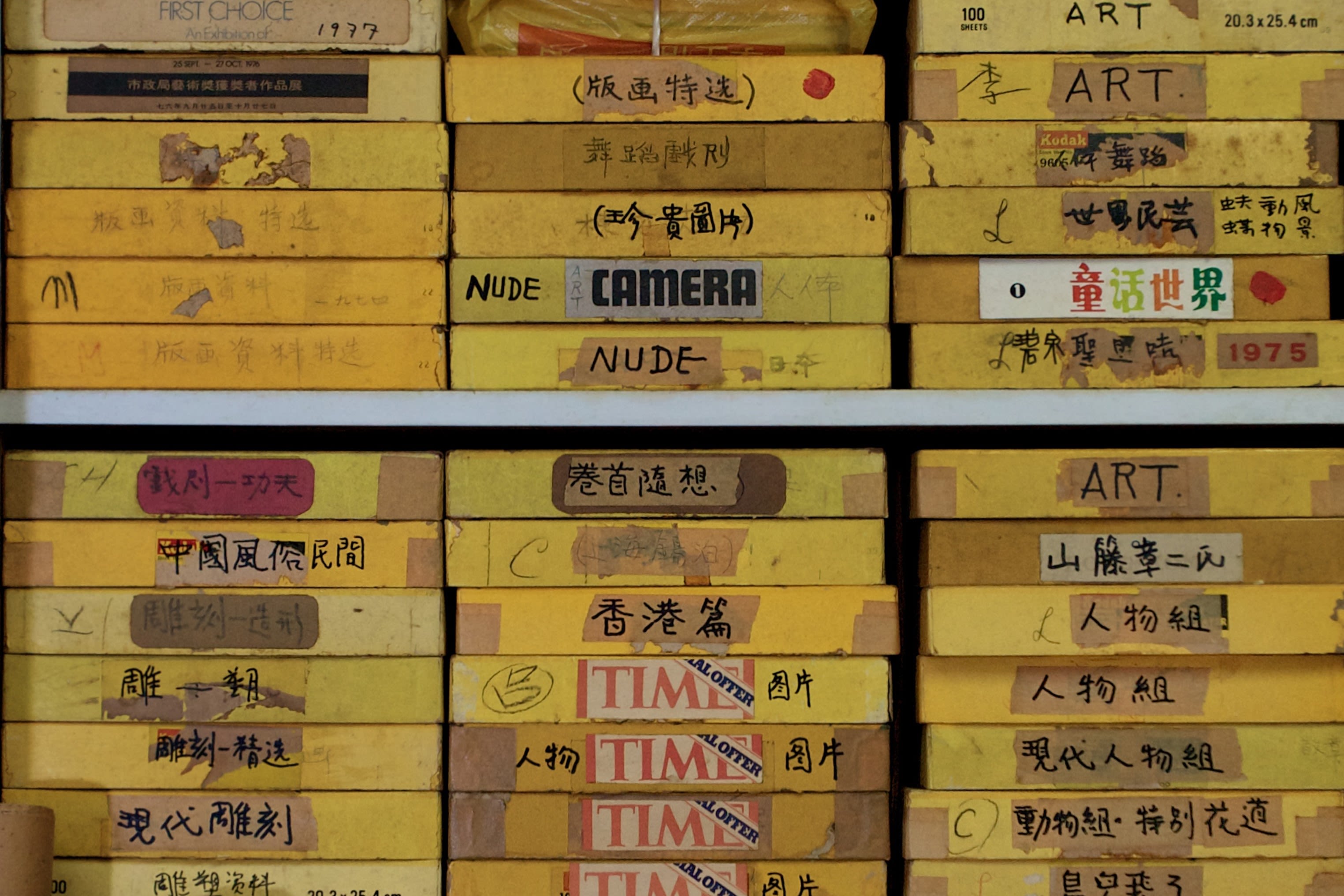
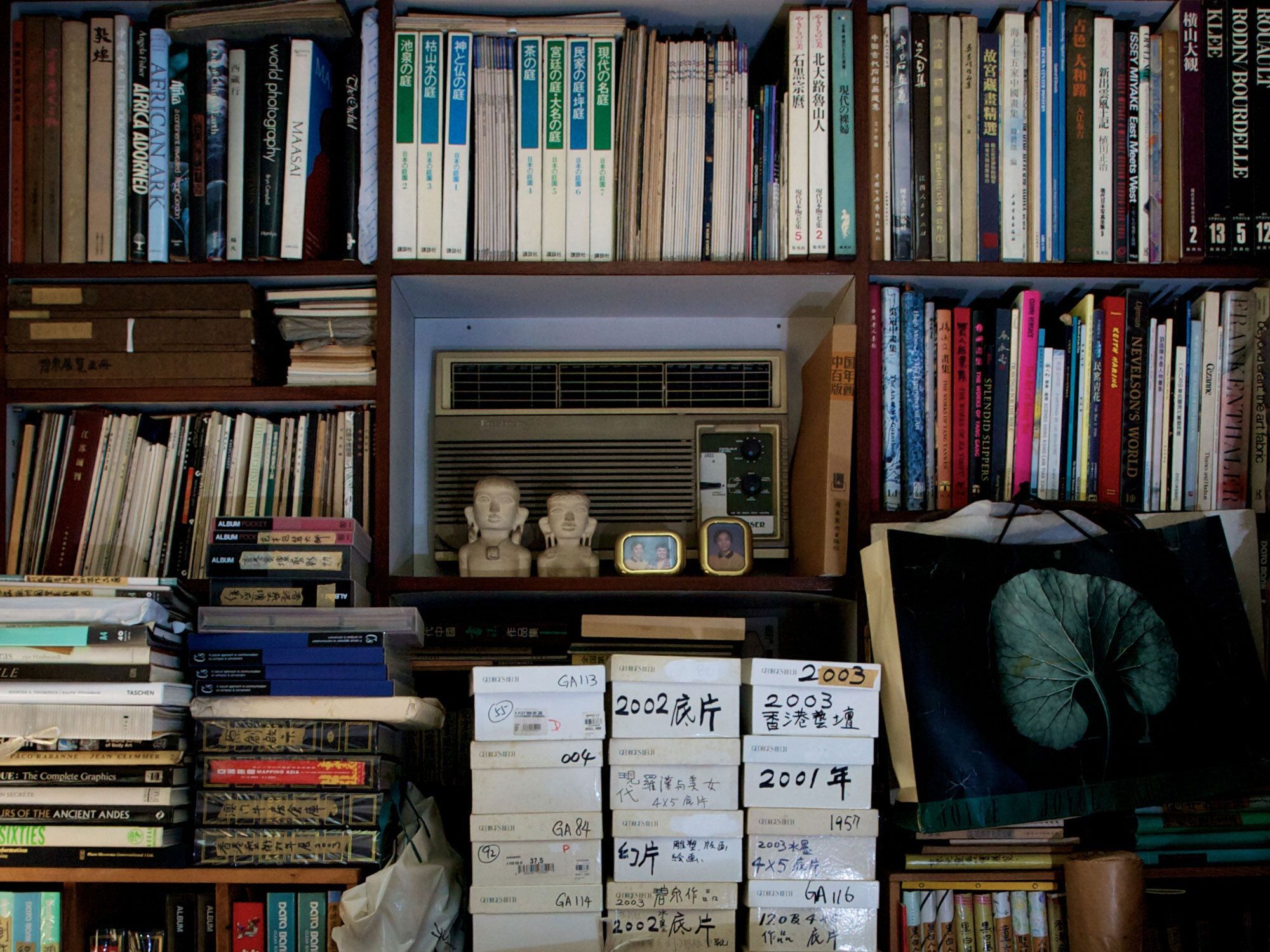
Bookshelves in Ha Bik Chuen’s studio in To Kwa Wan, Hong Kong, 2014
Bookshelves in Ha Bik Chuen’s studio in To Kwa Wan, Hong Kong, 2014
Ha’s collection includes clippings and other ephemera stored in more than 300 yellow Kodak boxes and other cardboard containers. These images, many cut out from magazines and newspapers, were primary sources for Ha’s self-learning. The boxes occupied a conspicuous position in his To Kwa Wan studio.
Ha gave names to many of his boxes, and the titles were often either descriptive or conceptual. For example, one of the boxes is bilingually labelled ‘Bird Flew Away’ and contains diverse images related to birds, the sky, or the cosmos.

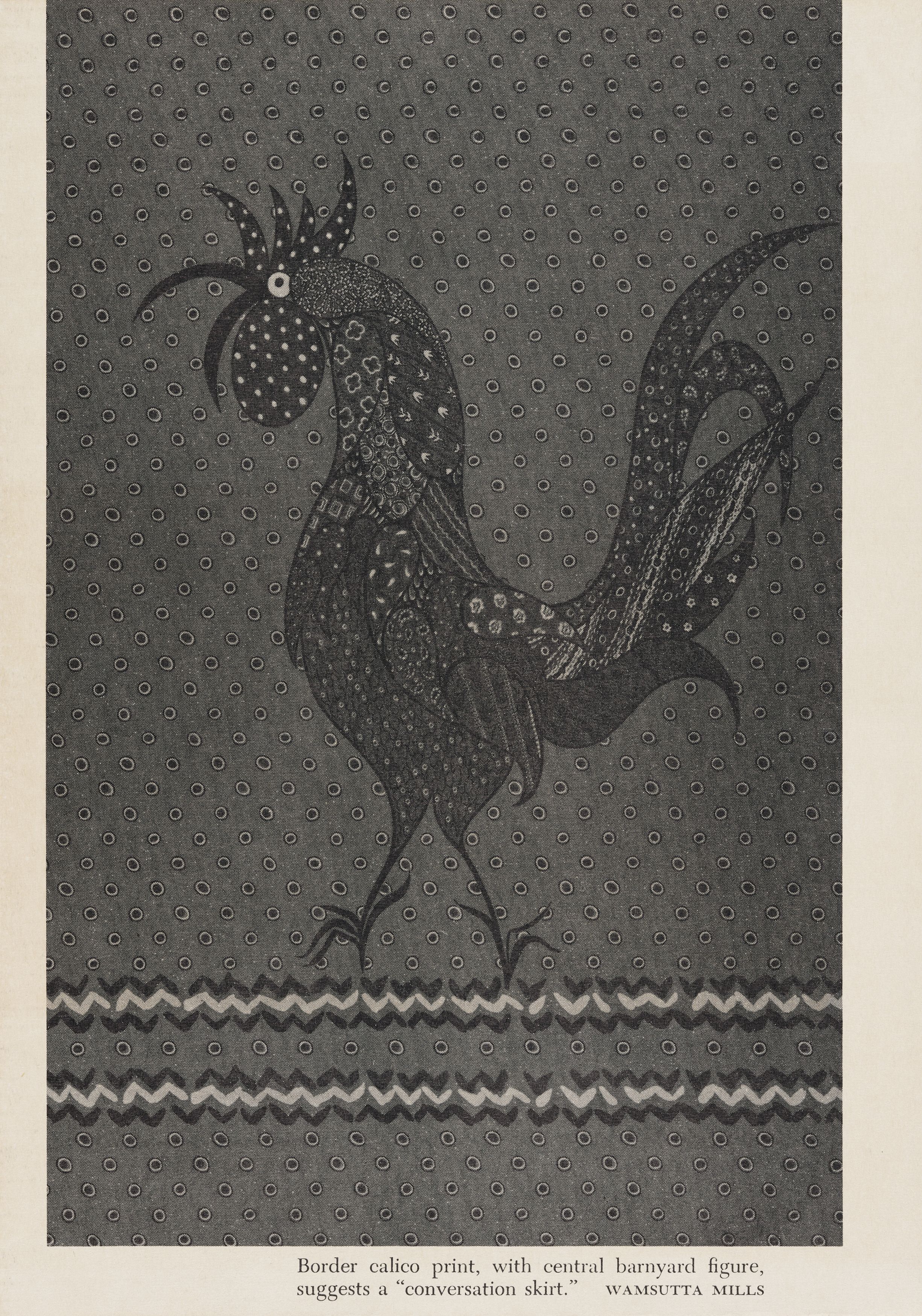
One of the cut-out images from the box of ‘Bird Flew Away’
One of the cut-out images from the box of ‘Bird Flew Away’
Another box is labelled ‘Chapter on Hong Kong’ with ‘1977’ marked separately. This box contains images and motifs related to the city Ha called home. Despite the year marked on the box, it contains materials from the 1960s to the 1990s.
Images of demolished landmarks or architectural features can be found in this ‘Chapter on Hong Kong’ box. These pictures, including old-style public housing and the Jumbo floating restaurant, often act as symbolic images of the city.

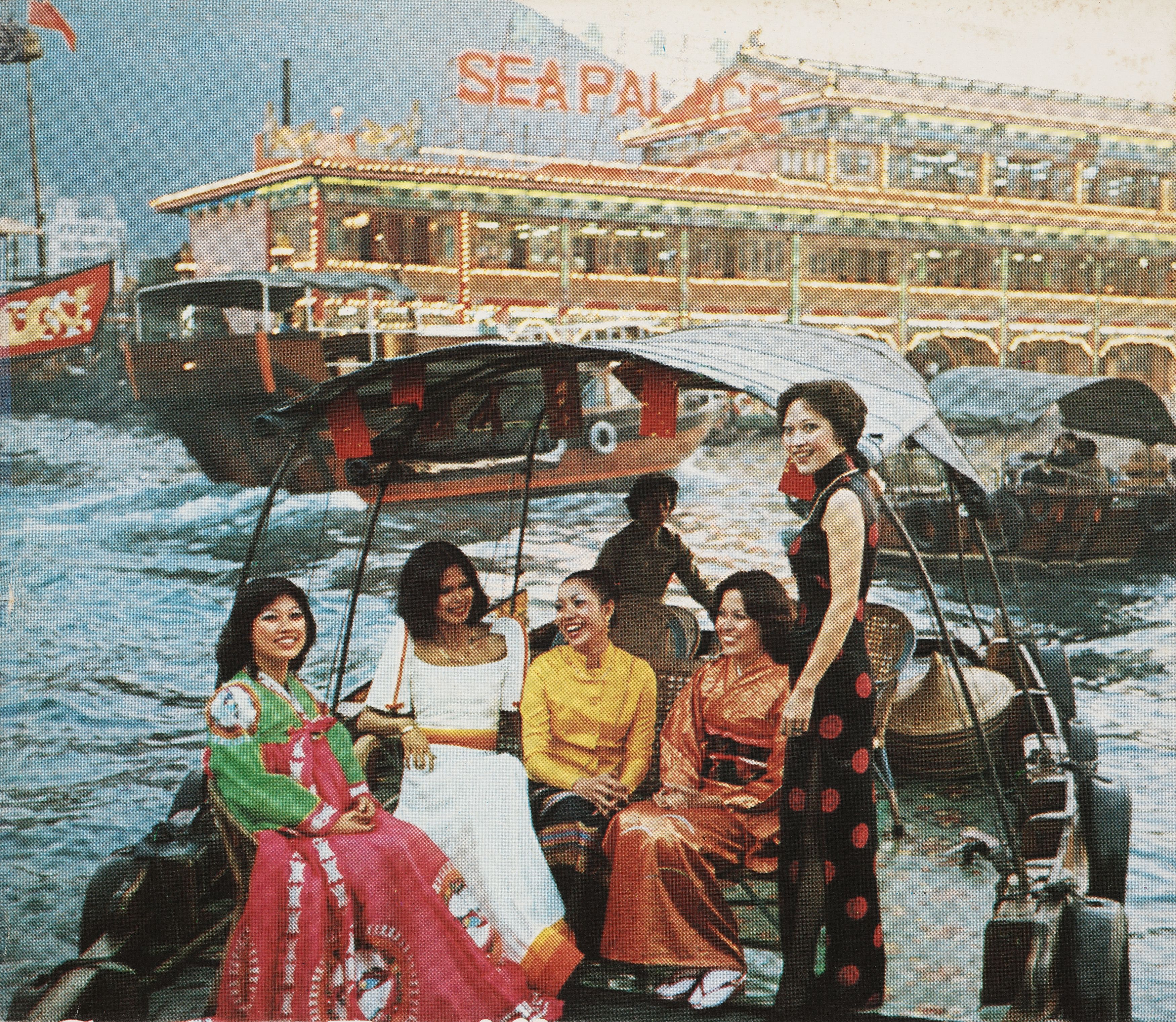
One of the cut-out images in the box of ‘Chapter on Hong Kong’, showing the Sea Palace (renamed as Jumbo Palace in 1991) in the 1970s
One of the cut-out images in the box of ‘Chapter on Hong Kong’, showing the Sea Palace (renamed as Jumbo Palace in 1991) in the 1970s
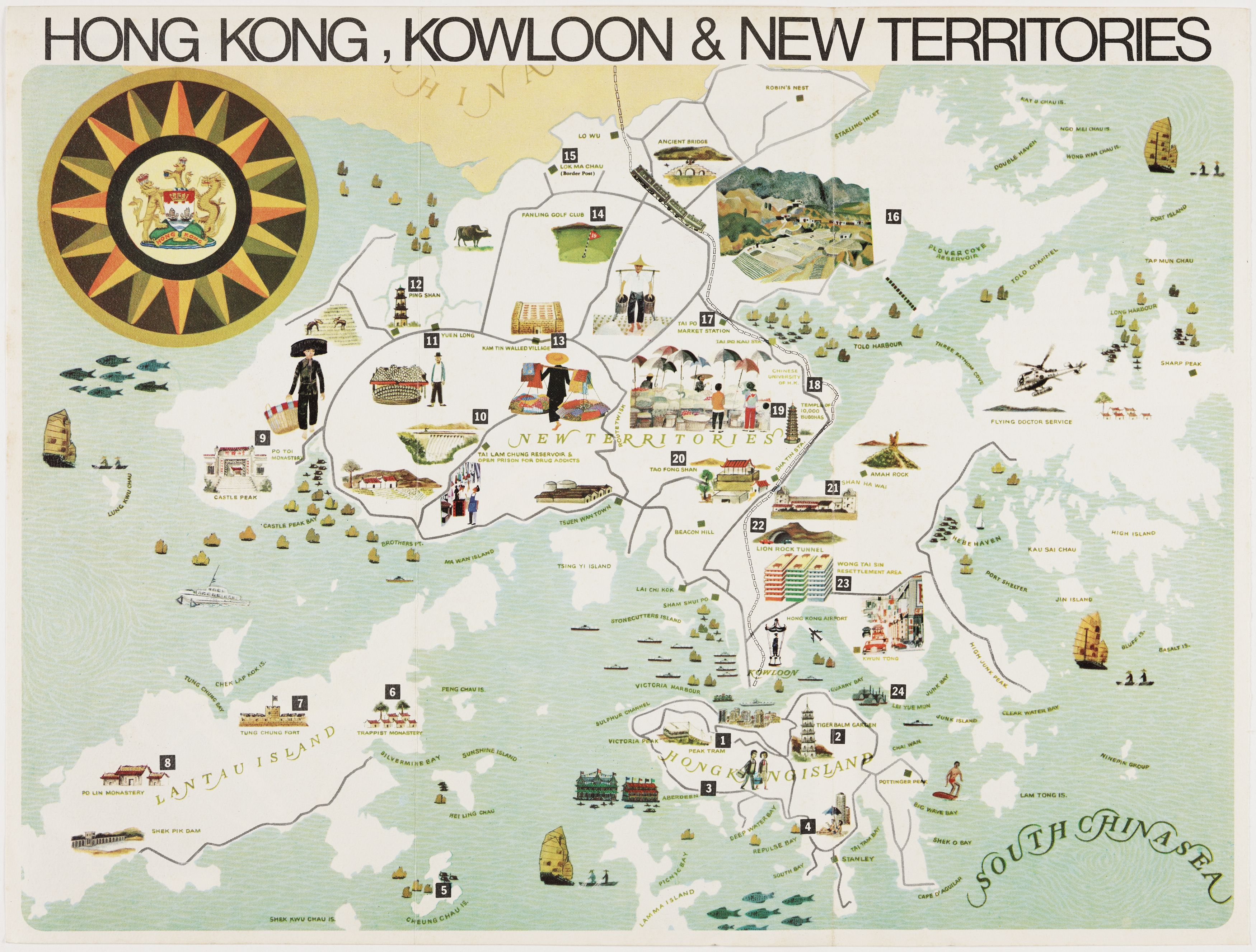
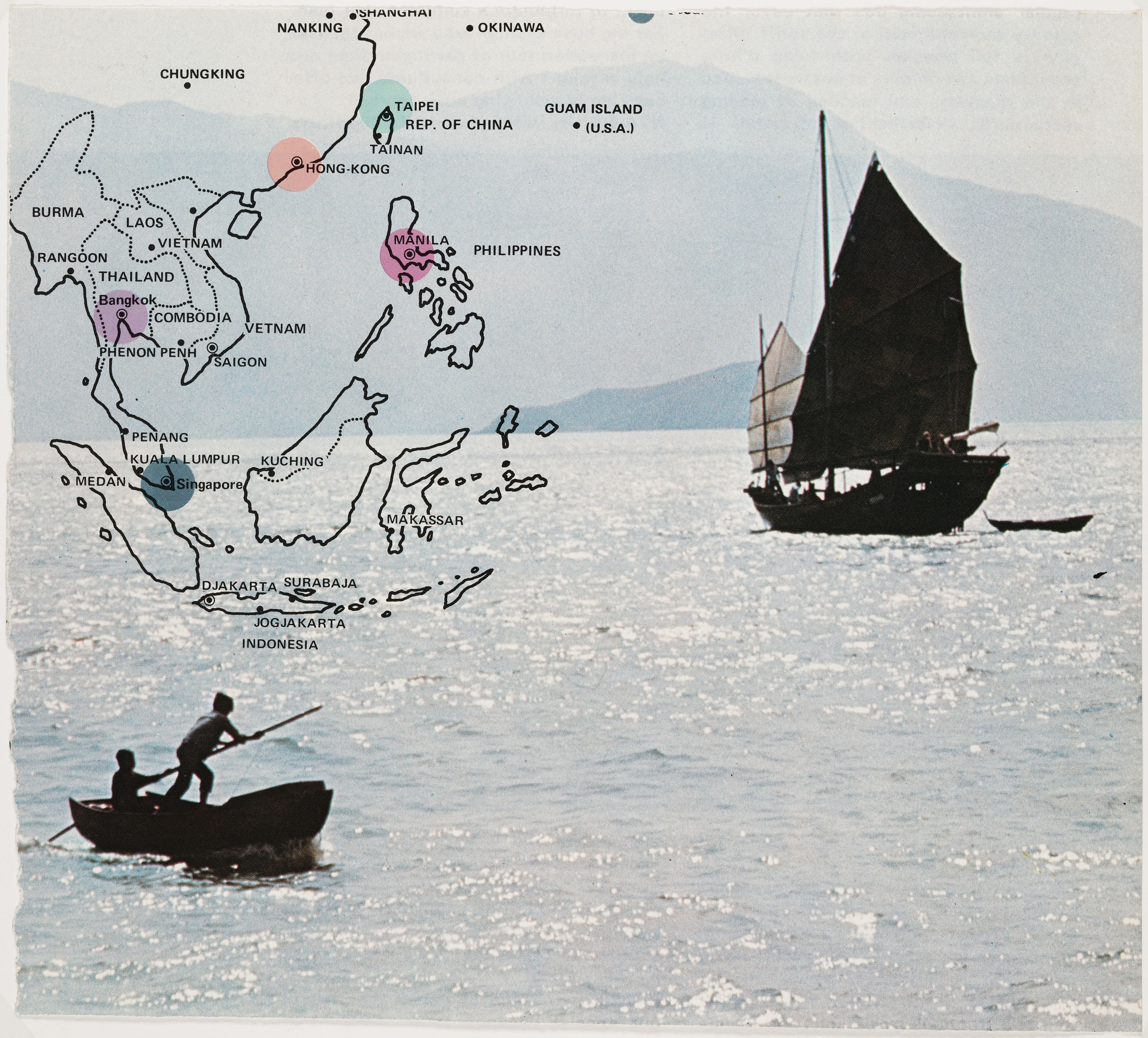
The box also contains images of junk boats, another iconic representation of the city. These pictures reflect the established narrative of Hong Kong’s transformation from a fishing village to an international financial centre. The images of junk boats in Ha’s box, however, also sail beyond this story, as their diverse sources—some reflecting the context of Hong Kong, others associated with Southeast Asia—revealing a multicultural diversity that connects Hong Kong to its surrounding regions.

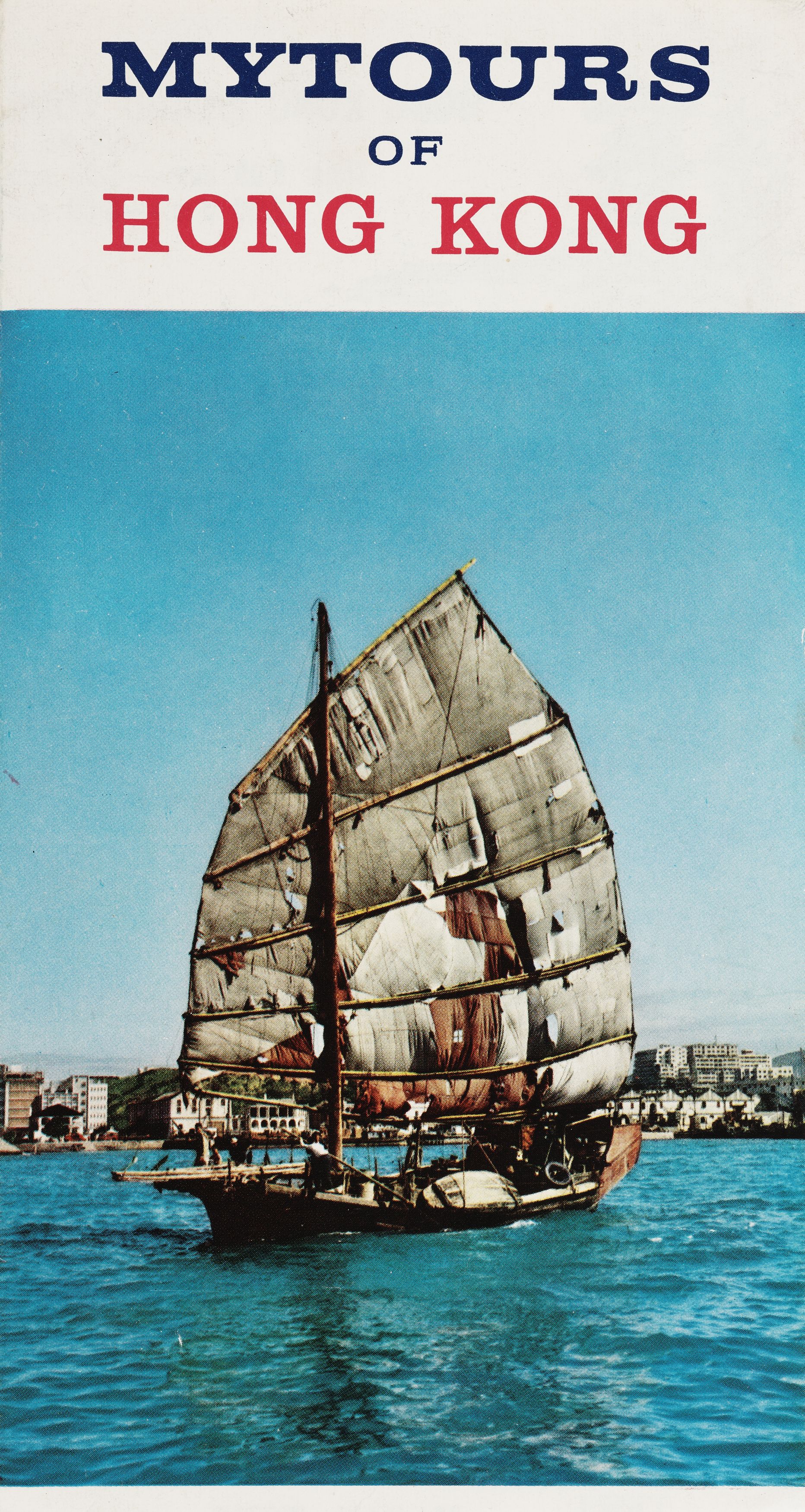

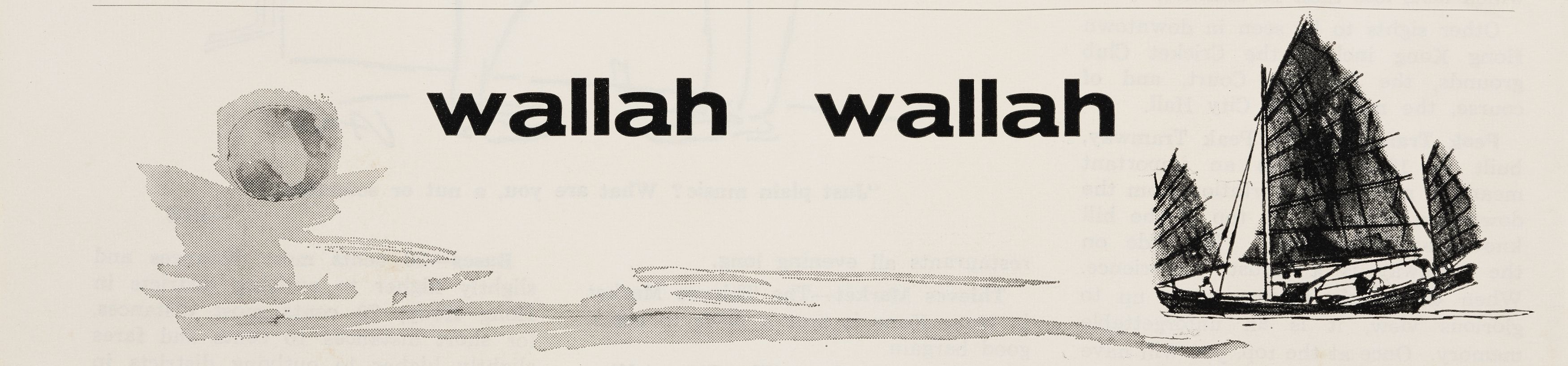

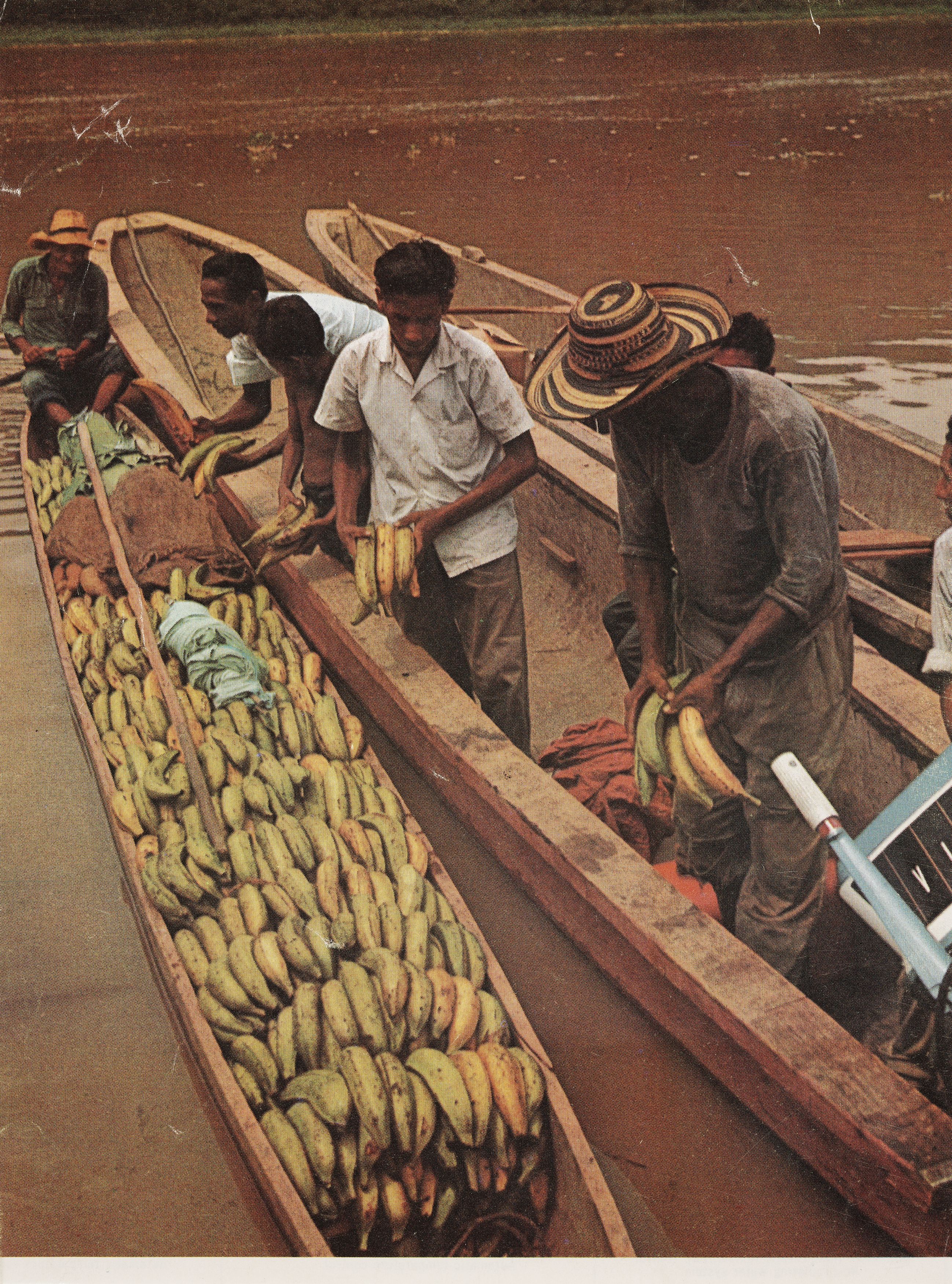

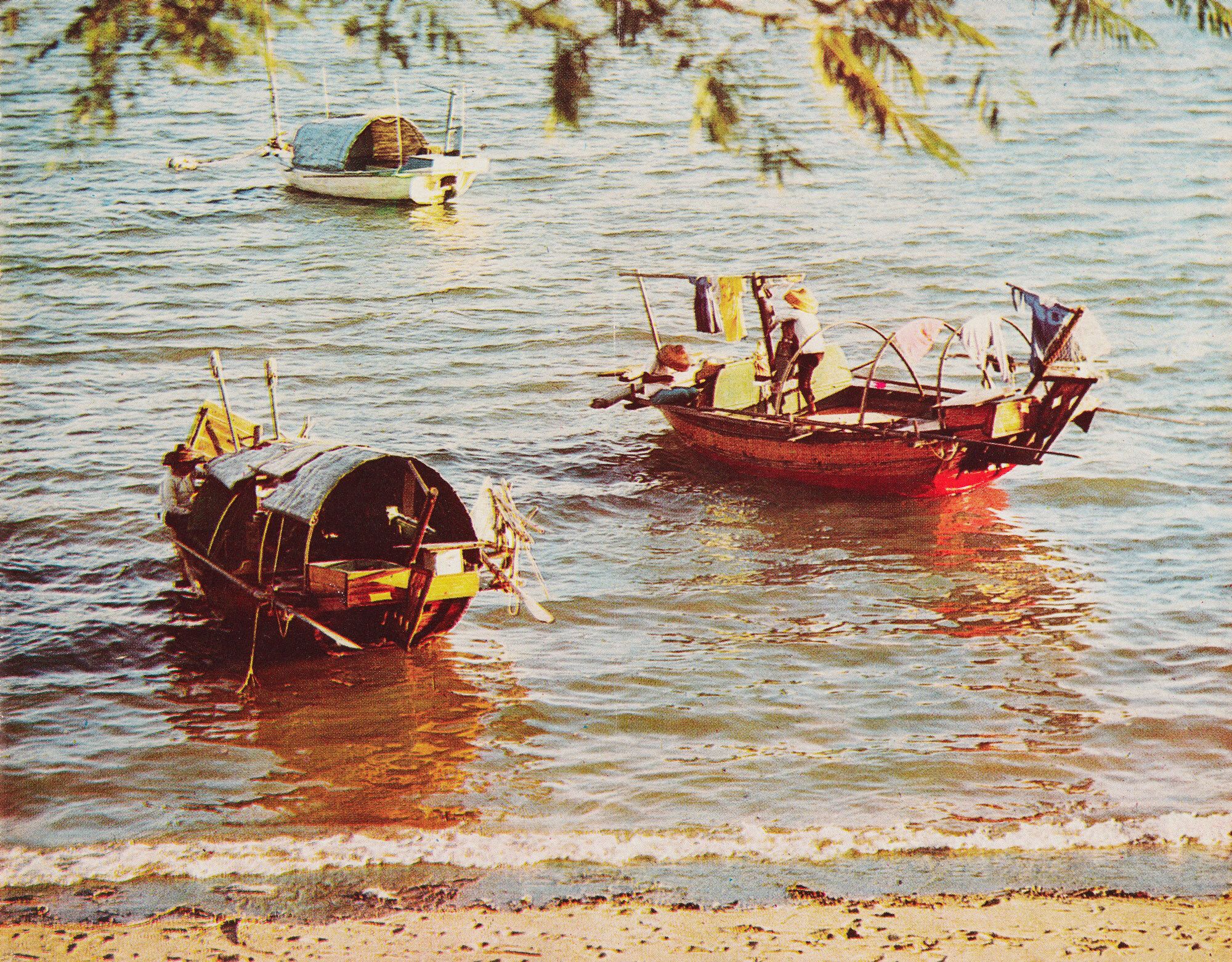
Pamphlet of Hong Kong tour and cut-out images from the box of ‘Chapter of Hong Kong’
Pamphlet of Hong Kong tour and cut-out images from the box of ‘Chapter of Hong Kong’
Ha’s boxes demonstrate a whimsical approach to sorting materials that was mostly intuitive but also encapsulated a capacity for rational explanation. His method offers a descriptive anchor while also allowing for broader and deeper interpretations.
Connecting to Other Archives at M+
The ‘Hong Kong Chapter’ box also dialogues with other archives and works in the M+ Collections. For example, the illustration by Dong Kingman, the Expo '70 issue of The Asia Magazine (dated 1 March 1970) on EXPO 70, and the annual report of Hongkong Land (1974) offer wider contexts for the Henry Steiner graphic design project archives at M+.
Both Kingman and Steiner, with their backgrounds marked by migration, practised art and design that bridged Eastern and Western ideas, philosophies and aesthetics, ultimately reflecting a universal human experience.

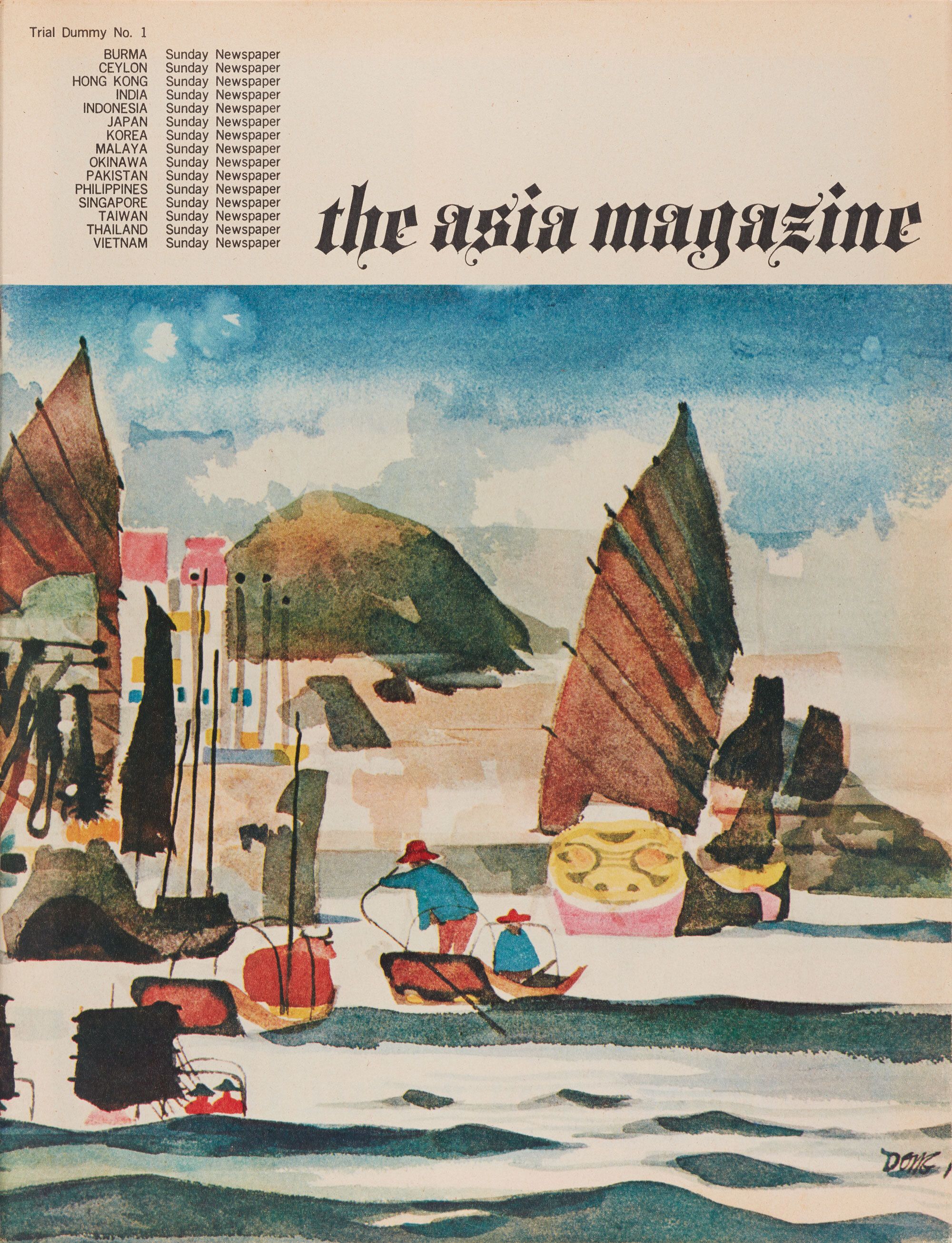
Cover of the trial issue of The Asia Magazine in the 1960s from the box of ‘Chapter of Hong Kong’
Cover of the trial issue of The Asia Magazine in the 1960s from the box of ‘Chapter of Hong Kong’
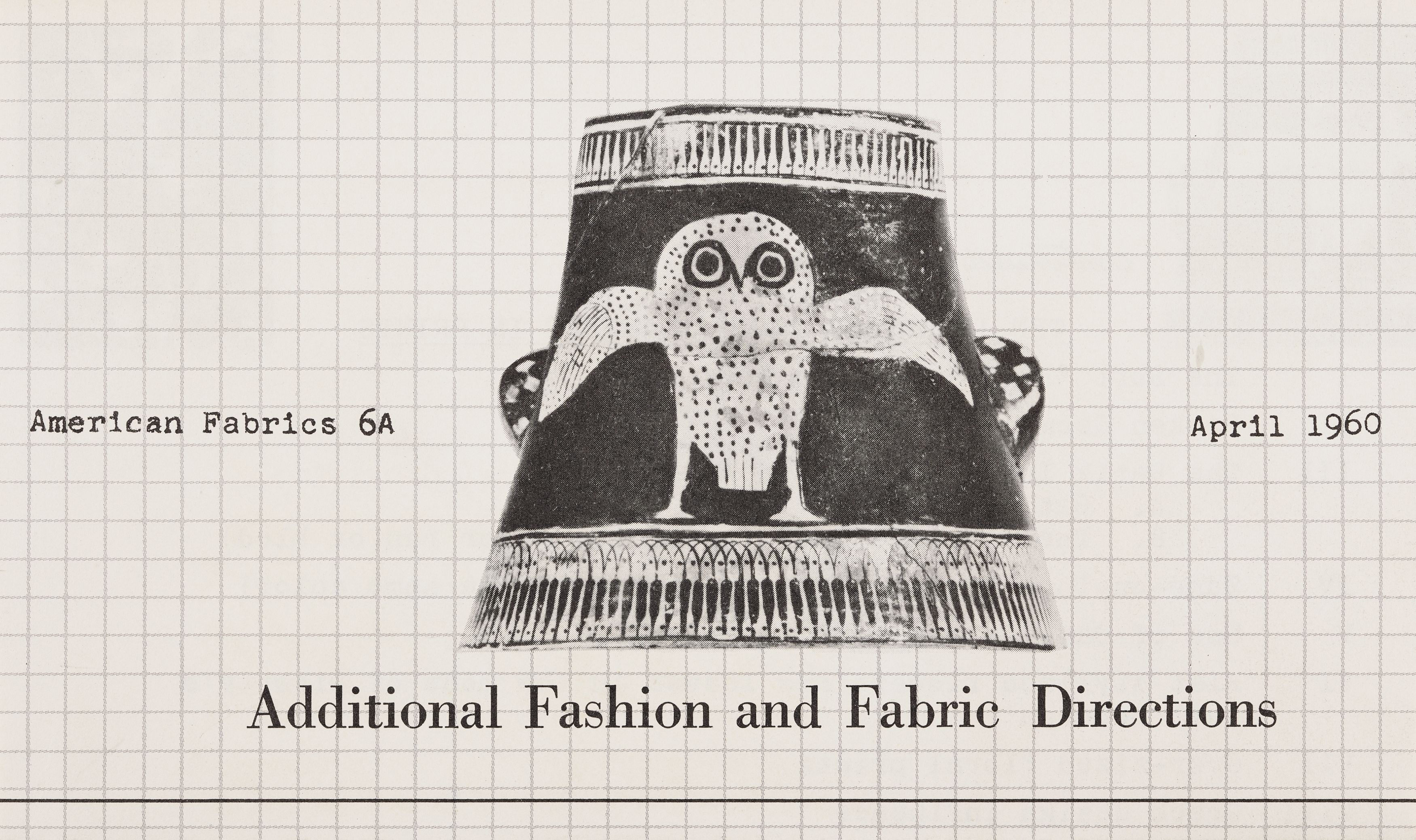
Steiner came to Hong Kong from the United States to work as the design director of The Asia Magazine in the early 1960s. The trajectory of Steiner’s creative vision coincided with some of Hong Kong’s most significant historical events. Based in Hong Kong, printed in Japan, and with staff from various parts of Southeast Asia, The Asia Magazine reflected Asia’s global significance during the Cold War era.
Steiner also designed the annual reports for property developer Hongkong Land in the 1960s and 1970s. Its 1964 annual report features a bird’s-eye-view of buildings in Central to reflect Hongkong Land’s role in developing the bustling business district. This annual report is also included in Ha’s ‘Hong Kong Chapter’ box.

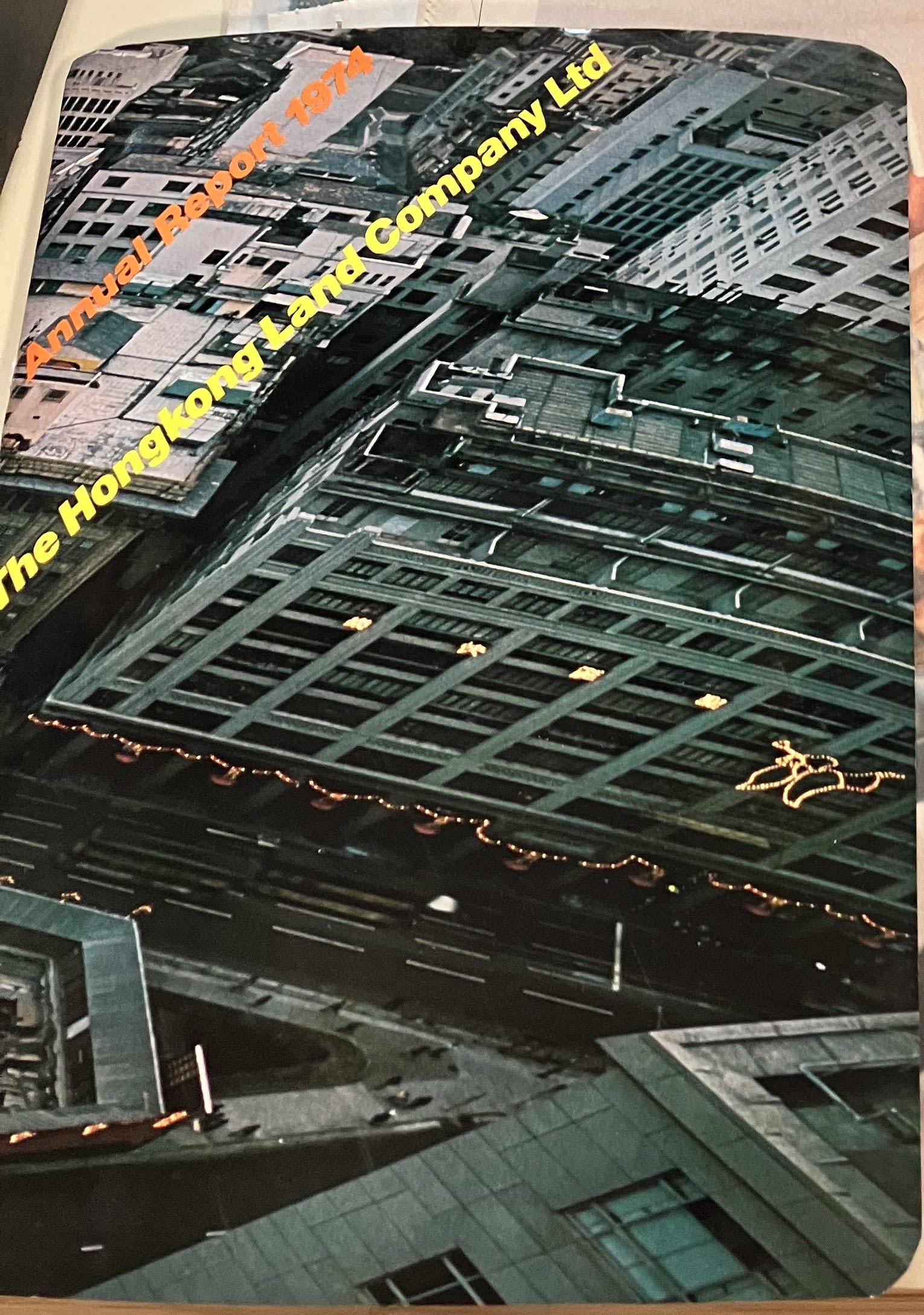
Cover of the annual report 1974 of Hongkong Land from the box of ‘Chapter of Hong Kong’, designed by Henry Steiner
Cover of the annual report 1974 of Hongkong Land from the box of ‘Chapter of Hong Kong’, designed by Henry Steiner
Connecting to the World
Besides revealing the historical and sociopolitical position of Hong Kong, Ha’s research materials also include images that map the city’s connections to other parts of the region within a global context.
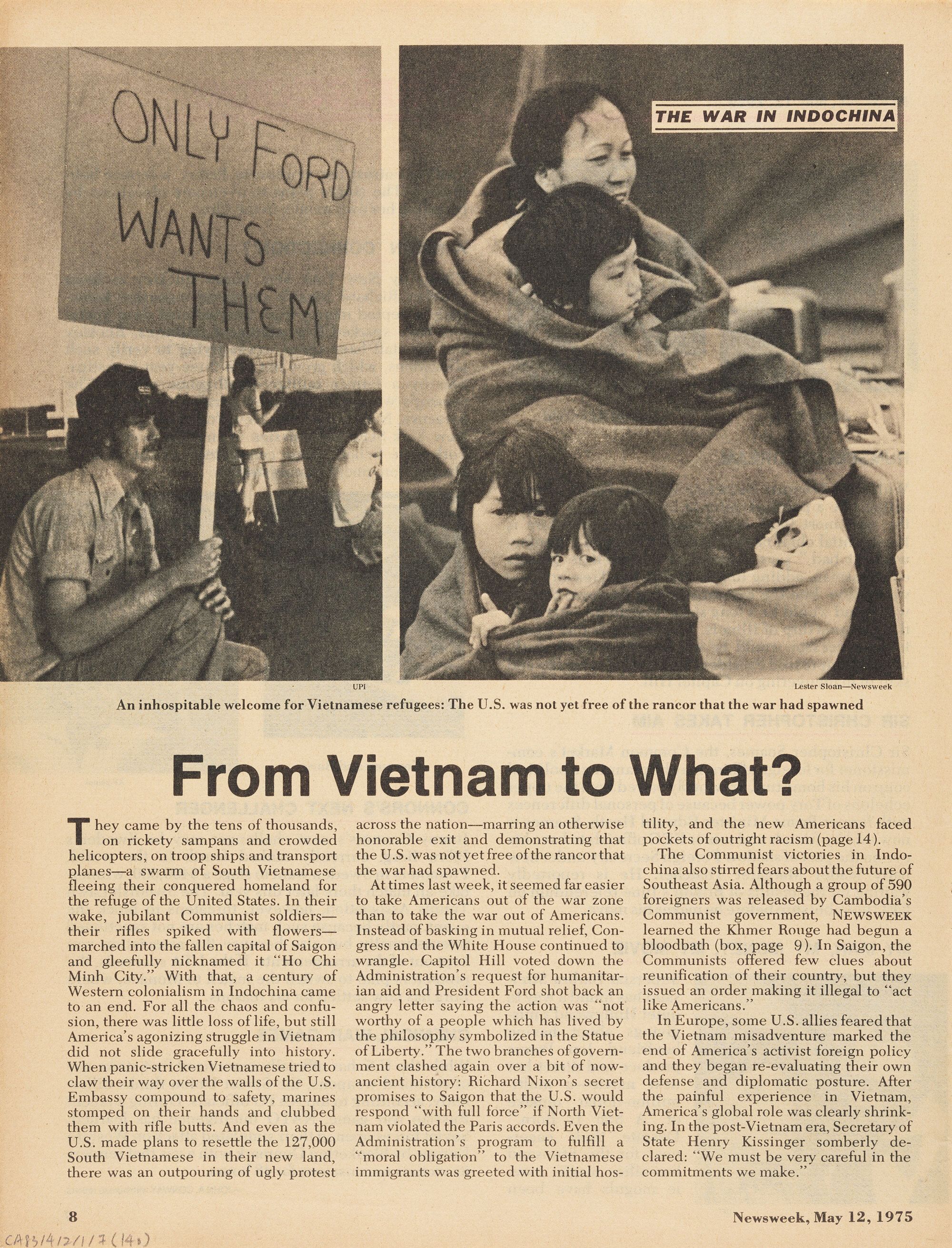
The 1970s to 1990s saw an influx of refugees from Vietnam to Hong Kong. The exodus, generated by the long conflict in Vietnam, was underpinned by the Cold War, which ideologically divided the world into two blocs. The fact that Hong Kong was seen as a place of refuge reflected the city’s particular position amid the global geopolitical tensions of that era.

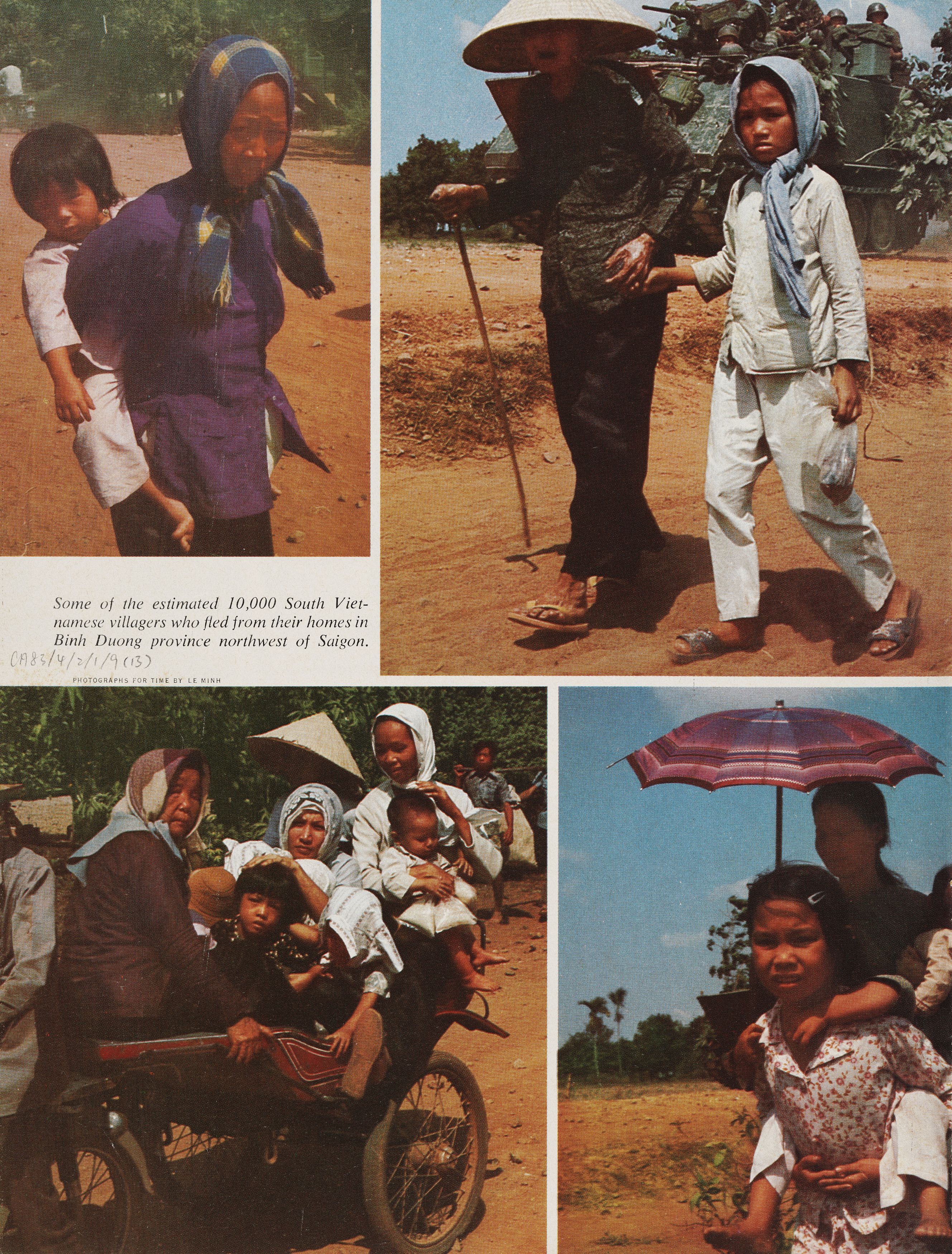
A loose page with images of South Vietnamese fleeing their homeland in the 1970s. The page is from the box of ‘TIME’
A loose page with images of South Vietnamese fleeing their homeland in the 1970s. The page is from the box of ‘TIME’
Two boxes in Ha’s archive are named ‘TIME’ and contain covers and pages from TIME and Newsweek magazines from the 1970s. The clippings reveal the sociopolitical upheavals that were happening in Asia during the Cold War era. Whether depicting the changing regime in China, the Vietnam War, or the period of martial law in the Philippines during Ferdinand Marcos’ presidency, the images collected in Ha’s boxes reveal the unrest that embroiled Asia during this period.

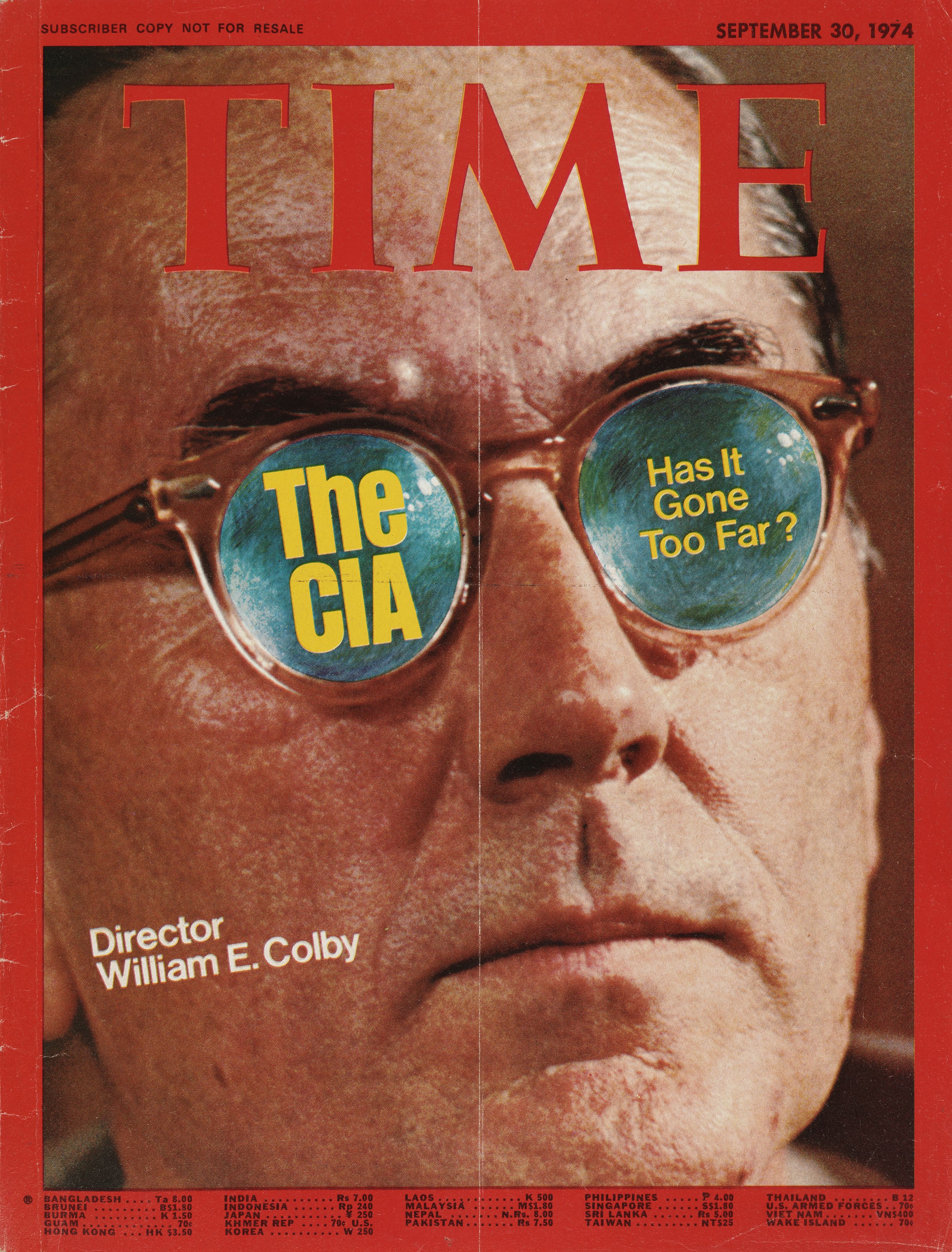
Cover of TIME (30 September 1974) featuring William Colby, who was Director of Central Intelligence in the USA. The cover is from the box of ‘TIME’. Courtesy of Ha Bik Chuen family and Asia Art Archive
Cover of TIME (30 September 1974) featuring William Colby, who was Director of Central Intelligence in the USA. The cover is from the box of ‘TIME’. Courtesy of Ha Bik Chuen family and Asia Art Archive
Ha’s materials include primary resources for researching historical events and their contexts. The box marked ‘1967’, for example, contains newspapers and magazines from 1967 to 1968.

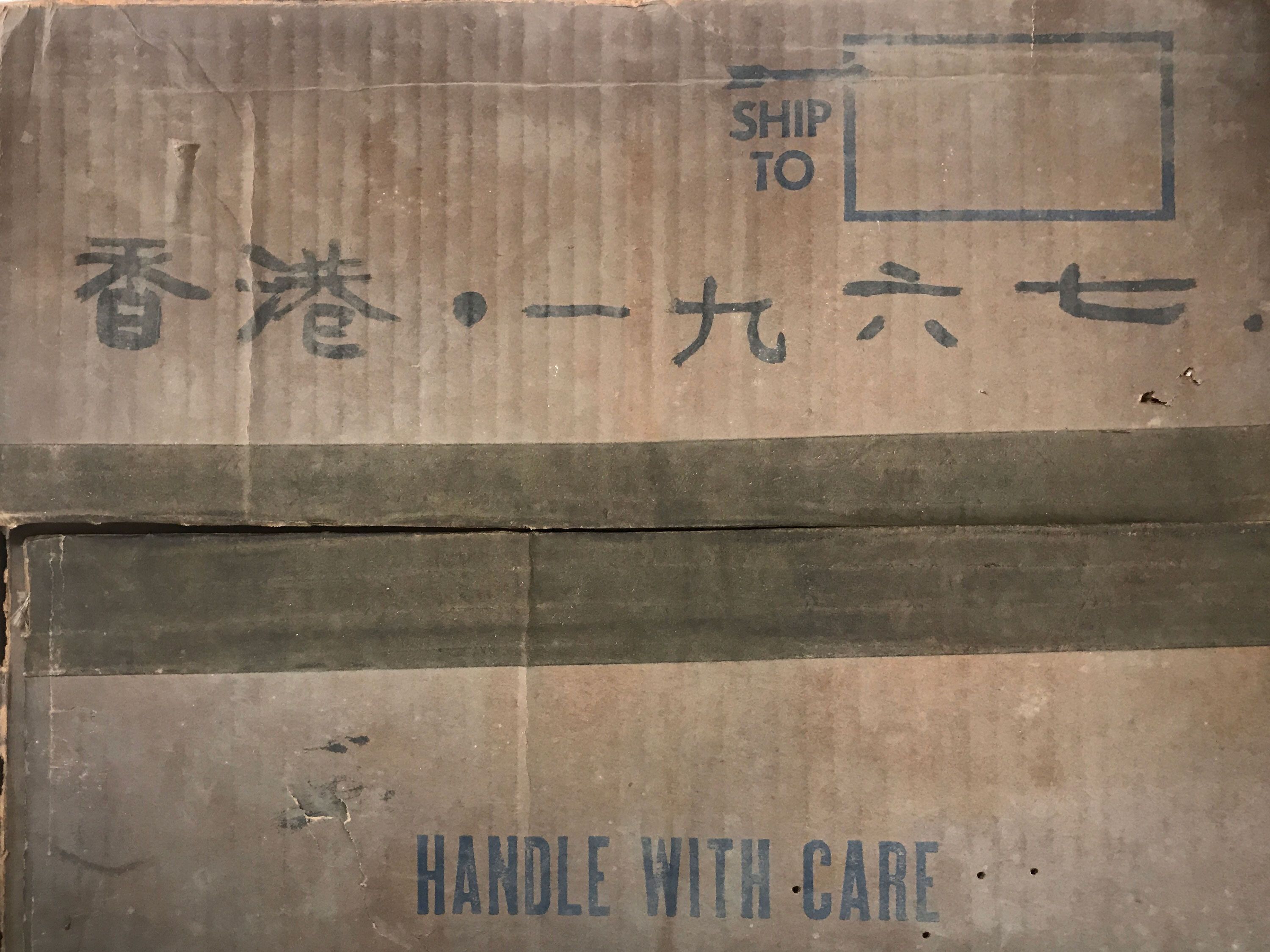
A box annotated with ‘Hong Kong’ and ‘1967’
A box annotated with ‘Hong Kong’ and ‘1967’
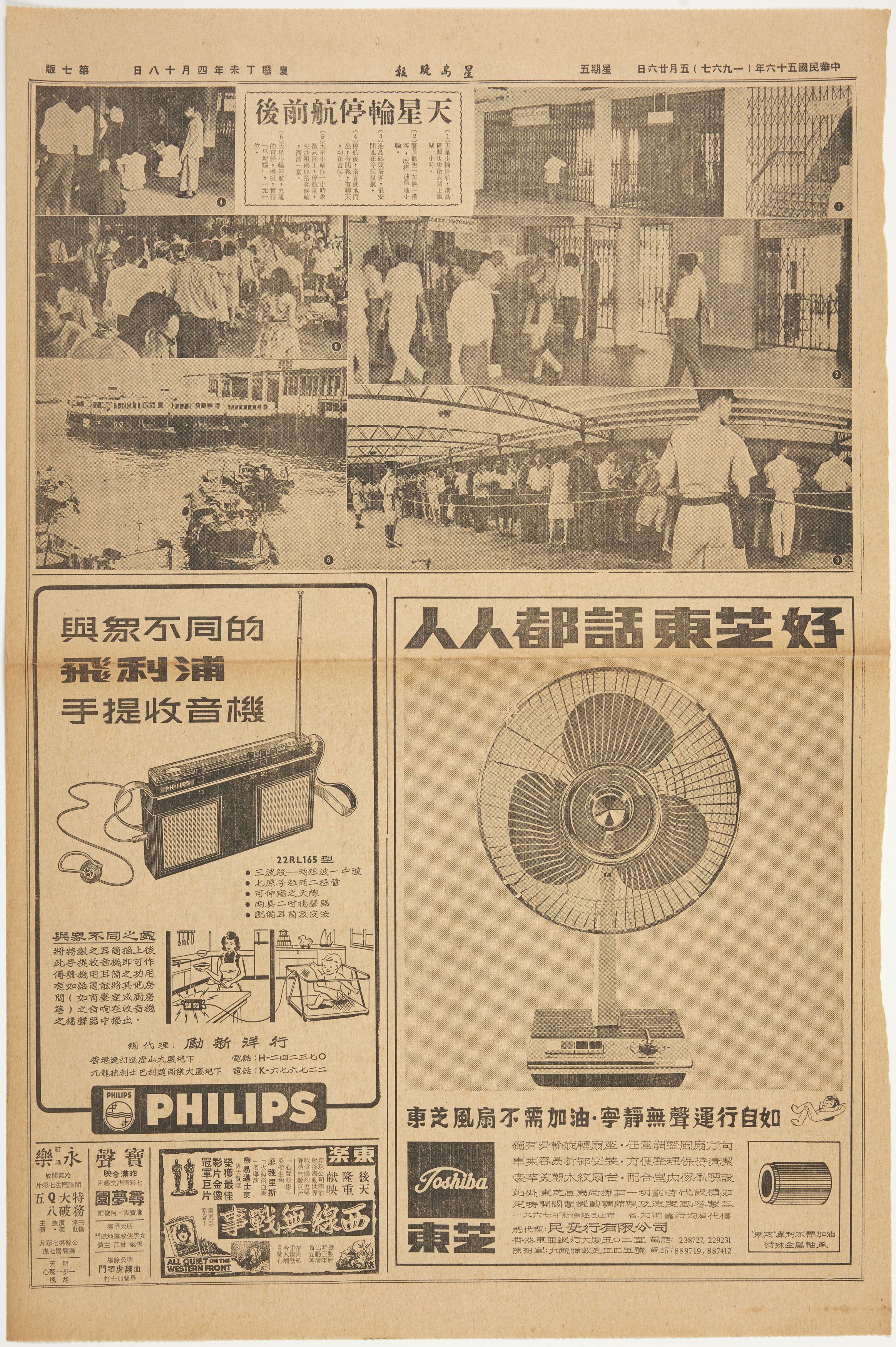
The materials in this box contain information about the 1967 Hong Kong Riots that took place between May and October that year. The large-scale demonstrations were ignited by labour disputes and escalated into protests and conflicts against the colonial government.

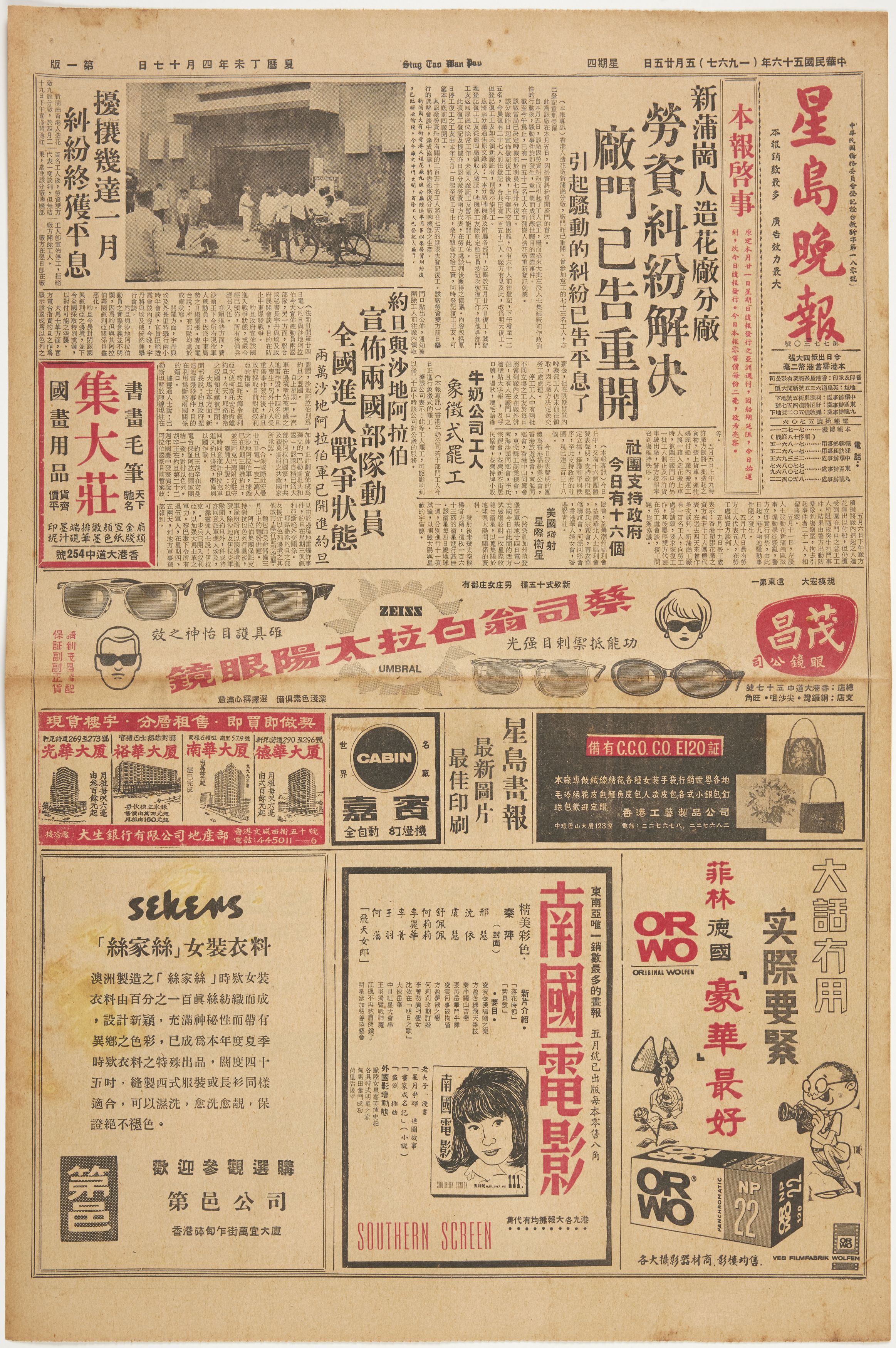
One of the Sing Tao Daily newspaper clippings from the box of ‘1967’, covering the labour dispute, 25 May 1967
One of the Sing Tao Daily newspaper clippings from the box of ‘1967’, covering the labour dispute, 25 May 1967
Ha kept the news sections from newspapers throughout that time, and his collection provides an archive of daily updates of the riots.
The box also contains several issues of Four Seas Weekly from 1967. The publication’s aesthetics and political language reflect Hong Kong’s position as an arena where tensions between East and the West played out during the Cold War. The covers of the publication always depicted celebrities or other glamorous images of life in the ‘free world’, while also always featuring a banner in the corner that reflecting Western ideologies.

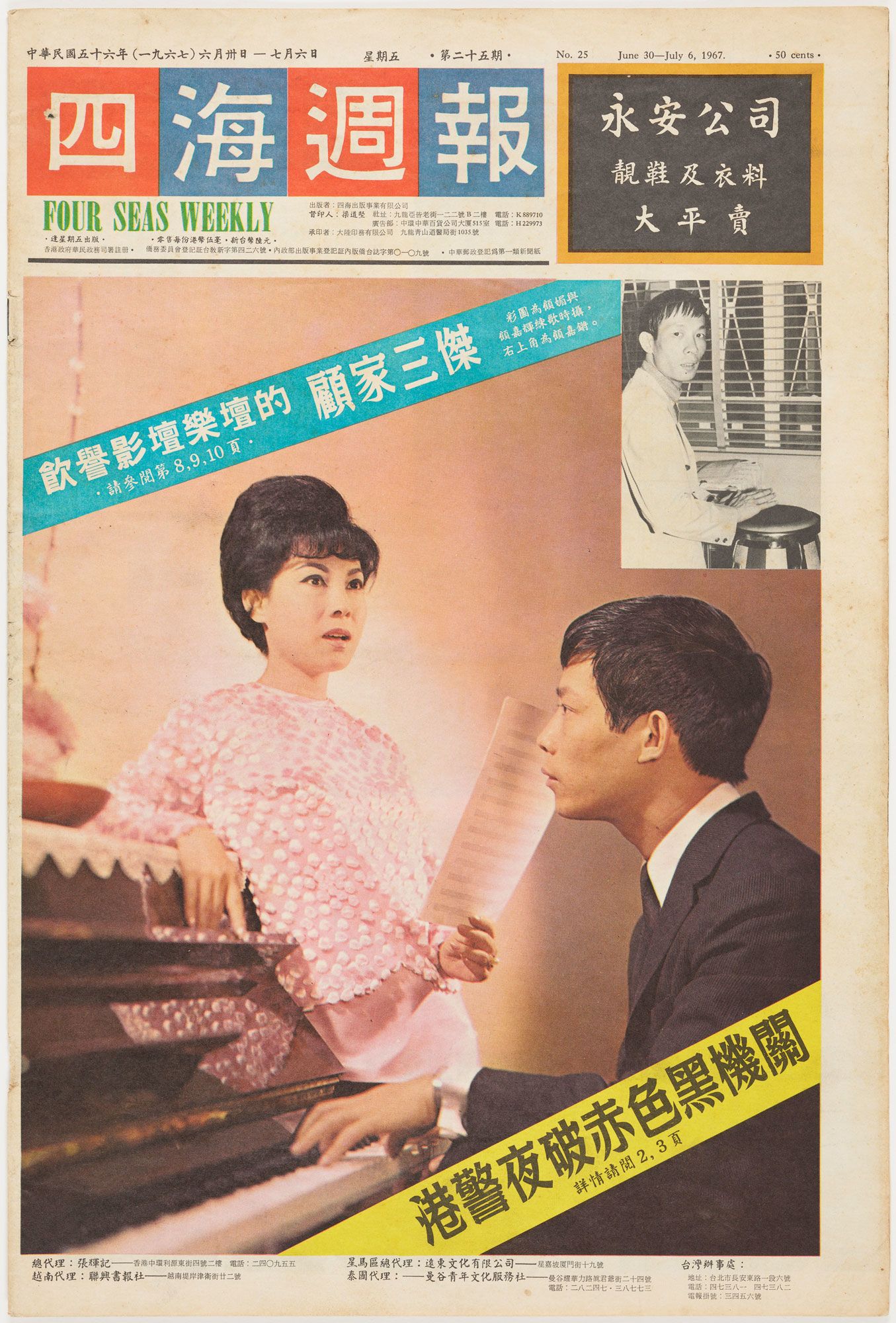
One of Four Seas Weekly from the box of ‘1967’, features legendary Hong Kong composer Joseph Koo and his sister on the cover
One of Four Seas Weekly from the box of ‘1967’, features legendary Hong Kong composer Joseph Koo and his sister on the cover
One cover, for example, features an elegantly staged image of legendary Hong Kong composer Joseph Koo and his sister Carrie Koo performing together. In the lower-right corner, there is a banner about the Hong Kong Police Force’s suppression of the riots. This combination reflects a strategy often used by the Western bloc during the Cold War: emphasising the abundance and civilised life of the free world while condemning the evils of Communism.





Photographic Documentation
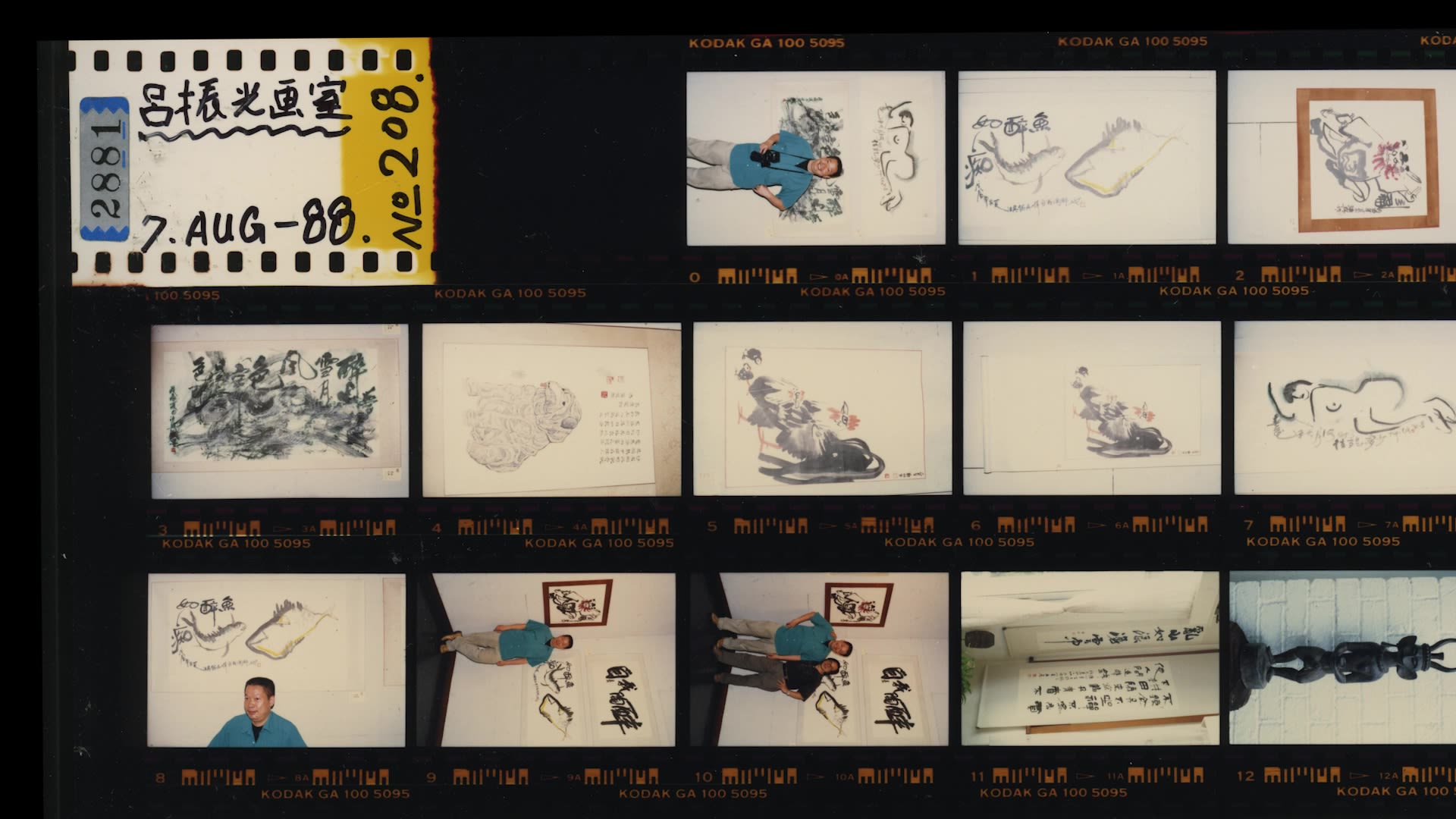

Since getting his first camera in the early 1980s, Ha used photography as his primary medium for making art and documenting the city around him.
Ha developed a habit of photographing every exhibition that he visited. These images comprise an enormously valuable document of Hong Kong’s art history as it unfolded, as well as providing visual anecdotes of Ha’s contemporaries.
‘Out of Context’ Exhibition
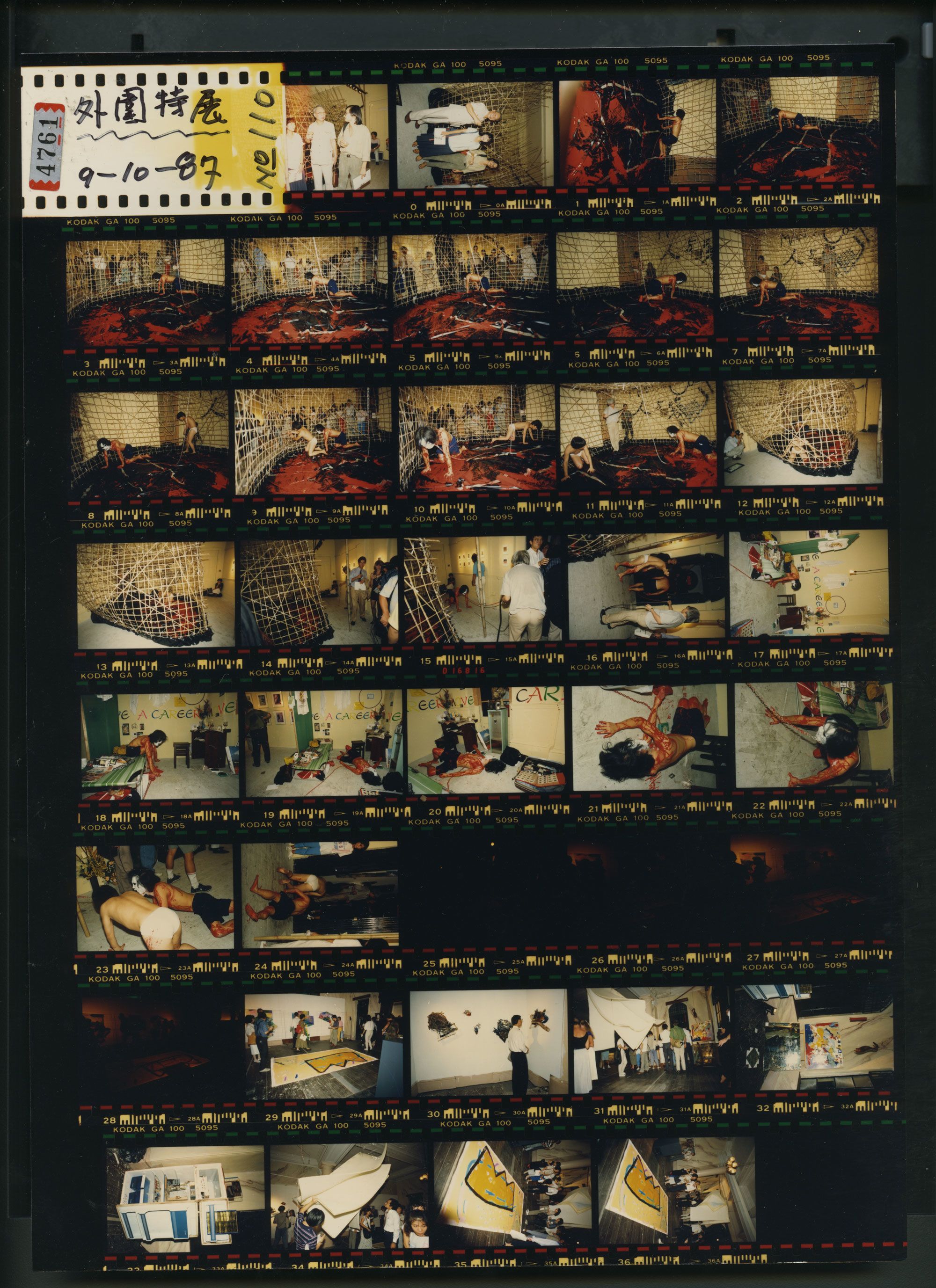
One of the most important photographic records in Ha’s archive is a contact sheet from the Out of Context exhibition. The images show how visual art captured and reflected the sociopolitical tensions of the 1980s.
Out of Context was a self-organised exhibition that took place over a weekend in October 1987 at a now-demolished building on 15 Kennedy Road, Hong Kong. The exhibition was a response to the lack of institutional support for art. The exhibition happened three years after the signing of the Sino-British Joint Declaration, and the influence of this historical event can be seen in the works created by the participating artists.

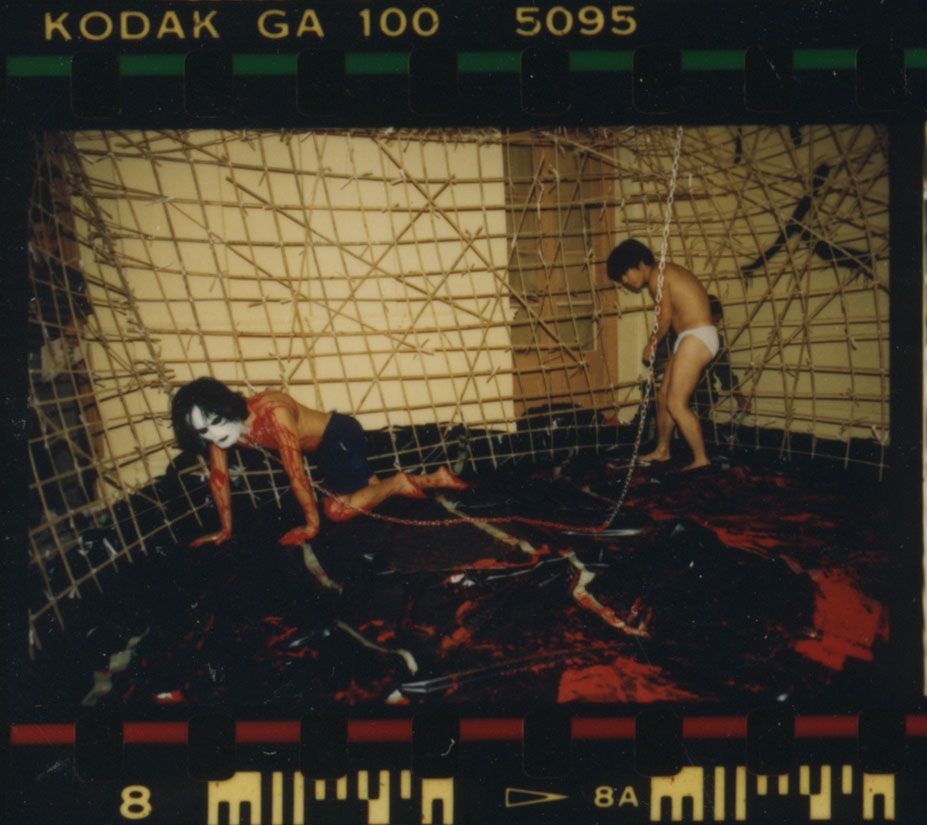
A frame in the contact sheet documenting the exhibition Out of Context in 1987, showing Yeung Sau Churk’s performance
A frame in the contact sheet documenting the exhibition Out of Context in 1987, showing Yeung Sau Churk’s performance
A contact sheet in Ha’s archive captured moments from Ricky Yeung Sau Churk’s Man and Cage in Out of Context. In this performance work, Yeung painted his face a ghostly white, covered his body in blood-like streaks, and chained himself inside a cage while he continuously screamed and crawled for forty-eight hours. The work was both a radical reflection of the conundrum of Hong Kong and its people amid a historical transition and an expression of the artist’s fear of the future.
Ricky Yeung Sau Churk’s Performance
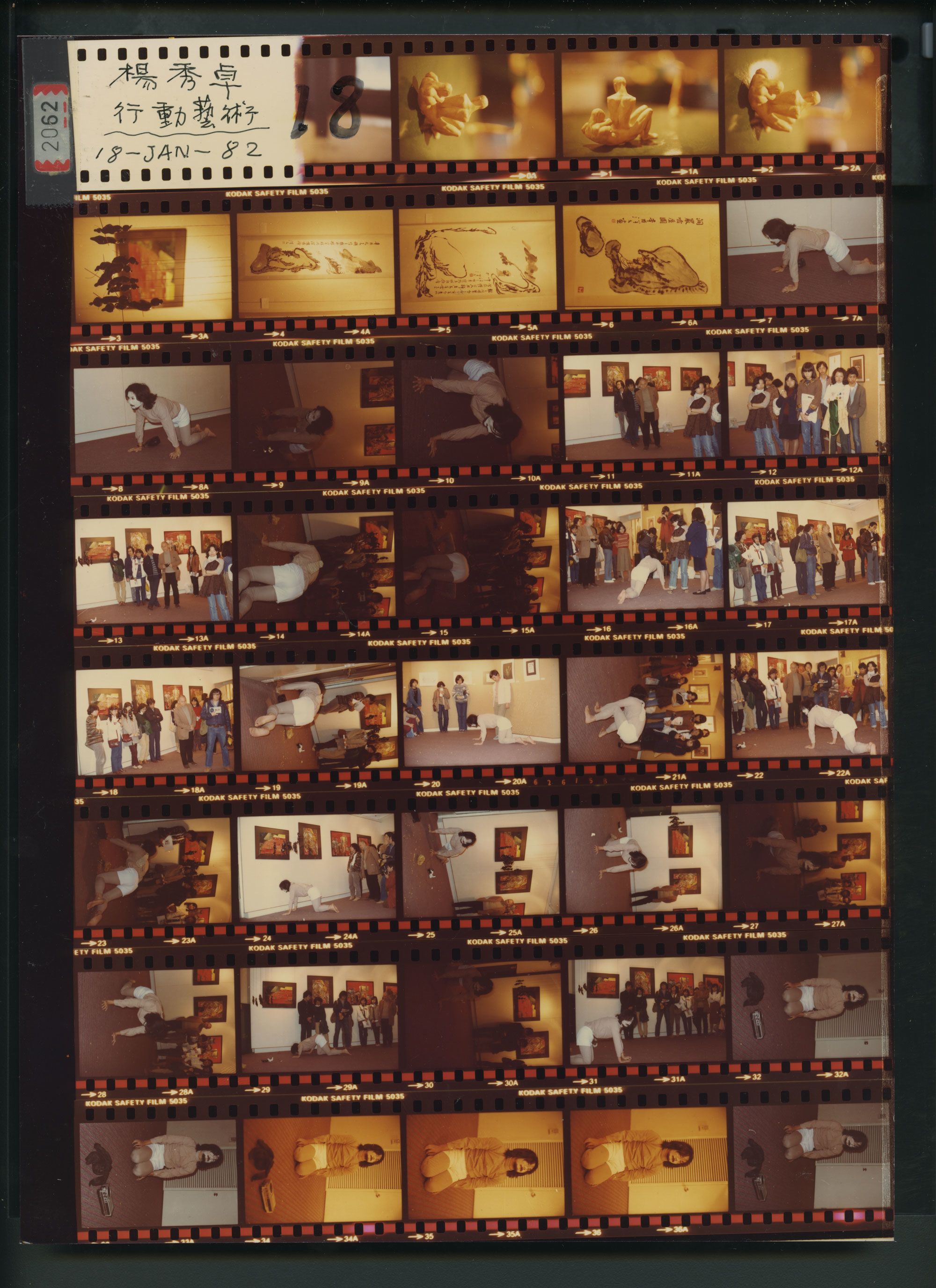
A pioneer of performance art in Hong Kong, Yeung created works that provoked and challenged audiences. Prior to his astounding performance of Man and Cage in 1987, Yeung had already used the cage as a symbol to question the identity of Hong Kong and the city’s relationship with its people. Another contact sheet from 1982 shows an earlier version of Man and Cage.

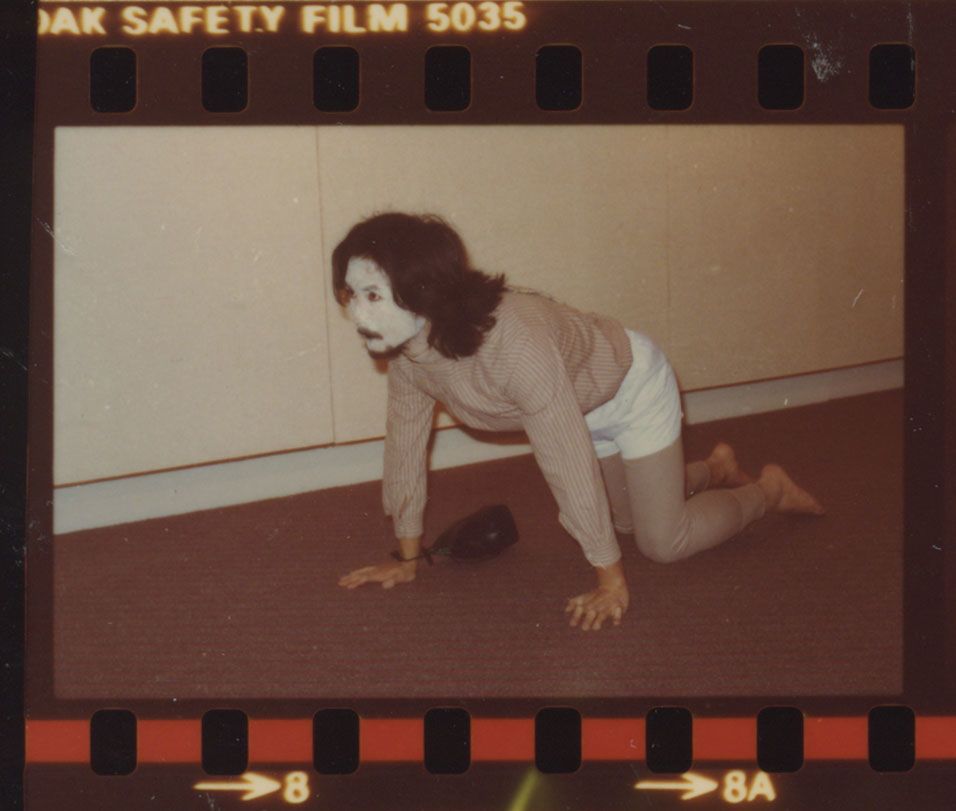
A frame of a contact sheet documenting Yeung Sau Churk’s performance in an exhibition in 1982
A frame of a contact sheet documenting Yeung Sau Churk’s performance in an exhibition in 1982
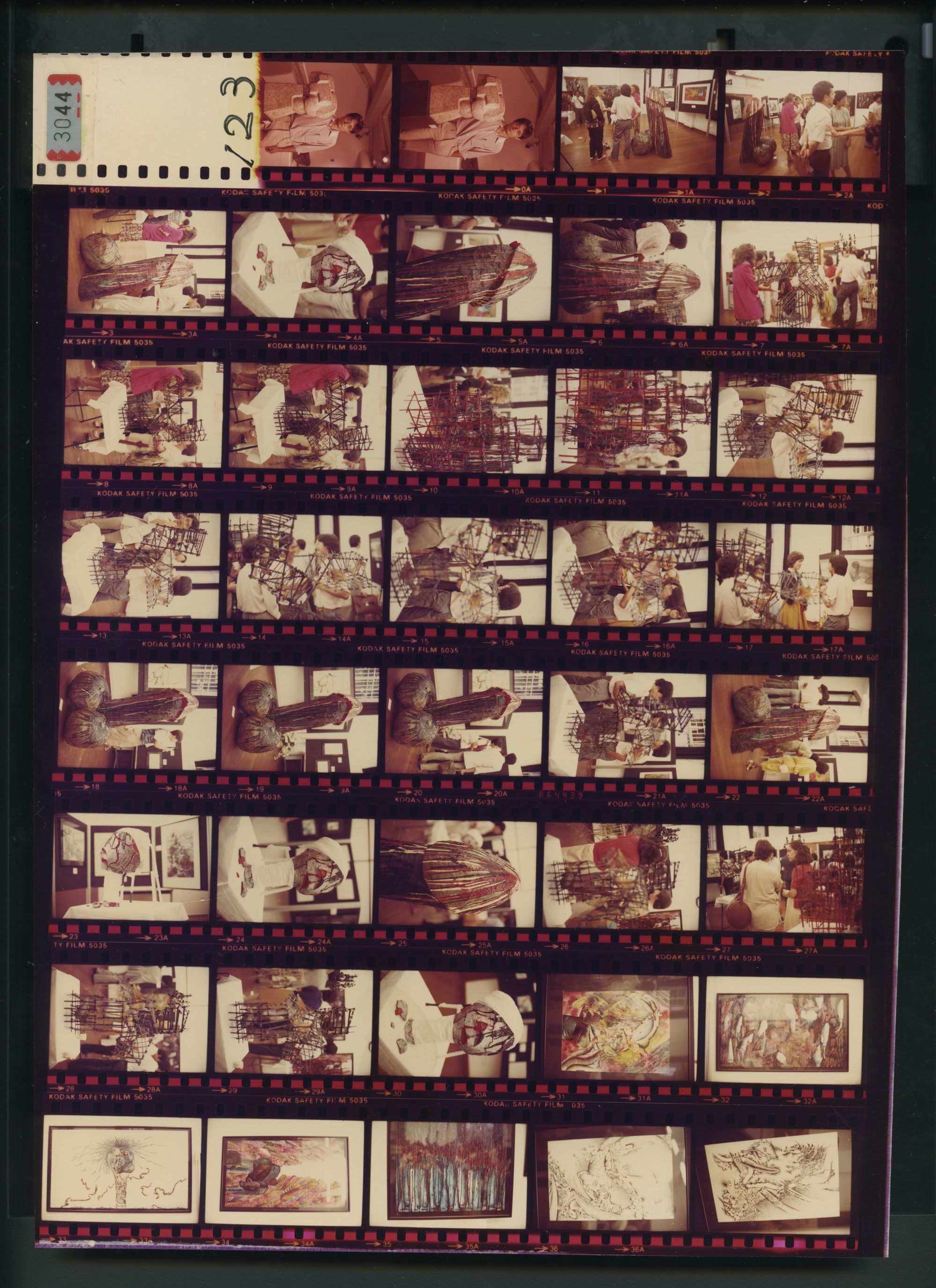
The cage became symbolic of Yeung’s practice, appearing regularly in his performances and artworks. A contact sheet from September 1982 shows Yeung at his solo exhibition, with his artwork Prosperity to Be Continued?, a sculpture that resembles a cage. The title broaches a rhetorical question about the future of Hong Kong.

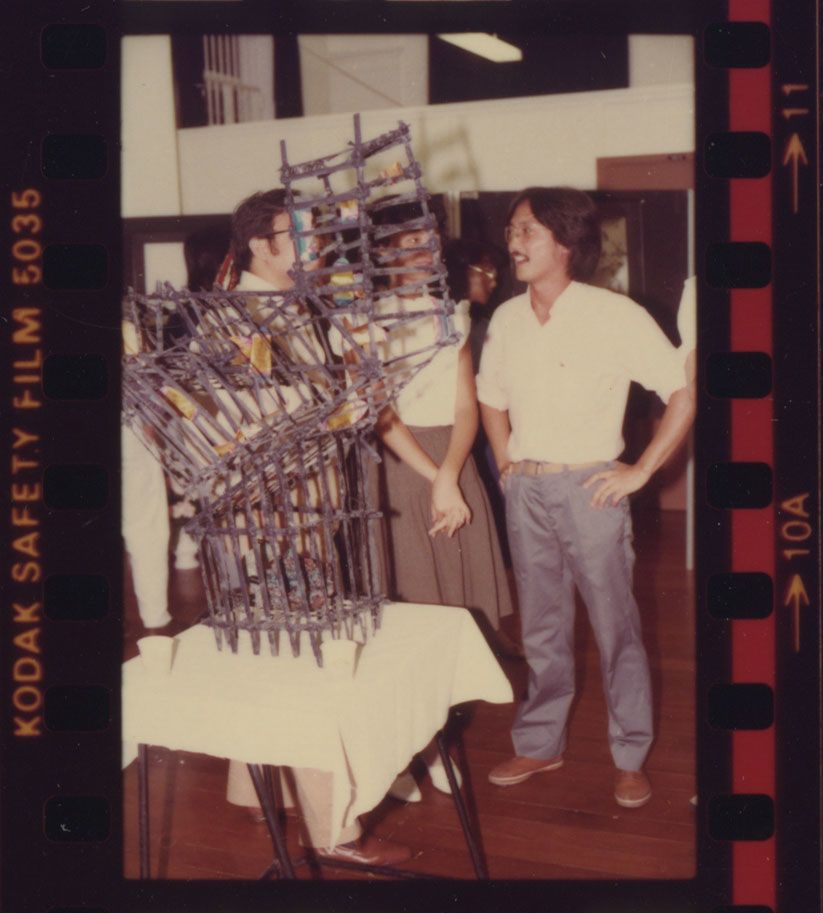
A frame of contact sheet capturing Yeung Sau Churk standing next to his artwork Prosperity to be Continued? in his solo exhibition in 1982
A frame of contact sheet capturing Yeung Sau Churk standing next to his artwork Prosperity to be Continued? in his solo exhibition in 1982
The three contact sheets are important records of Yeung’s artistic trajectory and the politics of art in the 1980s. They also reflect the atmosphere of a pre-handover Hong Kong.
Gathering with Fellow Artists
Ha also took his camera to social gatherings with his contemporaries or when he visited their studios. His photographic records of these events capture the ecology of Hong Kong’s art world before the international art market became established. It was a time when most artists were self-taught and often got together to exchange ideas and inspirations.

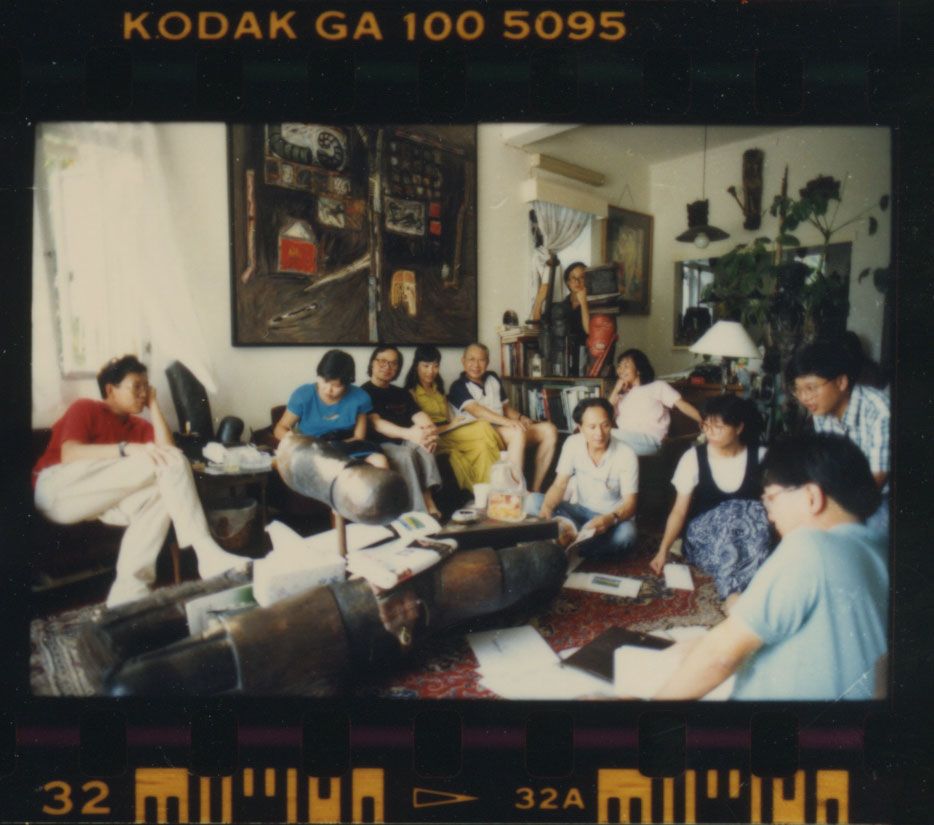
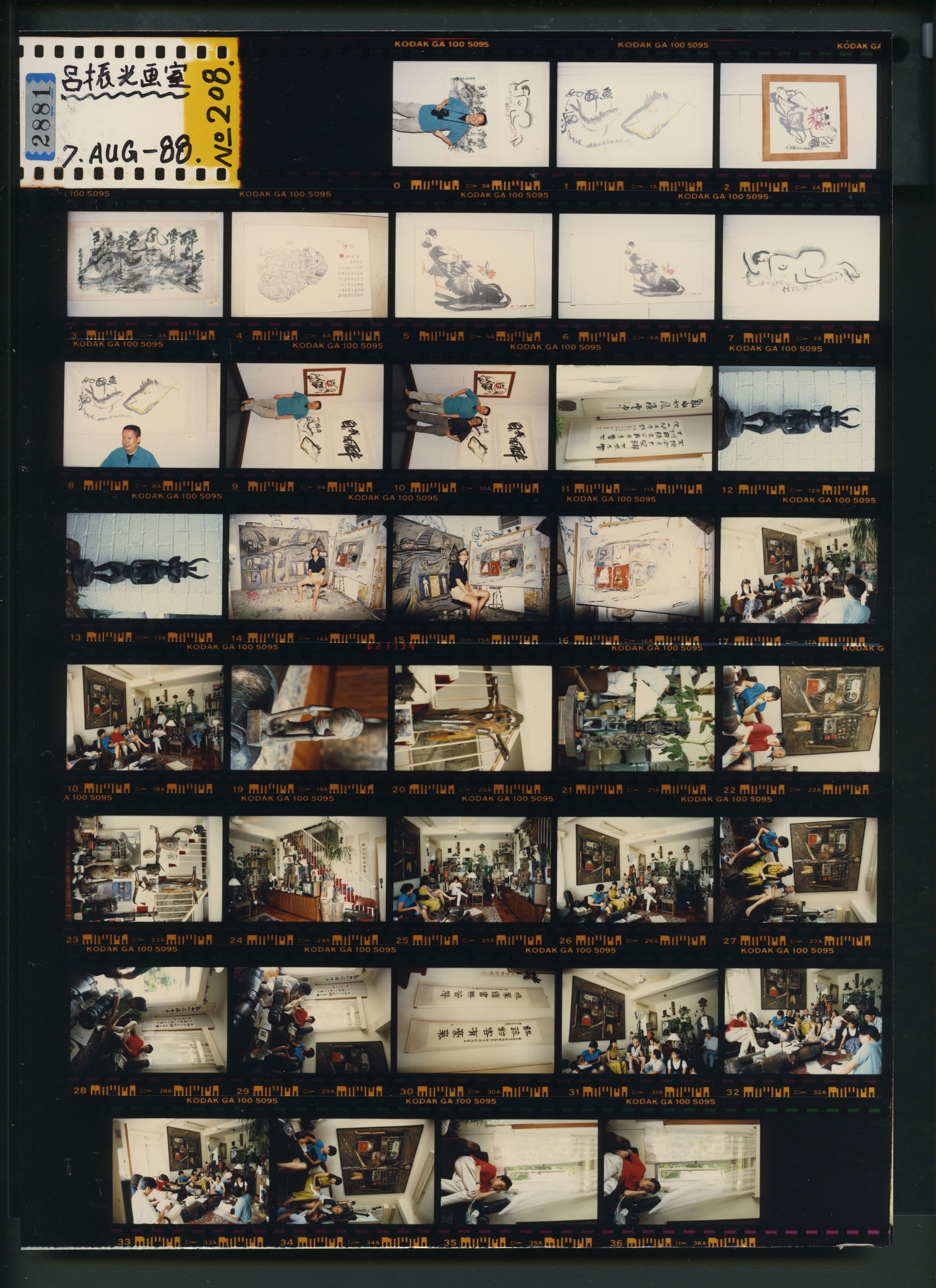
Contact sheet documenting Ha Bik Chuen and other artist friends in a social gathering in 1988
Contact sheet documenting Ha Bik Chuen and other artist friends in a social gathering in 1988
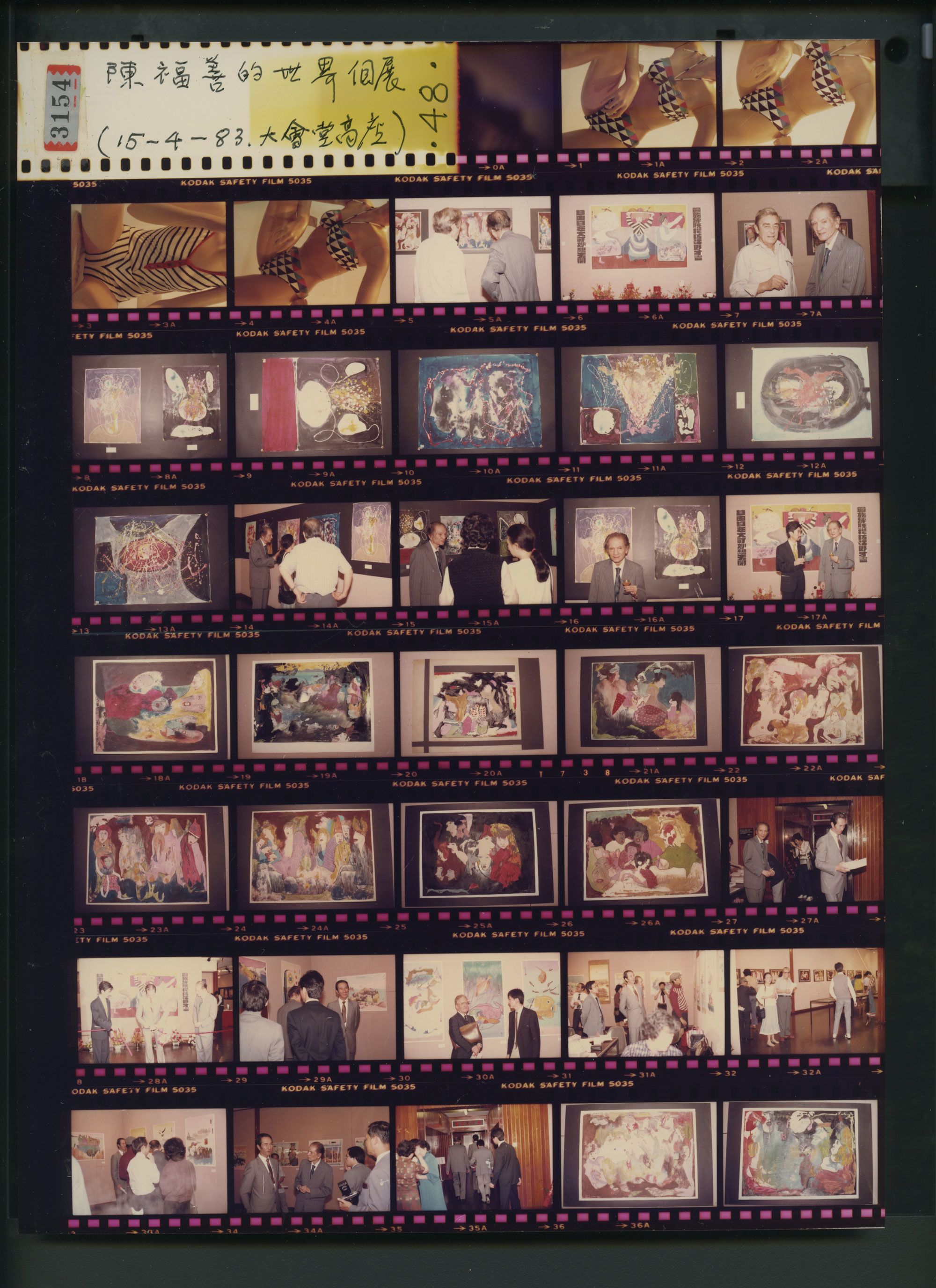
One contact sheet from 1983 shows Luis Chan talking delightedly in his studio about the paintings hanging behind him. The photographs attest to Chan’s productivity in making art even when he was in his 80s.

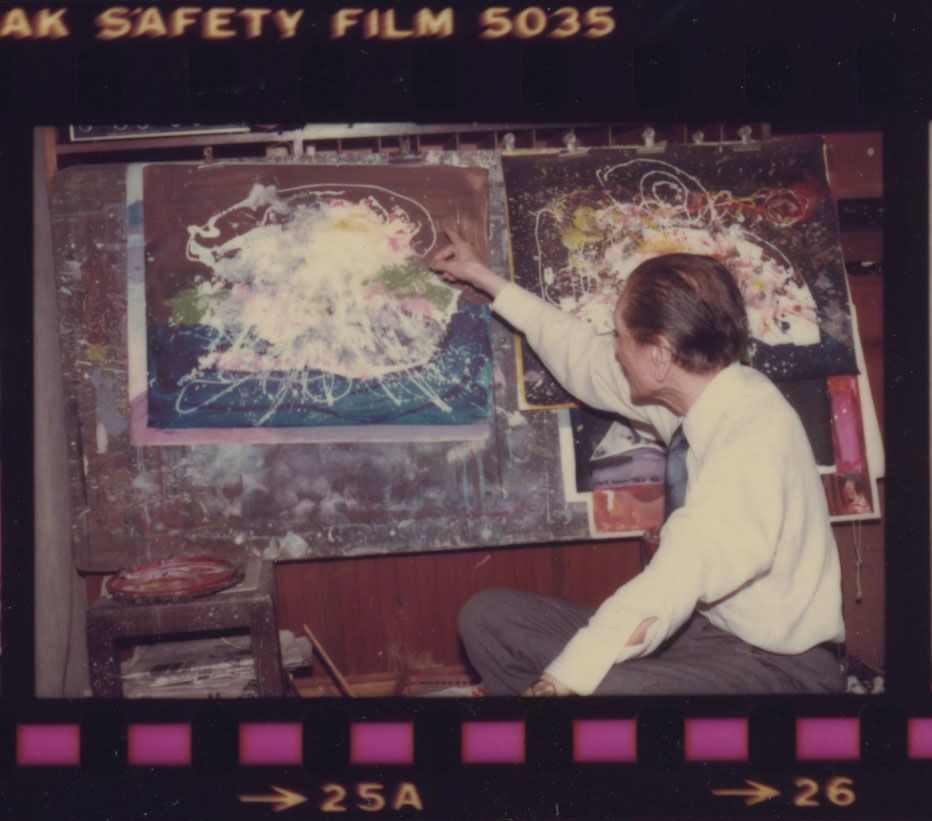
Contact sheet from 1983 showing Luis Chan talking about his painting
Contact sheet from 1983 showing Luis Chan talking about his painting
Another contact sheet from 1988 shows a group of artist friends, including Winnie Mak and Eddie Lui, visiting Lui Chun Kwong’s studio. Ha photographed Lui as he posed in front of his early paintings. The painting demonstrated a figurative and abstract style that has been rarely seen in Lui’s work since he shifted his focus to abstract painting. It provides a visual record to Lui’s varied artistic trajectory.

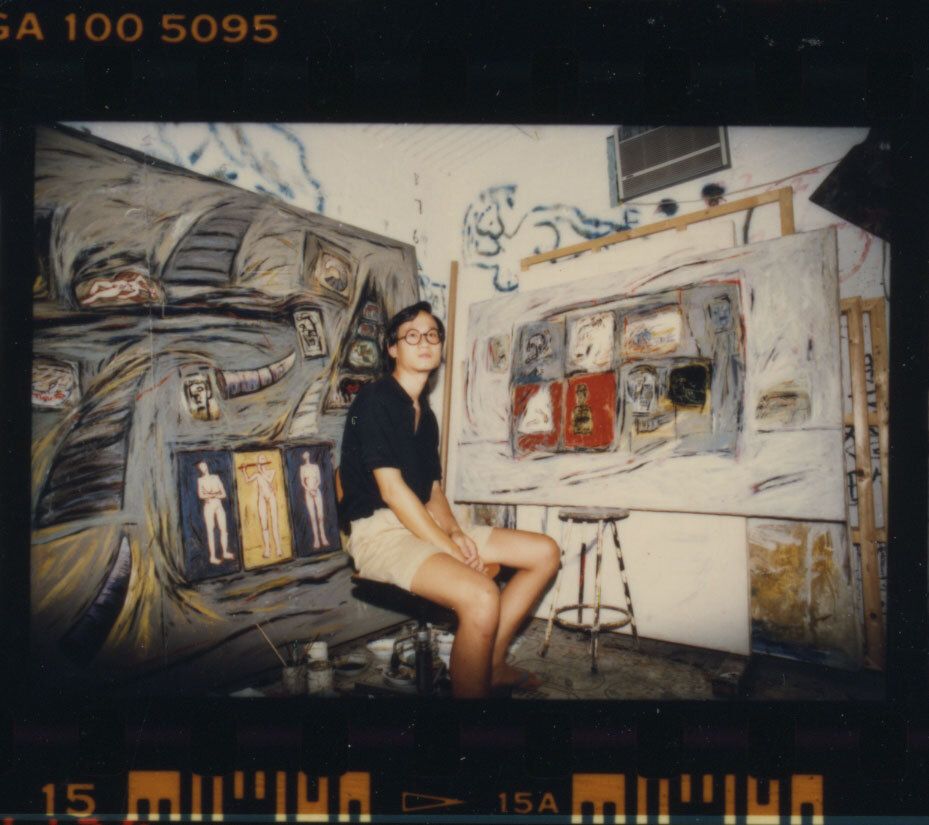
Contact sheet from 1988 showing Lui Chun Kwong sitting in front of his painting
Contact sheet from 1988 showing Lui Chun Kwong sitting in front of his painting

Modified Books

A core methodology in Ha’s artistic practice is that of assemblage. In a personal photo taken in his studio in 1975, Ha is shown to be crafting something in front of a card printed with the words ‘ASSEMBLING ASSEMBLING’. Collaging and amalgamating were fundamental to Ha’s creative process, and this approach often blurred the line between his artworks and his archival materials.

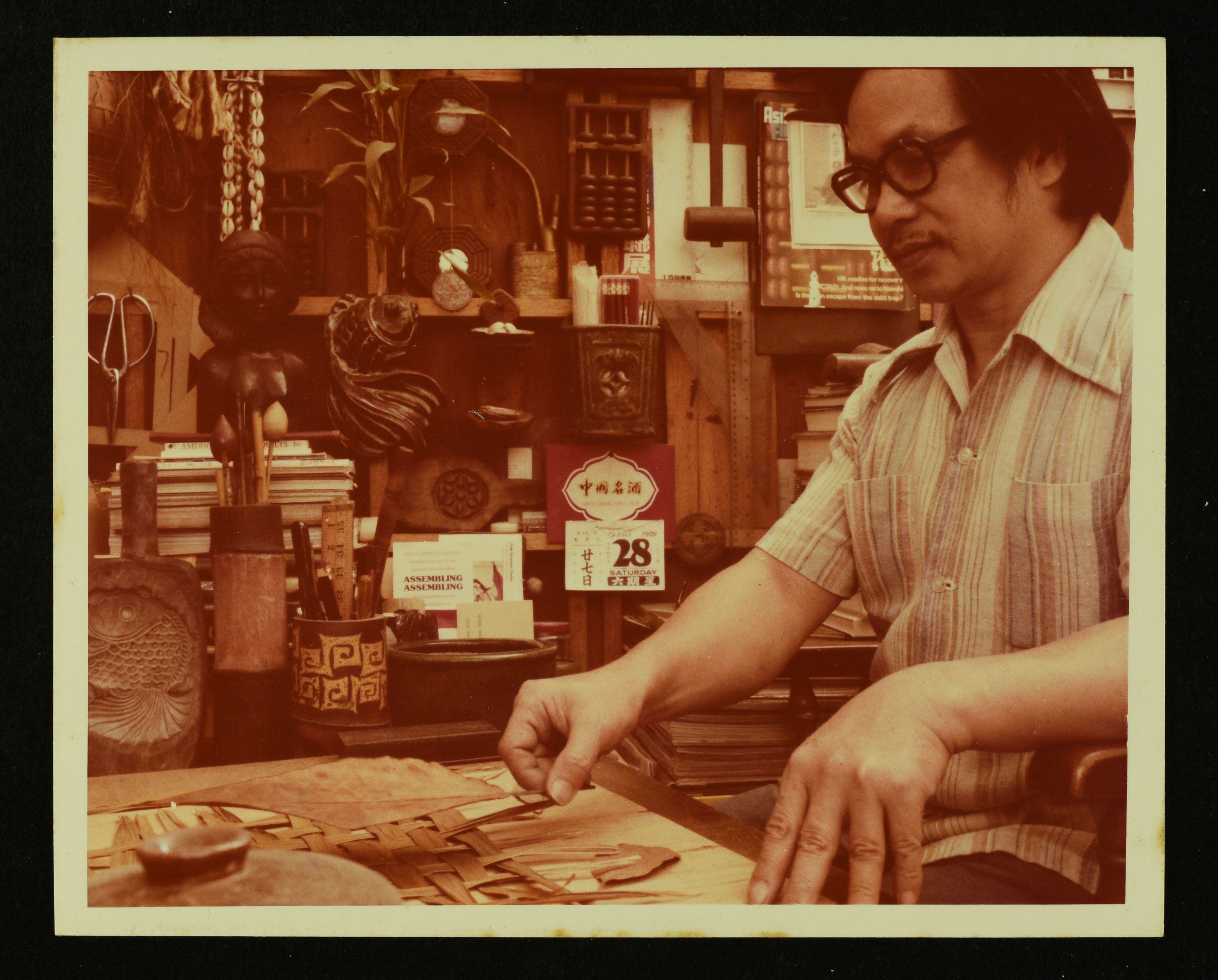
Ha Bik Chuen in his studio, circa 1975
Ha Bik Chuen in his studio, circa 1975
Ha created 180 modified books in the forms of handbound volumes, collaged magazines, collaged books, and collaged binders. Along with other materials in Ha’s archive, the modified books were intended to be used as self-learning materials. They possess an inherent creativity that resembles an artistic process, making them more than mere learning resources—they can also be regarded as works of art.
Collaging and juxtaposing images from different times and origins blur their temporality and contexts. The modified books can thus become structures of meaning production. They also ignite readers’ subjective feelings and interpretations, which tie back to Ha’s idea of his archive as a ‘thinking studio’.
Beauty & Art is a handbound volume by Ha that weaves together loose pages from Esquire magazine. Instead of being organised chronologically, the pages seem to be arranged according to similarities between images of ballerinas, dancing women, and heroic figures.

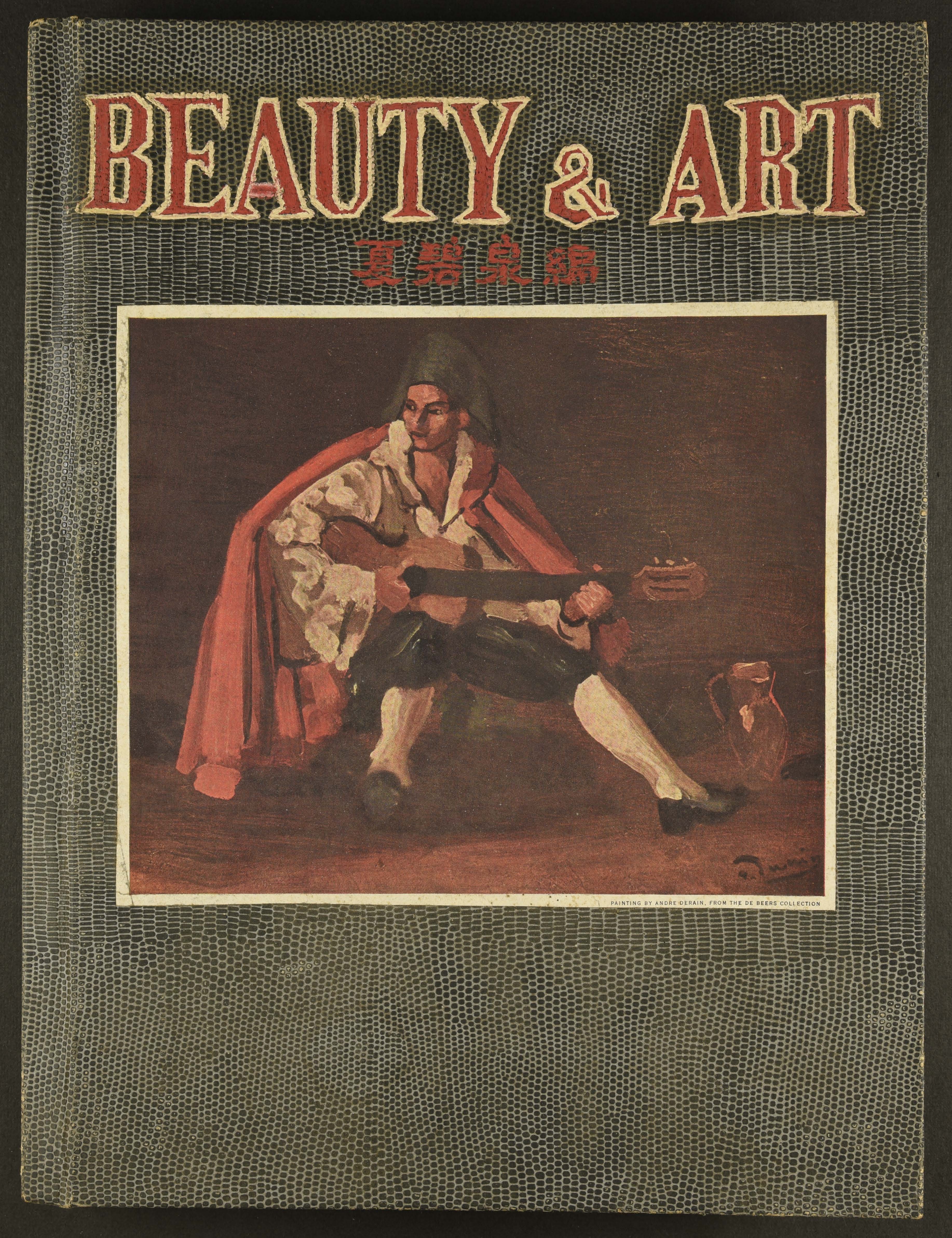
Modified book of Ha, Beauty & Art
Modified book of Ha, Beauty & Art
Ballerinas painted by Edgar Degas are juxtaposed with an unknown artist’s paintings of Hindu dances. Meanwhile, nude photographs are arranged before an image of Venus. On another page, a heroic style of illustration and an advertisement share similarities in Ha’s eyes. This juxtaposition of images reveals his sensitivity to forms, shapes, and gestures.
Inner pages of Beauty & Art
Inner pages of Beauty & Art
Ha cared little about the contexts and backgrounds of images and instead was interested in the postures, forms, and formats of the materials he collected. Disregarding chronology, Ha placed images that depicted similar content together, and this became his core specification when assembling cut-out images into a volume. His books of collaged images encapsulate a multi-temporality that create room for viewers’ imaginations and structures for new meanings to be made.
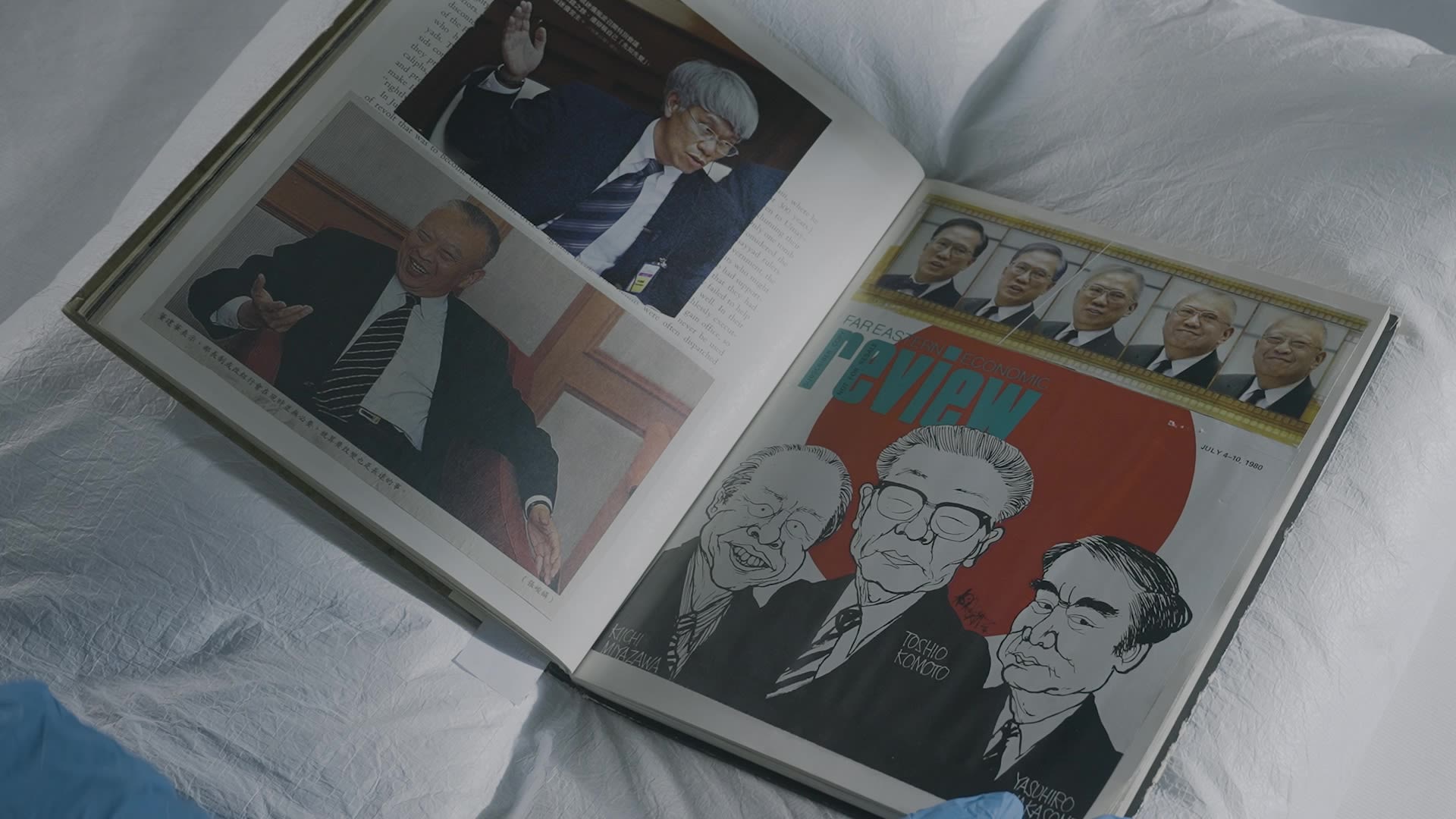
Ha assembled his Catalogue of Characters collage book by taking images from the 1960s to the early 2000s and placing them directly onto the pages of an existing publication. As the name suggests, this work is an amalgamation of characters and portraits.

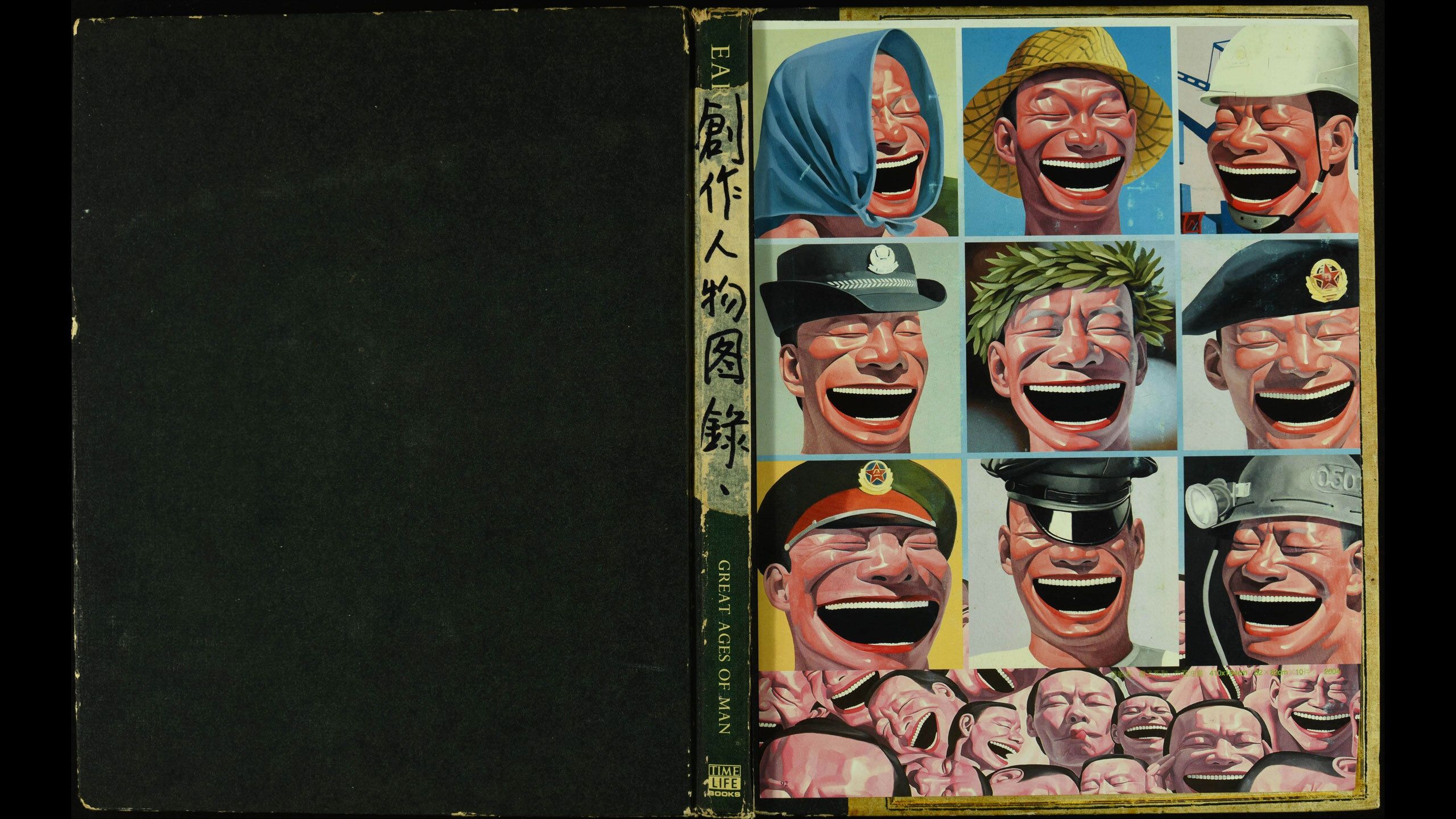
The book contains various images of characters painted by artists in the cynical realist style, including Yue Minjun’s signature laughing man and Zhang Xiaogang’s appropriation of family portraits. Also featured are materials from local and international magazines, such as TIME, Newsweek, Asiaweek, and Far Eastern Economic Review. Meanwhile, two pages showing masked faces during the 2003 SARS outbreak in Hong Kong reverberate with the recent global experience of the COVID-19 pandemic.
Ha cared little about the contexts and backgrounds of images and instead was interested in the postures, forms, and formats of the materials he collected. Disregarding chronology, Ha placed images that depicted similar content together, and this became his core specification when assembling cut-out images into a volume. His books of collaged images encapsulate a multi-temporality that create room for viewers’ imaginations and structures for new meanings to be made.
Ha assembled his Catalogue of Characters collage book by taking images from the 1960s to the early 2000s and placing them directly onto the pages of an existing publication. As the name suggests, this work is an amalgamation of characters and portraits.

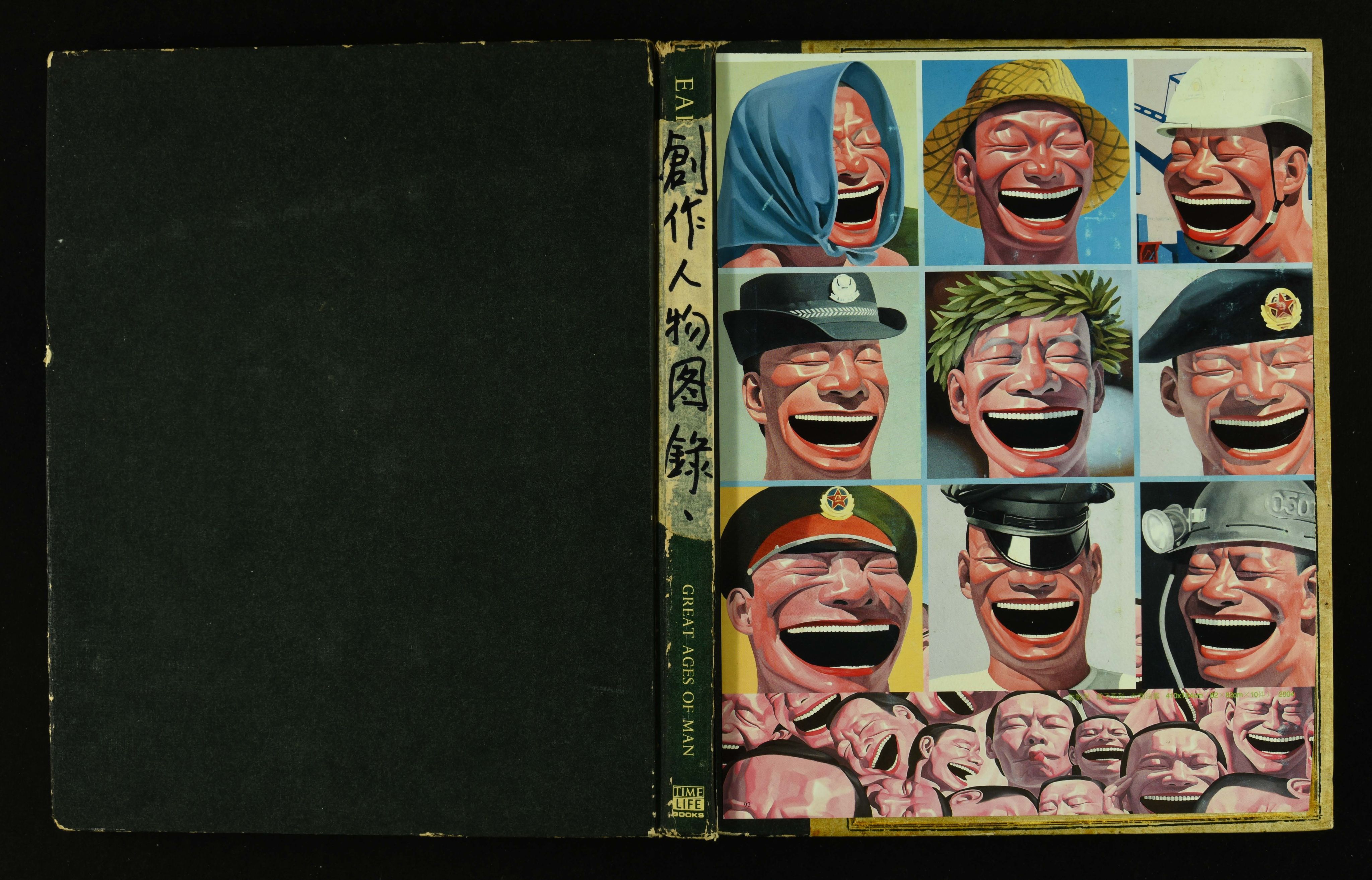
Modified book of Ha, Catalogue of Characters
Modified book of Ha, Catalogue of Characters
The book contains various images of characters painted by artists in the cynical realist style, including Yue Minjun’s signature laughing man and Zhang Xiaogang’s appropriation of family portraits. Also featured are materials from local and international magazines, such as TIME, Newsweek, Asiaweek, and Far Eastern Economic Review. Meanwhile, two pages showing masked faces during the 2003 SARS outbreak in Hong Kong reverberate with the recent global experience of the COVID-19 pandemic.

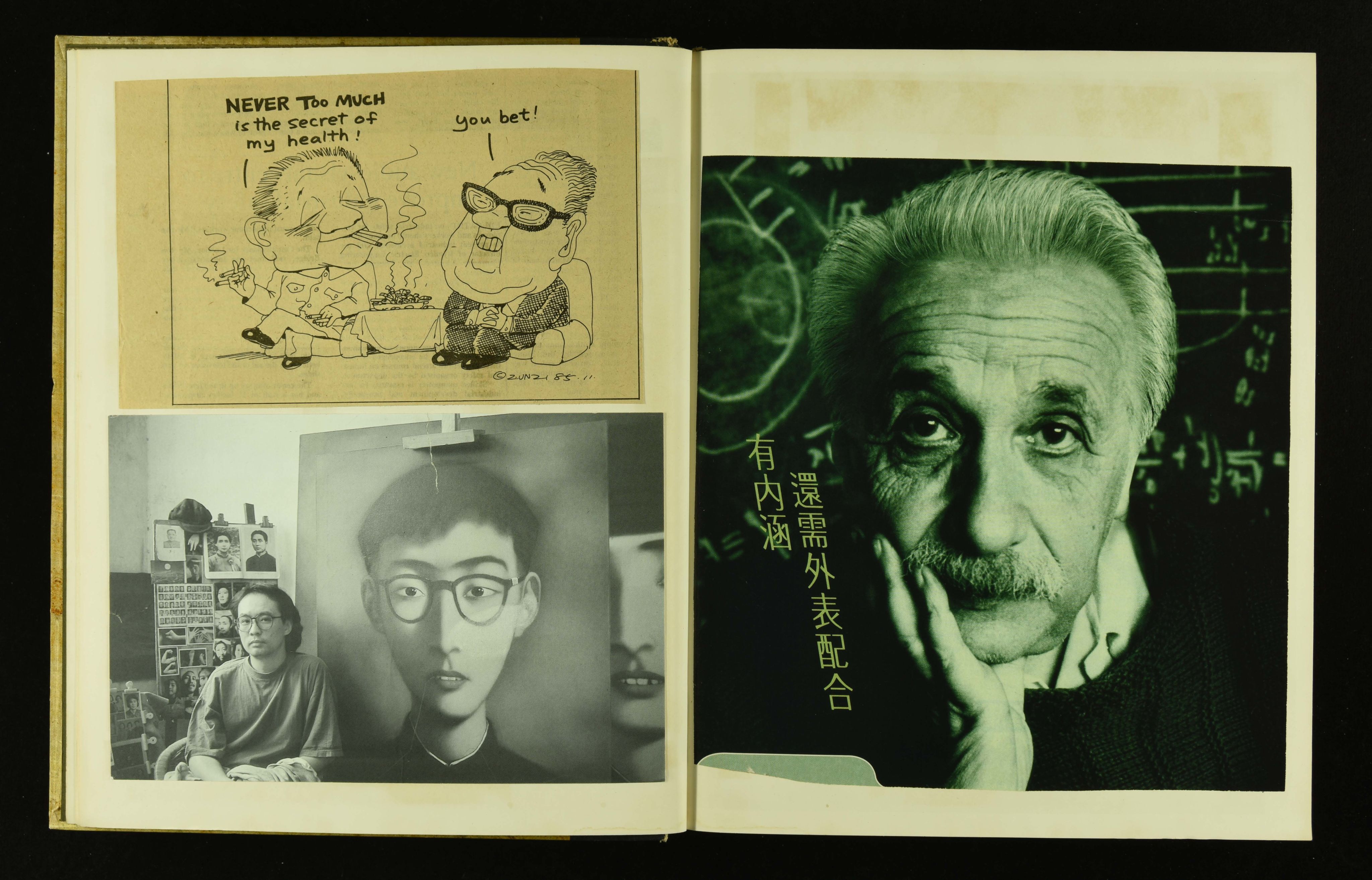
Spread page of Catalogue of Characters
Spread page of Catalogue of Characters
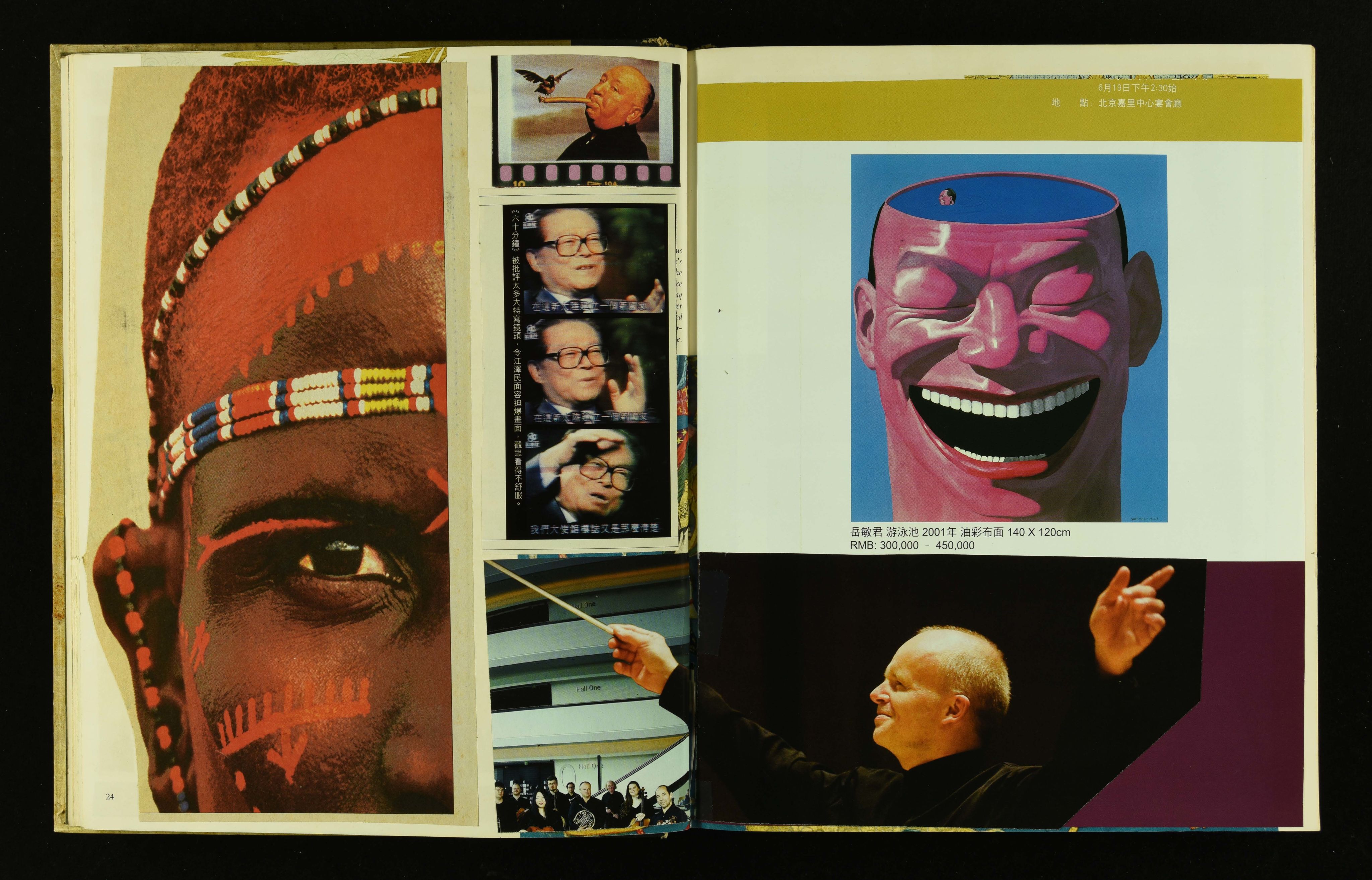
Spread page of Catalogue of Characters
Spread page of Catalogue of Characters
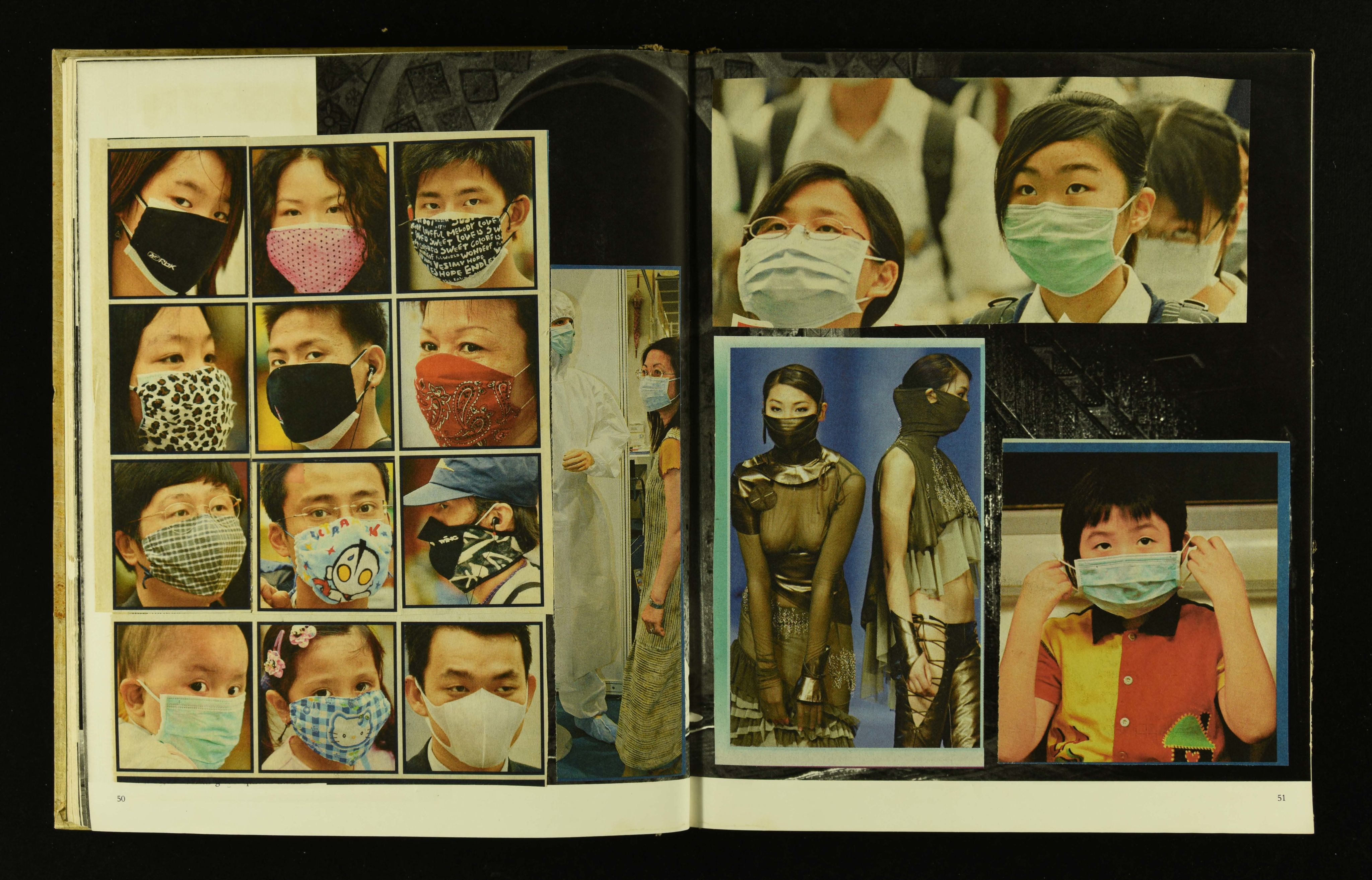
Spread page of Catalogue of Characters showing images of Hong Kong during SARS in 2003
Spread page of Catalogue of Characters showing images of Hong Kong during SARS in 2003
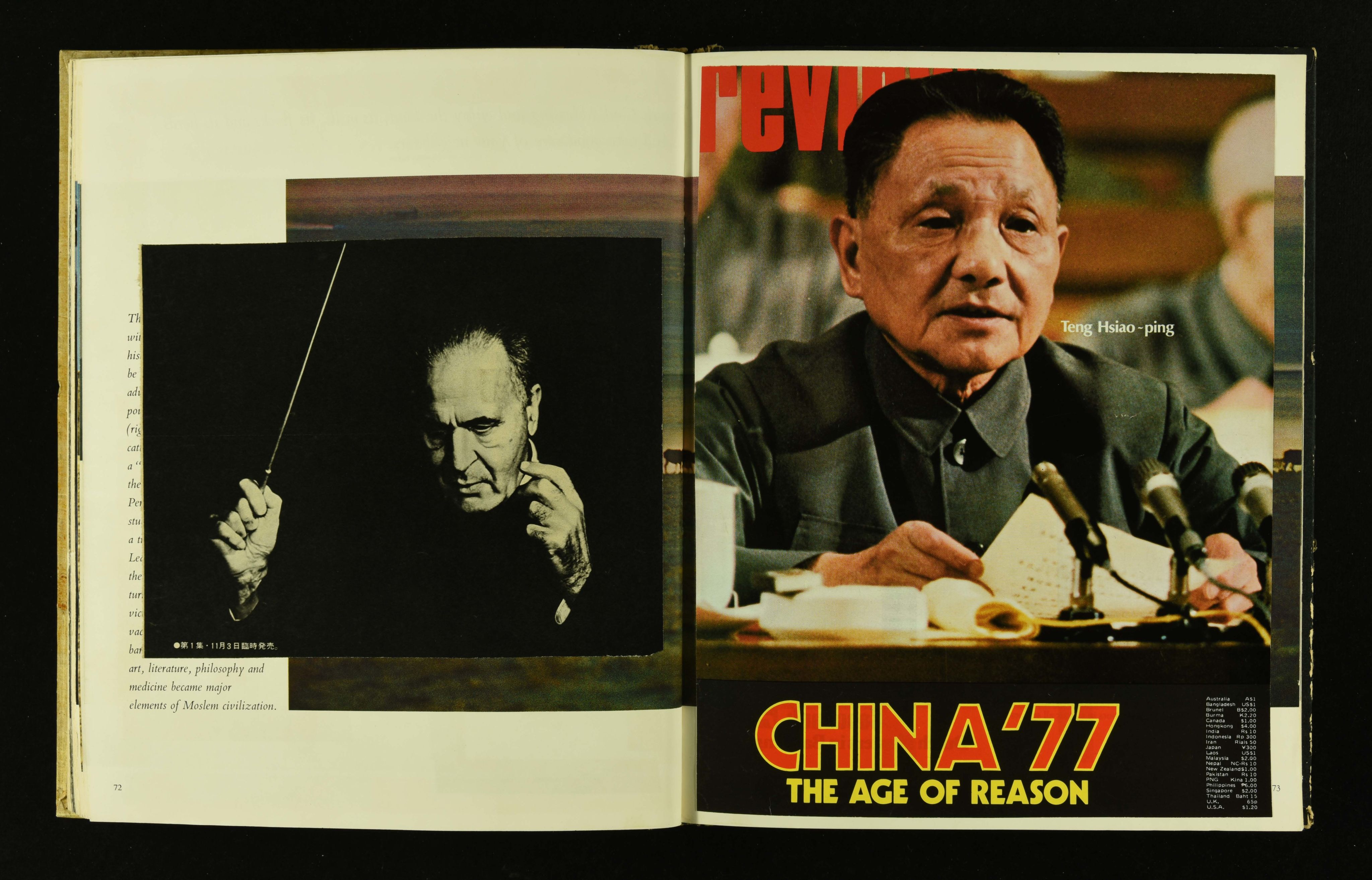
Spread page of Catalogue of Characters
Spread page of Catalogue of Characters
Apart from providing insights into Ha’s inner world, these amalgamations form an atemporal constellation of images that reflect the continual shifts and contestations of global political forces. While each image in the archive has its own meaning, Ha’s groupings and arrangements create new connections and implications that resonate in different ways with viewers.
Different from conventional archives which typically provide a relatively stable historical context and static categorisation, the Ha Bik Chuen Archive is a constellation of materials that transcends linear temporal and spatial boundaries, and provokes contemplation and reflection. Not only is it of historical significance, it is also dynamic and continuously renewing its meaning and connections with the city and the world.

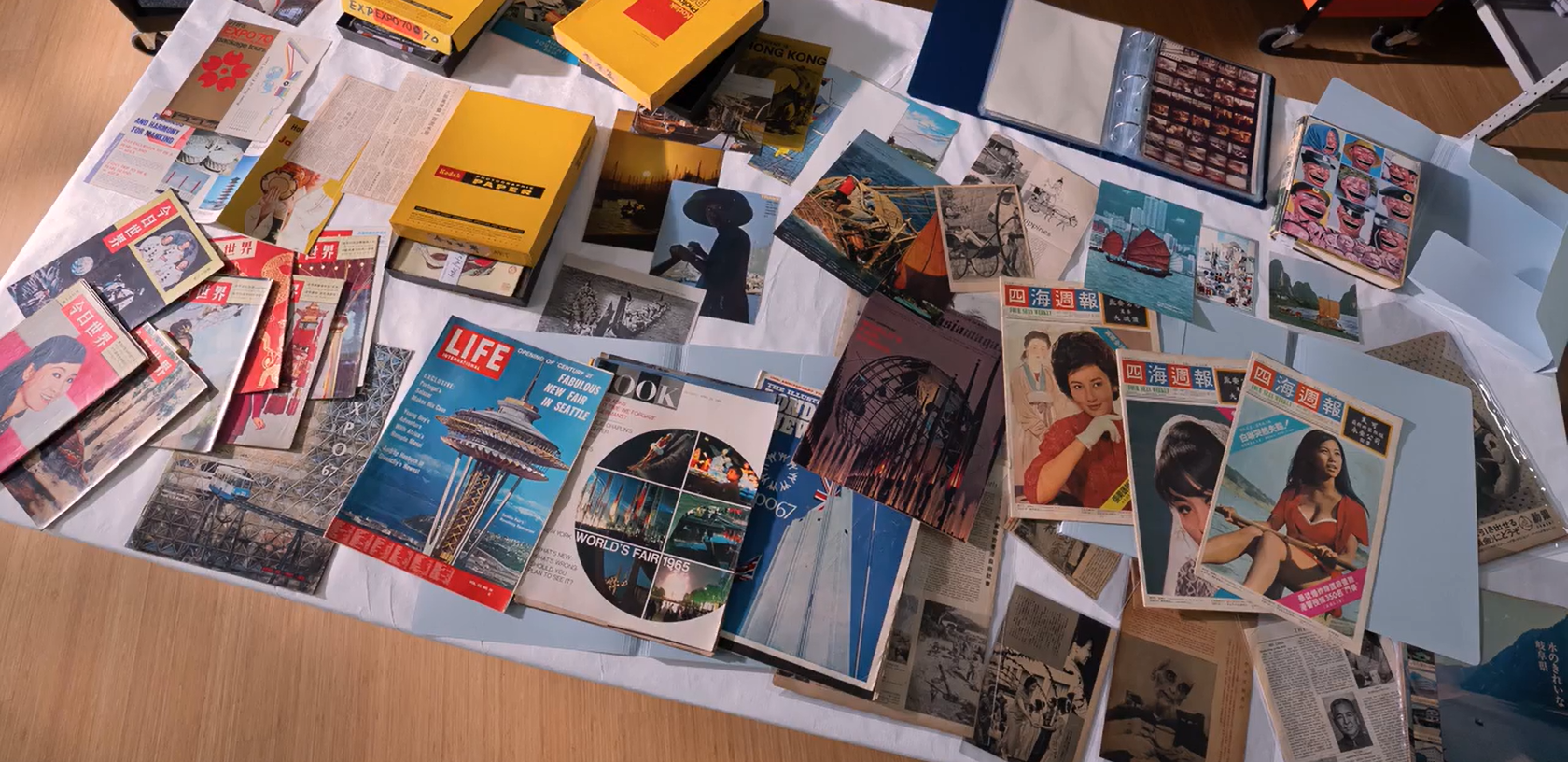
Unless otherwise specified, all images courtesy of Ha Bik Chuen Family and Asia Art Archive.
Credits
Produced by M+
Written by: Dr Vennes Cheng
English editorial: Dorothy So
Chinese editorial: Amy Leung, Lap-wai Lam
English to Chinese Translation: Amy Li
Layout: Amy Leung
Special thanks: The Ha Bik Chuen Family, Asia Art Archive, Chris Sullivan, Ling Law, Mimi Cheung, CM Yip, Tina Pang, Chloe Chow, Fei Tse, Yannis Lo, Elaine Lin